In September 1241, when Snorri Sturluson was killed in the cellar of his own house at Reykholt, a religious scholar in his thirties was teaching at a madrasa in Konya, some 4,600 kilometres away as the crow flies. His name was Muhammad Jalaluddin. Today the world knows him as Mevlânâ (“our master”) or Rumi (“the Anatolian”).
While the sagas were being written in Iceland, one of the longest poems in human history was being written in Konya. But this article is not about a coincidence of dates. The real questions are these: what did Rumi teach, where does he stand in the Islamic world, and what did he give the world?
A jurist becomes a poet
Rumi was born in 1207 in Central Asia. Tradition gives his birthplace as Balkh (in today’s Afghanistan); the Rumi scholar Franklin Lewis notes that the family was living in Vakhsh (in today’s Tajikistan) in those years. His father, Bahaeddin Walad, was a scholar known by the title Sultan al-Ulama, “sultan of the scholars”. In the shadow of the Mongol advance the family moved west, and in 1229 settled in Konya, the capital of the Anatolian Seljuks.

The young Jalaluddin received a classical Islamic education. After his father’s death he spent nine years in spiritual training with his father’s student Sayyid Burhaneddin, on whose advice he studied at the madrasas of Aleppo and Damascus. When he returned to Konya he was a respected faqih of the Hanafi school, that is, an expert in Islamic law. He taught, preached and issued legal opinions.
In 1244 everything changed. A wandering dervish named Shams of Tabriz arrived in Konya. The intense friendship between the two men turned Rumi from a scholar of books into a poet of love. A few years later Shams vanished. The great collection of lyric poems Rumi wrote after that separation still bears the name Divan-e Shams.
This transformation hides an important detail: Rumi did not leave religion behind to become a poet. He carried his religious learning into poetry.
What does he teach? The lament of the reed
Rumi’s masterpiece, the Masnavi, opens with the Persian words “Bishnav az ney”: “Listen to the reed.” The speaker is the ney, a flute made of reed. In the first eighteen couplets the ney moans with longing for the reed bed it was cut from; every melody it plays is the sound of that separation.
What is a ney? In Persian, “ney” means reed. The same word names the wind instrument made from it. So the ney of the Masnavi is both a plant and an instrument: a reed cut from the marsh, dried, and turned into a flute by boring holes in it. In Türkiye the ney is made from giant cane, known in Latin as Arundo donax. A single stalk with nine segments is hollowed out, seven holes are opened, six in front and one at the back, and a mouthpiece called the “başpare” is fitted to the blowing end. Reed flutes go back thousands of years; a reed flute found in a Sumerian grave dated to around 2800 BC is counted among the oldest examples. After Rumi, the ney became the leading instrument of the Mevlevi ceremony, and Mevlevi lodges became virtual schools of the ney. The long, hazy sound that anyone watching the sema in Konya hears today is the sound of the ney.
The Icelandic word for reed is “reyr”. That is why the Icelandic selection of Rumi’s poems is called Söngur reyrsins, which means precisely “the song of the reed”.

Rumi’s whole teaching is hidden in this image. The human soul has been cut off from its source, from God. The meaning of life is the journey back to that source. Longing is not a lack; it is the path itself: the ney can make music because it was cut.
The fuel of this journey is love. In Rumi, love is far greater than a feeling between two people; it is a pull that sets the universe in motion and draws everything back to its source. Reason is necessary on this road, but it is not enough. In a famous phrase from the Masnavi, those who try to walk by proof alone have wooden legs.
Death, too, changes meaning in this light. For Rumi, death is union with the beloved. That is why the night he died, 17 December 1273, is remembered as Şeb-i Arûs, the “wedding night”.
Thinking in stories
The Masnavi does not proceed like a work of philosophy but through stories nested inside one another. In six books of some 25,600 couplets, sultans, grocers, shepherds, animals and prophets speak. Three stories sum up Rumi’s world well.
The elephant in the dark. An elephant brought from India is kept in a dark stable. People who have never seen an elephant try to make it out by touch. The one who touches its trunk says “an elephant is like a water pipe”, the one who touches its ear “like a fan”, the one who touches its leg “like a pillar”. All of them are right and all of them are wrong. For Rumi, human knowledge is like this: everyone holds a piece of the truth. If they had a candle, the argument would be over.
Moses and the shepherd. A shepherd speaks to God with simple devotion: he wants to stitch His shoes, comb His hair, bring Him milk. Moses rebukes him for blasphemy. The shepherd flees into the desert. God then admonishes Moses: he was sent to unite God’s servants, not to divide them; God looks at the heart, not at the words. This story is the real source of what is often called Rumi’s “tolerance”.
The Chinese and the Greek painters. A sultan sets two groups of painters a contest. The Chinese cover their wall with colourful pictures. The Greeks use no paint at all; they polish the opposite wall until it shines like a mirror. When the curtain is lifted, the Chinese paintings are reflected even more beautifully in the polished wall. For Rumi, a person’s task is not to fill the heart with knowledge but to polish it like a mirror.
His place in Islam: “I am the servant of the Quran”
One concept needs explaining: Sufism (tasavvuf in Turkish). Sufism is the inner, mystical dimension of Islam. It does not consider obeying the rules to be enough; it aims for faith to be lived in the heart and for a person to be cleansed of the ego. Sufism is not outside Islam but within it, and Rumi is one of the greatest names in this tradition.
In his own preface, Rumi describes the Masnavi as “the roots of the roots of the roots of religion”. Most commentators on the Masnavi have read these three “roots” as sharia, tariqa and haqiqa: the rules of religion, the spiritual path walked by those rules, and the truth reached at the end of the path. The preface to the fifth book puts it this way: the sharia is like a candle that lights the way, but holding the candle is not the same as walking the road. Scholars such as Nicholson and Furuzanfar note that this preface may not be Rumi’s own, but the image sums up the outlook of the Mevlevi tradition well.
The Masnavi’s religious depth shows in numbers too. According to academic studies, the work alludes to verses of the Quran in more than two thousand two hundred places. That is why the Masnavi has been known in the Islamic world for centuries as “the Quran in Persian”. A couplet attributed to the 15th-century poet Jami says of Rumi that “he is not a prophet, but he has a book”.
Rumi himself never saw it that way. In a quatrain attributed to him he says that as long as he lives he is the servant of the Quran and the dust on the path of the Prophet Muhammad. This line is little known in the West.
Throughout Islamic history Sufism has also drawn criticism. Some religious scholars kept their distance from music and from the sema, which resembles dance. The Mevlevi order, however, held a respected place for centuries both at the Ottoman court and among ordinary people.
What did he give the world?
A literature. Rumi left five works. According to the oldest copy, dated 1278 and kept at the Mevlana Museum, the Masnavi has 25,618 couplets. The Divan-e Kabir gathers more than 40,000 couplets of ghazals and quatrains. To these are added Fihi ma fihi (“In it is what is in it”), compiled from his conversations, Majalis-e Sab‘a, containing seven of his sermons, and Maktubat, the letters he wrote to statesmen and friends. The works are in Persian; the Divan also contains a small number of lines in Arabic, Turkish and Greek.
An institution and a school of art. Rumi did not found an order. The Mevlevi order was organised after his death by his son Sultan Walad. Mevlevi lodges spread from Anatolia to the Balkans and Egypt. They were not only places of worship; in the words of the historian Ahmet Süheyl Ünver, they were the fine arts academies of their time. Dervishes were expected to practise an art or a craft. The Mevlevi contribution stands out especially in these fields:
Music and composition. The Mevlevi ayin became one of the largest forms of classical Turkish music; more than sixty ayins are known today. In the lodges a neyzenbaşı taught the ney and a kudümzenbaşı the kudüm drums; dervishes with fine voices were trained as “ayinhan”, singers who learned the makams and Rumi’s ghazals by heart. Hammâmîzâde İsmail Dede Efendi (d. 1846), Zekâi Dede (d. 1897) and Hüseyin Fahreddin Dede (d. 1911), sheikh of the Bahariye Mevlevi lodge, are the great composers of this tradition.

Listen: a sample of Mevlevi music. A Mevlevi ayin is a long composition in four parts (selam) that accompanies the sema. The oldest known ayins are three “beste-i kadim” (“ancient compositions”), by unknown composers and thought to date from the 16th century: Pençgâh, Dügâh and Hüseyni. In the recording below, the Konya Turkish Sufi Music Ensemble of Türkiye’s Ministry of Culture and Tourism performs the Dügâh ayin. The recording was published on the ensemble’s official YouTube channel.
Poetry and literature. The Masnavi was recited, translated and explained in commentaries; commentaries were even written on Cezire-i Mesnevi, the Masnavi selection by Yusuf-ı Sineçak (d. 1546/47). Neşati, Fasih Ahmed Dede and Şeyh Galib (d. 1799), sheikh of the Galata Mevlevi lodge, were poets who came from Mevlevi circles. Şeyh Galib’s Hüsn ü Aşk (“Beauty and Love”) is the leading example of literature born within Mevlevi culture.

Calligraphy. Mevlevi calligraphers signed their works “al-Mevlevi”; many of them mastered the ta‘liq script. Copying the Masnavi by hand was a deep-rooted tradition. Writing Rumi’s name arranged in the shape of the Mevlevi felt hat (sikke) became a composition particular to these circles.

Illumination and bookbinding. From the 14th century on, decorated copies of Rumi’s works were commissioned. From the late 13th century, many calligraphers, illuminators, bookbinders and painters added the epithet “Mevlevi” to their names.

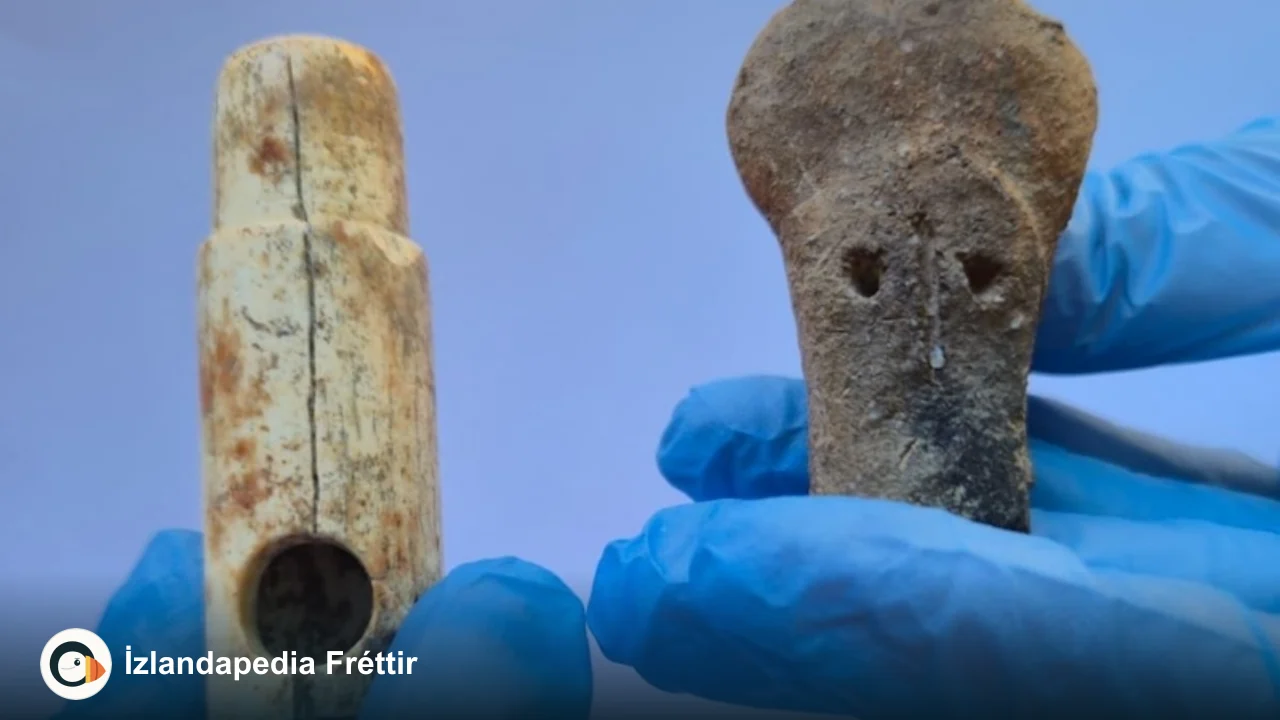
Painting and crafts. Fasih Ahmed Dede made drawings in charcoal; the court painter Levni (d. 1732) painted Mevlevi dervishes. Ivory maktas, the boards used for cutting reed pens, made by Mevlevi craftsmen are today in museum collections.

A ceremony. The sema, which tourists know as the “whirling dervishes”, is not a show but an act of worship. The tall felt hat (sikke) on the semazen’s head represents the tombstone, the white skirt (tennure) the shroud, and the black cloak on his shoulders the grave. The semazen turns with the right hand open to the sky and the left turned towards the earth: I receive from God and give to people. The ceremony took its present formal shape in the generations after Rumi, as the Mevlevi order became an institution. In 2005 UNESCO proclaimed the sema ceremony a “Masterpiece of the Oral and Intangible Heritage of Humanity”, and in 2008 inscribed it on the Representative List.

In Türkiye the path of this ceremony has not been unbroken. Under Law No. 677 of 1925, the Mevlana lodge in Konya was closed like all other Sufi lodges, and in 1927 it became a museum. Music training in the Mevlevi lodges also came to an end. From 1953 the sema was again performed in public in Konya, with state permission, as a cultural commemoration. Today the Mevlana Museum is one of the most visited museums in Türkiye: 3,062,800 people visited it in 2025. That is roughly eight times the population of Iceland.

A legacy of thought. Rumi’s influence did not stay within Ottoman borders. The German philosopher Hegel praised him as “the excellent Rumi”. Muhammad Iqbal, the great Muslim thinker of the 20th century and Pakistan’s national poet, regarded Rumi as his spiritual guide. In Iqbal’s 1932 masterpiece Javid-nama, Rumi guides the poet through the heavens, as Virgil leads Dante through hell and paradise. In one poem Iqbal has Rumi and Goethe meet in paradise: two masters, of the East and of the West.
The West’s Rumi and the missing half
The Rumi read in Europe and America today is largely the work of the American poet Coleman Barks. Barks, who died in February 2026 at the age of 88, did not know Persian. He recast scholars’ word-for-word translations into a free American poetic idiom and sold millions of books. It is also his voice reading Rumi’s poem “The Guest House” on Coldplay’s 2015 song “Kaleidoscope”.
But something is missing from this Rumi: Islam. In 2017 the journalist Rozina Ali wrote in The New Yorker that references to the Quran and Islam had been largely stripped out of popular English versions. According to Omid Safi of Duke University, the tendency goes back to the Victorian era: Western translators assumed that poets like Rumi were mystics in spite of Islam, not because of it. Everything you have read in this article so far shows why that assumption is wrong.
What Rumi did not say
The two texts most often shared under Rumi’s name are not his. According to scholars, the quatrain that begins “Come, come, whoever you are, come again” is not found in the reliable early manuscripts of Rumi’s work. The “seven pieces of advice” (“In generosity and helping others, be like a river…”), taught even in schools in Türkiye, do not appear together in any of Rumi’s works, the Masnavi included. Both were attributed to him because they feel close to his spirit. In English the situation is worse: many lines circulating on social media under Rumi’s name have no Persian original.
There is a simple rule: if a Rumi quotation does not say which couplet of the Masnavi or the Divan it corresponds to, treat it with suspicion.
The ney plays in Icelandic too
Since 2020, Icelandic readers have been able to read Rumi in their own language. Ljóðasafn Rúmí – Söngur reyrsins (“The song of the reed”), a 140-page book published by Páskaeyjan, is the first substantial selection of Rumi in Icelandic. The translation received support from Miðstöð íslenskra bókmennta, and in the same year it entered the bestseller list for poetry at number 8. The book was translated from English, so Icelandic readers, too, reach Rumi through an intermediary language. Nor is the interest new: in 1989 the newspaper Þjóðviljinn introduced Rumi to its readers as “a contemporary of Sturla Þórðarson”.
Şeb-i Arûs 2026: for those who want to go
- Dates: 7–17 December 2026 (the 753rd anniversary of Rumi’s death)
- Theme: “Insan Vakti” (“The time of the human”)
- Venue: Mevlana Cultural Centre, Konya
- Tickets: On sale through Biletinial since 9 October, from 300 Turkish lira. Book early for 17 December, the night of the anniversary itself.
- Getting there: There are no direct flights from Iceland to Konya; the most practical route is a connecting flight to Konya via Istanbul.
- Tip: The sema is performed as an act of worship. Applause and flash photography are not expected during the ceremony.
Closing
What keeps Rumi relevant 750 years later is that he asks the great questions through simple images. Hands touching an elephant in the dark, a prophet angry with a shepherd, a polished wall, a cut reed. You do not have to be a Muslim to understand them. But to understand Rumi, you need to know that these images came from the heart of a Muslim scholar.
The ney moans the further it is from the reed bed it was cut from. A copy of Söngur reyrsins on a bookshelf in Reykjavík is an echo of that sound.
Sources
- Forlagið: Ljóðasafn Rúmí – Söngur reyrsins
- Miðstöð íslenskra bókmennta: translation grants (30.4.2020)
- Vísir: 2020 bestseller list
- timarit.is: Þjóðviljinn, 1989
- Küre Ansiklopedi: Masnavi (Turkish)
- Küre Ansiklopedi: Mevlevi sema ceremonies (Turkish)
- Encyclopedia.com: Rumi (Franklin Lewis)
- Ladan Amirchoupani, ATEBE (2021): Jami and the “Quran in Persian”
- Ankara University: the Sayyid Burhaneddin period (Turkish)
- DergiPark: The word in the Divan-e Kabir (Turkish)
- Selçuk University: the “Come again” quatrain (Turkish)
- DergiPark: “Rumi’s seven pieces of advice” (Turkish)
- DergiPark: The ney in Turkish music culture (Turkish)
- DergiPark: Making a ney – nine segments, seven holes (Turkish)
- Ministry of Culture and Tourism: Galata Mevlevi Lodge Museum (Turkish)
- TDV Encyclopaedia of Islam: Galata Mevlevihanesi (Turkish)
- TÜBİTAK Encyclopedia: Mevlevi culture and art (Turkish)
- Zeynep Demircan, TÜBA-KED 32 (2025): the Mevlevi tradition of book arts (Turkish)
- DergiPark: Music education in Mevlevi lodges – neyzenbaşı, kudümzenbaşı (Turkish)
- Ministry of Culture and Tourism: Mevlevi Sema Ceremony (UNESCO)
- Dar al-Masnavi: the Mevlevi order and the sema after 1953
- Posta: Mevlana Museum visitor numbers for 2025 (Turkish)
- Encyclopaedia Iranica: Muhammad Iqbal
- Encyclopaedia Iranica: Jāvīd-nāma
- AJC: Coleman Barks dies at 88
- Rozina Ali, “The Erasure of Islam from the Poetry of Rumi” (republished)
- DergiPark: The first Mevlevi ayins – beste-i kadîm (Turkish)
- Konya Turkish Sufi Music Ensemble: Dügâh ayin (YouTube)
- Ministry of Culture and Tourism: Şeb-i Arûs, 753rd year (Turkish)
Spotted a mistake? info@izlandapedia.com · Instagram @izlandapedia