
Explore this guide
The short answer
The Icelandic sagas are prose narratives written down in medieval Iceland. The best-known group, the Íslendingasögur or Sagas of Icelanders, looks back to families and conflicts from the settlement period to about 1030, but most surviving works took written form in the thirteenth and fourteenth centuries.
That distance matters. The sagas are neither simply “Viking stories” nor modern history books. Real place names, kinship networks and legal practice meet oral memory, literary design, crafted dialogue and occasional supernatural elements.
What is a saga?
The word saga is related to Old Norse segja, “to say” or “to tell”. Today it can label any long-running story; in its historical setting it refers to medieval prose narratives about Icelandic families, kings, bishops, saints or a legendary past.
The characteristic voice is restrained. The narrator often steps back and lets people emerge through short dialogue, decisions and consequences. Violence can be reported with almost documentary coolness. Genealogies, legal assemblies, land boundaries and journeys are not decoration: they structure the story.
Women are not merely background figures. Guðrún in Laxdæla saga, and Hallgerður and Bergþóra in Njáls saga, shape alliances, honour and the direction of conflict. Their representation should still be read in the social and literary world of the thirteenth-century writers.
When were they written?
The period described and the period of writing are not the same. The family sagas largely portray the settlement of Iceland and the Commonwealth, while most surviving forms belong to the thirteenth and fourteenth centuries. Stories probably circulated orally in the intervening years, but we cannot prove an unbroken oral chain for every scene.
- About 870Permanent settlement begins; the social world remembered by the family sagas develops.
- 930The Alþing is founded. Law, arbitration and assemblies become central to saga conflict.
- About 1000The adoption of Christianity becomes a historical threshold between old belief and a new order.
- 12th–14th centuriesSaga writing and major manuscript compilations flourish.
- Árni Magnússon (1663–1730)His lifespan. The manuscripts he collected and recorded form the basis of the collection now preserved in Iceland and Denmark.
- 1971–1997Manuscripts covered by the agreement with Denmark return to Iceland in stages. Part of the collection remains in Copenhagen.
- 2009The Arnamagnæan Manuscript Collection enters UNESCO's Memory of the World Register.
Not every saga belongs to the same genre
These modern categories help organise a varied body of writing. Their borders are not always exact, but they provide a useful map:
Sagas of Icelanders
Families, feuds, land, law and honour. Njáls saga, Egils saga and Laxdæla saga belong here.
Kings' sagas
Norwegian kings and political history. Heimskringla is the best-known compilation.
Legendary sagas
A legendary Scandinavian past in which heroic feats, monsters and supernatural events become more prominent.
Contemporary sagas
Events closer to their writers' own time. Sturlunga saga is fundamental for thirteenth-century conflict.
Bishops' sagas
The lives of Icelandic bishops, church organisation and the development of Christian society.
Short tales
Brief narratives, often preserved inside larger compilations, centred on one incident or person.
Six stops for a first reading route
Instead of searching for the single “best” saga, choose a first text that fits your reading habits. A short, direct work can prepare you for the larger structures.
- Hrafnkels sagaShort, concentrated and easy to follow: an excellent introduction to power, justice, revenge and social rank.
- Gísla saga SúrssonarThe story of an outlaw, for readers drawn to suspense, loyalty, dreams and pursuit.
- Egils sagaA long family biography of the warrior-poet Egill, combining verse, anger, politics and Iceland's ties to Norway.
- Laxdæla sagaRelationships, marriage, social pressure and tragic choices around Guðrún Ósvífrsdóttir.
- Njáls sagaAn extraordinarily broad construction of law, friendship and feud—not necessarily first, but a major destination.
- The Vinland sagasEiríks saga rauða and Grænlendinga saga offer two differing memories of journeys to Greenland and North America.
Which saga should I start with?
Length is relative and difficulty is our reading guidance, not a formal score. Translation, notes and layout change page counts, so editions are not directly comparable by pagination.
| Saga | Length | Reading effort | What to expect |
|---|---|---|---|
| Hrafnkels saga | Short | More approachable | A compact first encounter with a small cast. |
| Gísla saga | Short–medium | Moderate | Track the family ties within a tightly focused plot. |
| Egils saga | Long | More demanding | Generations, place names and verse need closer attention. |
| Laxdæla saga | Long | Moderate–demanding | Family relationships shape the story. |
| Njáls saga | Very long | More demanding | A large cast and detailed legal disputes. |
| The Vinland sagas | Two short narratives | Approachable–moderate | Follow the voyages and compare the two accounts. |
Choosing an English translation
For a modern selection, The Sagas of Icelanders (Penguin Classics, ISBN 9780141000039) brings several starting points together. Its contents credit Bernard Scudder for Egil’s Saga, Keneva Kunz for The Saga of the People of Laxardal, Terry Gunnell for The Saga of Hrafnkel Frey’s Godi, and Martin S. Regal for Gisli Sursson’s Saga.
For the longer legal and family drama, Njal’s Saga, translated and edited by Robert Cook (Penguin Classics, ISBN 9780140447699), includes maps, explanatory notes and a character index. These aids matter more than finding the shortest edition. Older public-domain translations can be read free, but their English may require more effort; a modern translation is a separate, usually copyrighted edition.
Reading in Turkish? Verified bibliographic examples include Vinland Sagaları, translated by Kudret Emiroğlu (İmge, 100 pages, ISBN 9789755331645), and Egill’in Sagası, prepared by Emre Aygün (Kaynak, 2015, 278 pages, ISBN 9789753439640). A catalogue record does not guarantee current availability.
The publisher’s record for Vinland Sagaları gives December 1996; its short voyage narratives can suit a first reading. LIBRI’s bibliographic review verifies the Egill’in Sagası record and credits Emre Aygün as the preparer, so we do not add an unverified translator credit. Its poetry and family history make it a denser second step. These examples are not an exhaustive list of Turkish editions. We did not securely identify Turkish editions of Hrafnkels, Gísla, Laxdæla or Njáls in this research; this does not establish that none exists. Search by title and ISBN in a library or bookshop. Catalogue records guarantee neither current stock nor free access.
History or fiction?
The most useful answer is literature that joins the two. Sagas can preserve genuine settlements, known families, legal institutions and landscapes. Yet their scenes, speeches and causal structures were shaped centuries after the events. A speech is not a transcript, and a character portrait is not a neutral biography.
Historians test saga evidence against archaeology, place names, law codes, genealogies and contemporary documents. A contradiction does not make a text worthless; it can reveal how thirteenth-century Icelanders wanted to remember their past.
A saga and an Edda are not the same thing
The terms are frequently mixed together. Both belong to medieval Icelandic literary culture, but their forms and purposes differ.
Sagas
Mainly prose narratives. They place families, kings, saints or legendary heroes inside extended plots.
The Eddas
The Poetic Edda is a collection of mythological and heroic poems. Snorri's Edda is a handbook of poetic craft and mythology.
It is therefore misleading to reduce the sagas to Odin, Thor and “Viking mythology”. Family sagas may include supernatural material, but their central pressures often come from neighbours, law, marriage, reputation and failed reconciliation.
Where can you follow the sagas in Iceland?
The sagas are intensely geographical: a valley, farm name or river becomes part of a memory map. These places make the literature tangible, but some remain working farms and private land.
Reykjavík · Edda
The permanent “World in Words” exhibition brings you into the material world of the manuscripts. Books rotate on display, so check the current selection if you hope to see a particular work.
Þingvellir
The legal and social setting of the Alþing, and the best place to understand why saga disputes reach assemblies and courts.
Borgarnes
The Settlement Center has two exhibitions devoted to the settlement of Iceland and Egils saga.
Reykholt
Snorrastofa is a research and exhibition centre for Snorri Sturluson, his works and medieval culture.
South Iceland
Hlíðarendi, Bergþórshvoll and the Rangá area carry the geography of Njáls saga.
Dalir and Snæfellsnes
Valleys, coasts and place names form natural reading routes for Laxdæla saga and Eyrbyggja saga.
Where can you read the sagas for free?
- Icelandic Saga Database: a volunteer archive offering Icelandic texts and many public-domain translations in formats including HTML, EPUB and PDF.
- Handrit.is: the official catalogue for manuscript collections in Iceland and Denmark, with high-resolution images for many records.
- Icelandic Saga Map: a university-supported way to explore saga texts and place names together. Use it for research; a mapped place does not by itself establish an exact historical scene or an accessible travel route.
Public-domain English translations are free, but their language can feel archaic. Check the translator and publication date. A modern translation can make a first encounter—especially with a long work such as Njáls saga—considerably easier.
Frequently asked questions
What exactly does “saga” mean?
It is related to Old Norse segja, “to say” or “to tell”. In historical usage it can mean a prose narrative or history.
Are the sagas Viking mythology?
No. Some contain supernatural elements and old beliefs, but the family sagas focus primarily on people, kinship, law and social conflict. The Eddas are the more direct source for mythological poetry.
Did everything in the sagas really happen?
We cannot say that. Real people, places and institutions may be present, but the narrative form, dialogue and details were shaped as literature centuries later.
Can modern Icelanders read the original manuscripts?
Normalised editions remain more accessible to Icelandic readers than the originals are to speakers of many other modern languages. Reading medieval script, abbreviations and manuscript conventions directly still requires specialist training.
Which saga should I choose first?
Try Hrafnkels saga or Gísla saga for something short and sharp, Egils saga for character and poetry, or Njáls saga for the great narrative of law and feud.
Sources and image licences
Sources checked: . Institutional sources were reviewed for manuscript returns, the UNESCO listing and exhibition rotation. Use each venue’s current page for opening hours and admission.
- UNESCO — Arnamagnæan Manuscript Collection
- Icelandic Saga Database — texts and an introduction to the tradition
- Árni Magnússon Institute — manuscript studies
- Árni Magnússon Institute — the collection and its return
- Þingvellir National Park — the Alþing as a centre of social and legal life
- Visit West Iceland — the Settlement Center and Egils saga exhibition
- Snorrastofa — Snorri Sturluson
- World in Words — the Reykjavík manuscript exhibition
- Handrit.is — digital manuscript catalogue
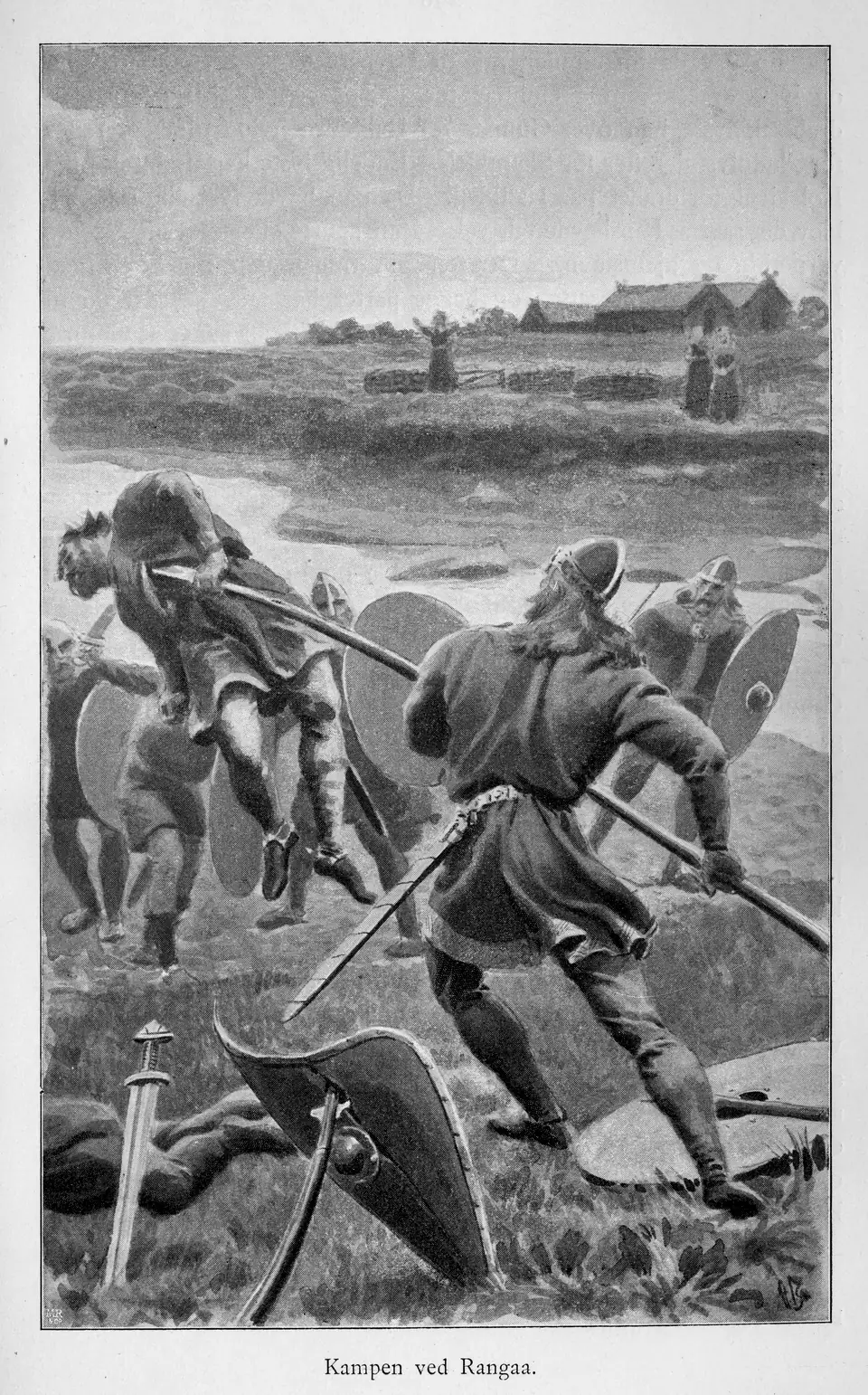
- Images: Andreas Bloch, 1898, public domain; Möðruvallabók AM 132 fol., public-domain reproduction. Resized and converted to WebP for the web.
- Icelandic Saga Map — texts, manuscripts and geography
- Árni Magnússon Institute — changing the manuscripts on display
- İmge Kitabevi: Vinland Sagaları — künye
- LIBRI: Egill’in Sagası — bibliyografik inceleme
- Penguin Classics: Njal’s Saga
- Penguin: The Sagas of Icelanders — contents

