
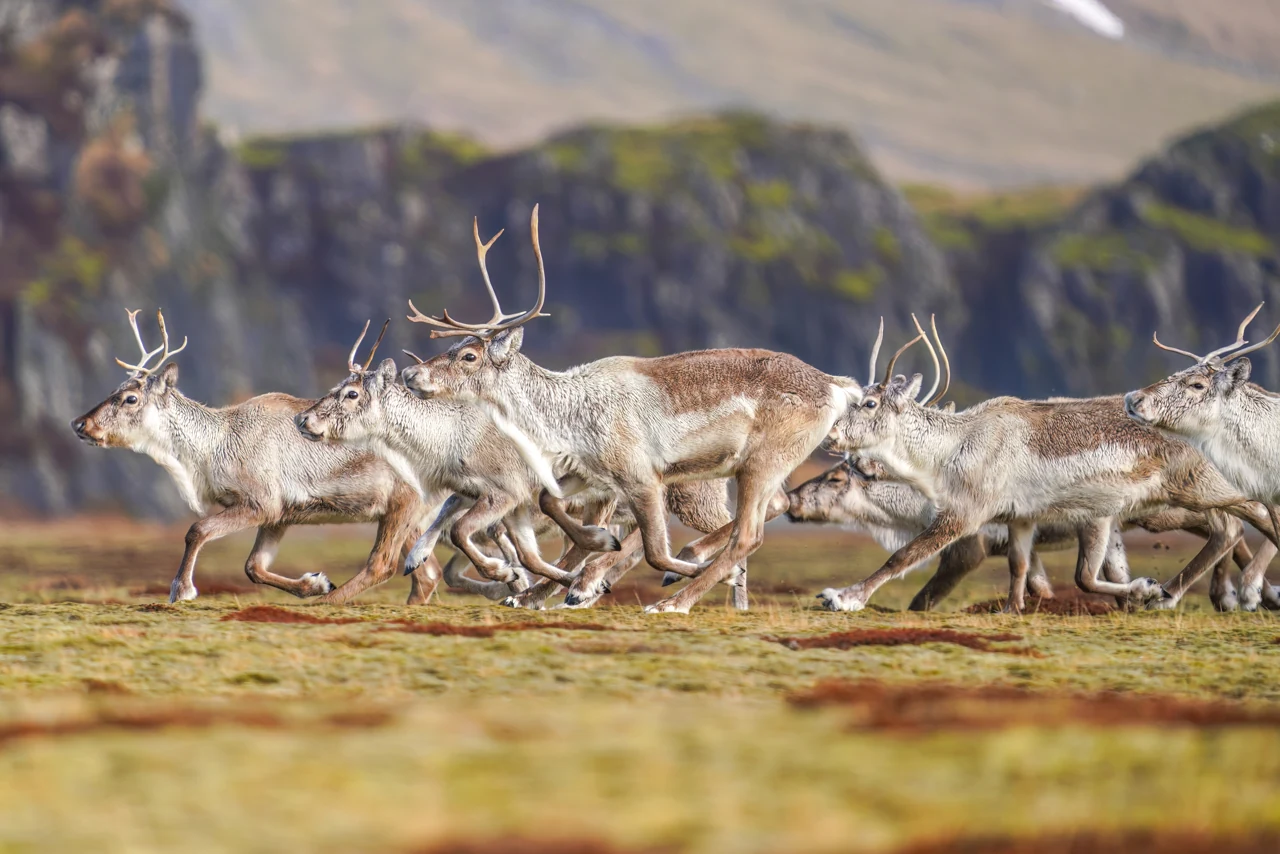

How did they reach Iceland?
Four groups of reindeer were introduced from Norway between 1771 and 1787 to create another agricultural resource. The intended domestic husbandry did not take hold; the animals lived free in the countryside. Their story therefore differs from that of the Arctic fox, which reached Iceland before people.
The seasons change where herds roam
The chance of encountering herds shifts between higher ground in summer and lower areas in winter. This is a broad region, not one location where a sighting is assured. Ask regional visitor centres for up-to-date local advice. Do not drive a long detour based only on the location of an old photograph.
 İzlandapedia

What can antlers tell you?
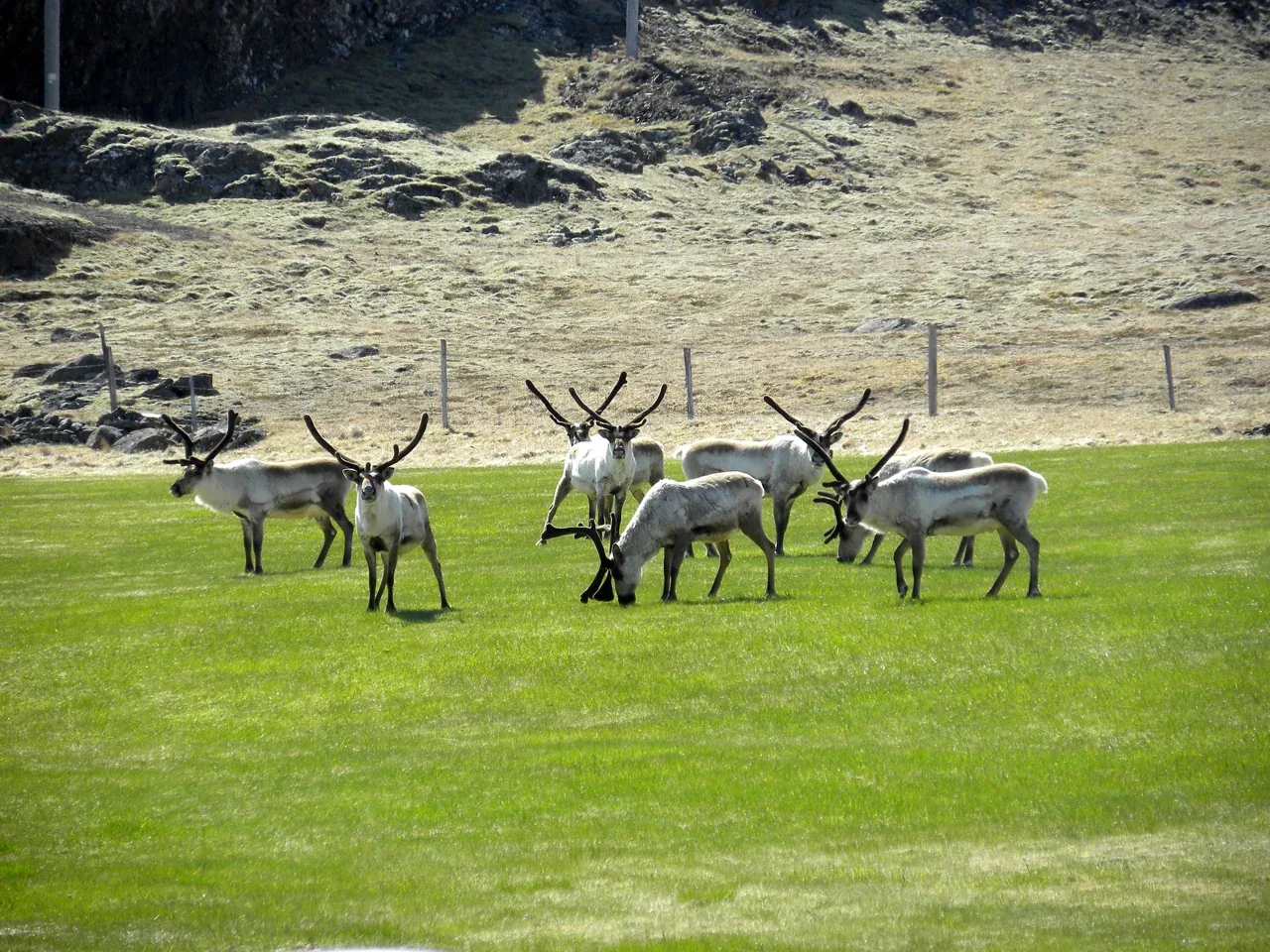
Both male and female reindeer can carry antlers, while some individuals are naturally antlerless. Antlers alone therefore do not identify an animal as male. Museum and natural-history resources offer a better starting point than a quick label attached to a photograph.
 İzlandapedia

Keep the herd’s route open
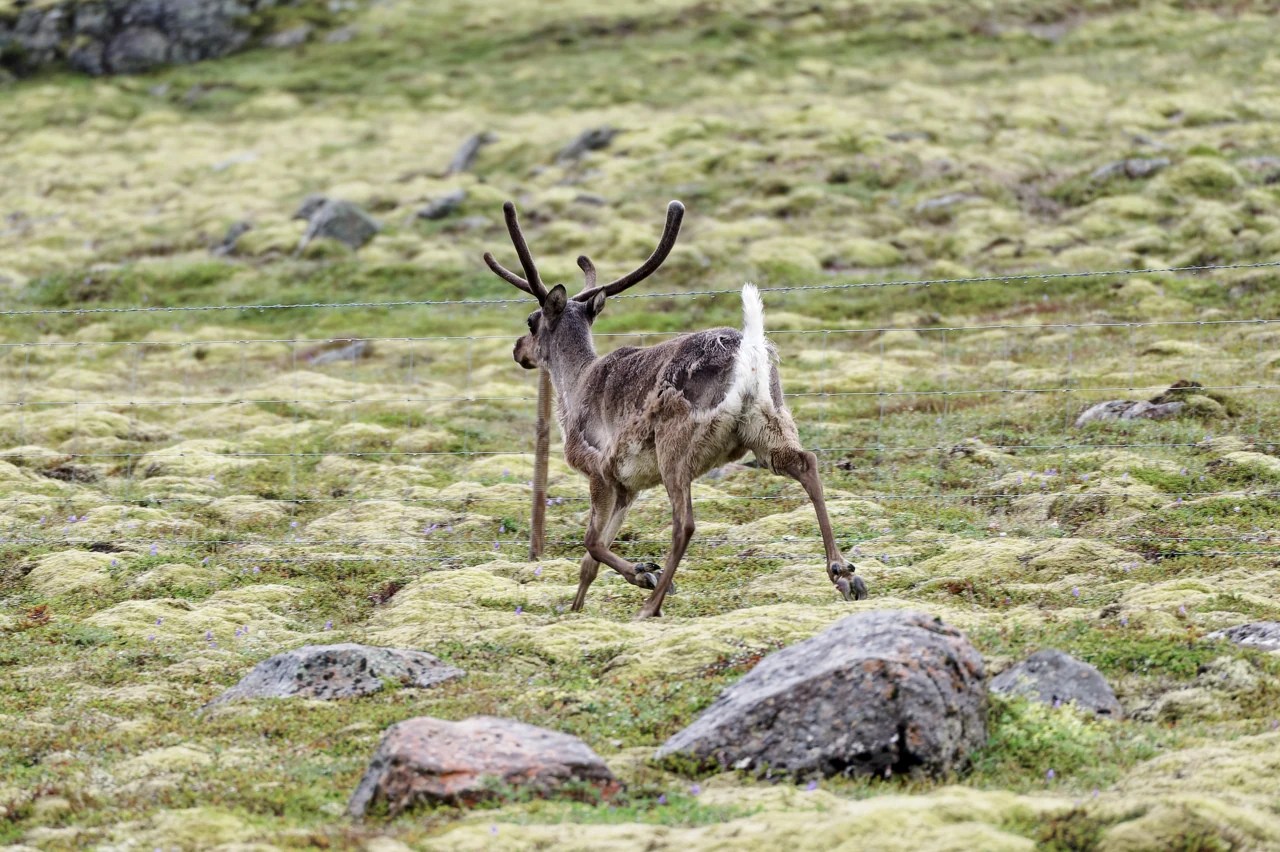
Our watching suggestion is to remain well back without cutting across the animals’ direction of travel. Do not follow on foot or drive a herd for a closer picture. Avoid feeding and calling. If the group raises its heads to watch you, give it more space. Do not approach calves or position yourself so that the group splits.
If you meet animals near a road
Traffic safety comes before a sighting. Find a safe, permitted parking place rather than braking suddenly or stopping in the carriageway. Do not drive off-road for a photograph. Check SafeTravel and Umferðin before travelling east; a summer photograph says nothing about winter road access.
Fitting a sighting into your journey
We suggest treating reindeer watching as a flexible part of an East Iceland itinerary. Bring binoculars or a longer lens and allow time to wait. A day without a sighting can still reveal the animals’ landscape and history through local museums. Keep a managed park experience distinct from seeing free-ranging herds in the wild.
Frequently asked questions
Do reindeer live everywhere in Iceland?
No. Today’s wild herds live in East Iceland.
Are they native to Iceland?
They did not arrive naturally. People introduced them from Norway in the 18th century.
Are all antlered reindeer male?
No. Females can also carry antlers, and some individuals are naturally antlerless.
Sources and photograph rights
Sources checked on 30 October 2026. Historical figures are labelled with their reference year. Recheck local access rules and visitor instructions before travelling.
- Náttúrufræðistofnun · Hreindýr
- Visit Austurland · Reindeer in Iceland
- Minjasafn Austurlands · Hreindýr
- SafeTravel · Travel conditions
- Umferðin · Road conditions
Resized and converted to WebP for the web; the sharing copy is cropped. The photograph’s licence is retained for these derivatives.