
Quick answer
Iceland's puffin is the Atlantic Puffin (Fratercula arctica). It spends most of its life on the open ocean and comes ashore mainly to breed. For the South Coast, mid-May to early August is the main viewing window. Arrival and departure vary between colonies and years; a summer date alone does not guarantee a sighting.
A year between ocean and colony
- Winter · Life at sea
Autumn and winter are spent on the open North Atlantic. Coastal colonies are not a winter viewing destination.
- Spring · Return to the burrows
Adults return to breed. Local arrivals range from mid-April to late April; nesting can bring access restrictions.
- Summer · Parents at work
Breeding and chick feeding make this the main colony-viewing season. Adults also leave to fish at sea.
- Late summer · Back to the ocean
Colonies quieten as breeding ends. Some birds remain into August, but timing differs by place and year.
This is a seasonal guide, not a live sightings forecast. Check the local site before a long detour.
What kind of animals are puffins?
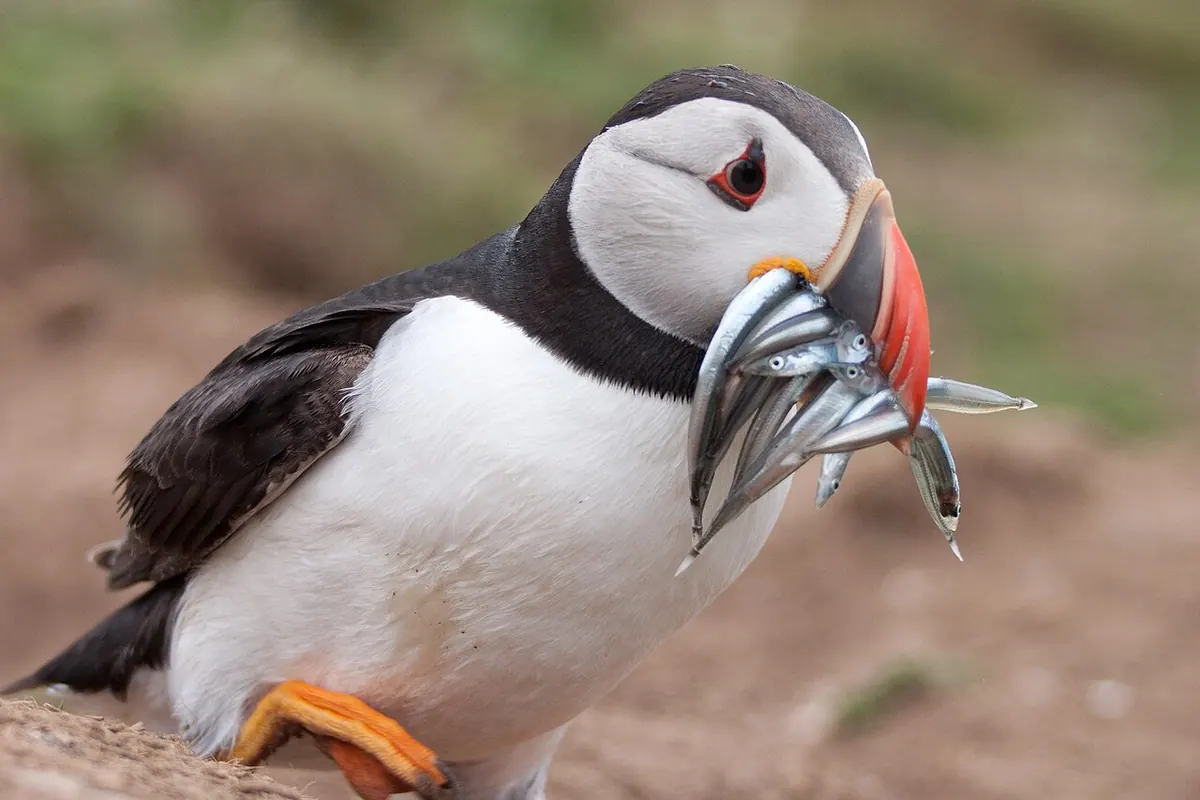
A puffin is not a penguin. It is a flying seabird that beats its short wings rapidly in the air and uses them like flippers underwater. It eats sandeels, capelin, herring and other small fish. Backward-pointing structures in its mouth help it hold several fish at once.
Puffins breed in colonies. Pairs often return to the same partner and burrow in later years. They normally raise a single chick, with both parents sharing incubation and feeding. They are long-lived birds, and young puffins may not breed for several years.
Do they migrate?
Yes, although not as a conspicuous overland flock. When breeding ends, puffins leave their colonies and spend autumn and winter on the open North Atlantic, feeding at sea alone or in small groups. They return to coastal breeding sites in spring.
 İzlandapedia
 İzlandapedia
When and where can you see puffins?
Visiting in April or October? April is a return period, and timing differs by colony. October falls in the open-ocean part of the annual cycle, so a coastal colony is not a dependable viewing plan. Use the local season and access links below before adding a detour.
Visit South Iceland's 2026 guidance gives late April to mid-August for the South, with mid-May to early August as the peak viewing period. Numbers at a colony change with the weather and feeding at sea. The regional guidance below is more useful than a single nationwide deadline.
| Location | What the visit offers | What to check |
|---|---|---|
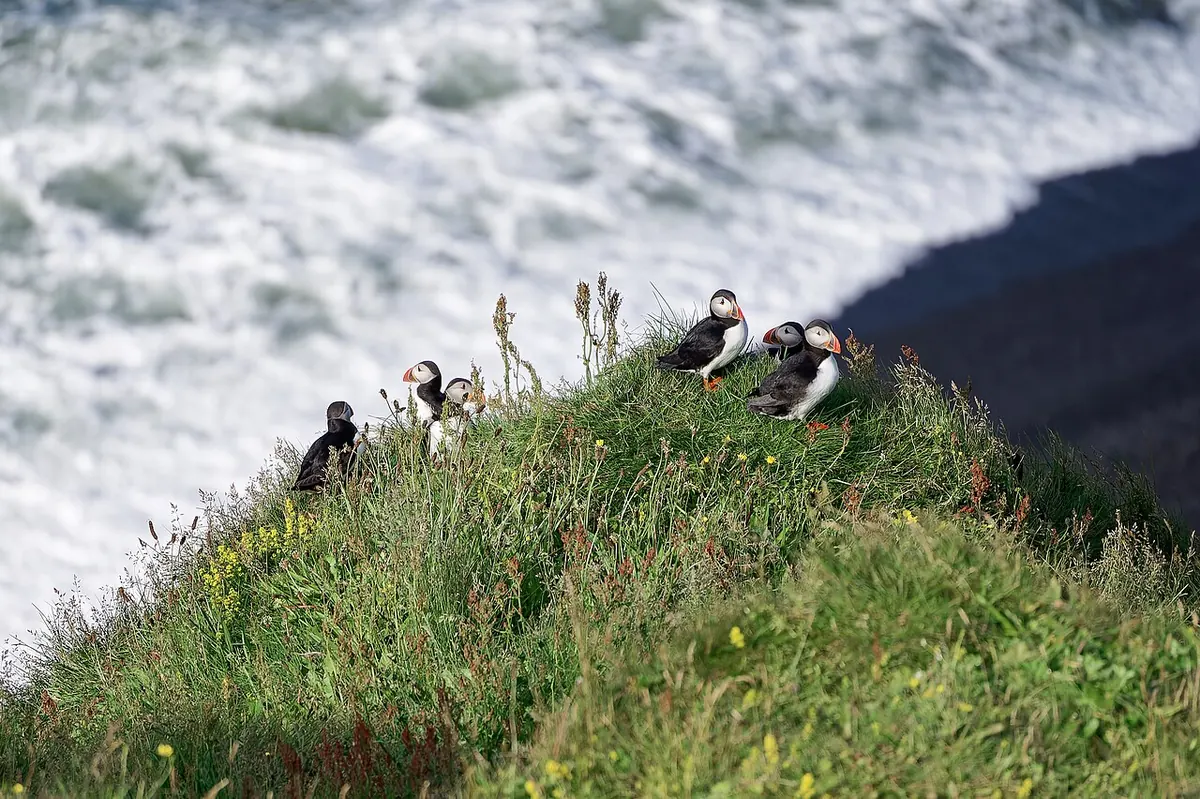
| Dyrhólaey | A South Coast cliff stop on marked paths. | Nesting protection can restrict access; cliff edges are unstable. Check official access guidance. |
| Heimaey | A large Vestmannaeyjar colony and the local puffling-rescue tradition. | An island visit needs its own transport plan. The South’s main window is mid-May–early August; check current local conditions. |
| Hafnarhólmi · Borgarfjörður eystri | Boardwalks and viewing platforms by the harbour. | Local guidance gives mid-April–mid-August, with May onward the main viewing period. Local season and webcam. |
| Látrabjarg | Exposed seabird cliffs in the Westfjords. | Late spring–July is the main period; August is less predictable. Winter road access is not maintained. Visitor and road guidance. |
| Reykjavík area | Seasonal boat trips towards nearby nesting islands. | Check current departures and sea conditions with the operator; seeing birds is not guaranteed. |
| Grímsey and the north | More remote island and seabird experiences. | Confirm seasonal access and local sightings before committing to the journey. |
Why are puffins so loved?
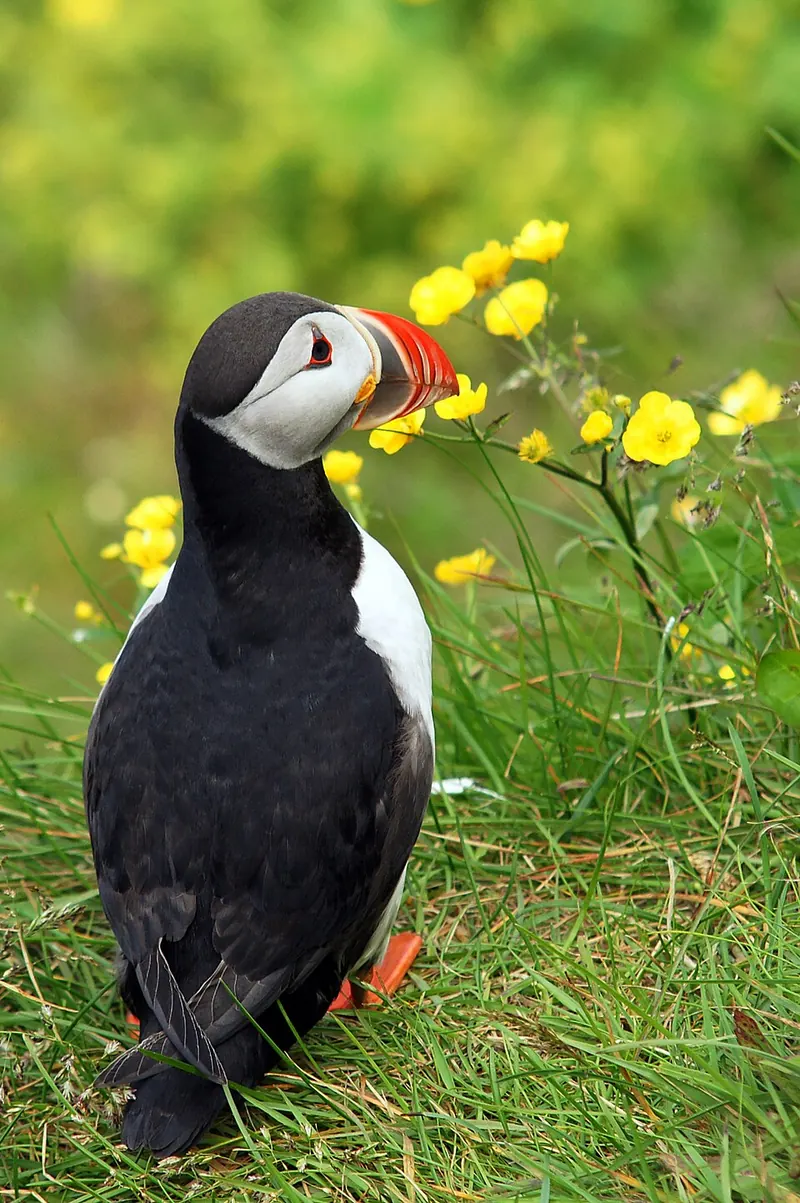
Their colourful breeding bill, black-and-white “suit”, upright walk and bill full of fish make them instantly recognisable. Iceland's official tourism site calls the puffin the country's signature bird, which helps explain why it appears on toys, signs and souvenirs everywhere.
Their endearing look hides a remarkable ocean life: they can spend months away from land, feed in rough seas and return over long distances to the same small burrow.
Are puffins hunted, and are they on restaurant menus?
The 2025 Icelandic Red List classifies the puffin as Critically Endangered (CR) nationally; its global category is Vulnerable (VU). These assessments describe different geographic populations. In a June 2026 statement, the Nature Conservation Agency again urged caution over hunting and consumption, pointing to continued decline and poorer food availability.
Yes. Puffin hunting has a long history in Iceland and remains legal in some places. The traditional method catches flying birds with a long-handled net called a háfur. Smoked or small portions of puffin can still appear in some tourism-oriented restaurants.
Tradition does not automatically make today's harvest sustainable. A 2024 stock assessment prepared for Iceland's Environment Agency describes puffins as slow-breeding, long-lived birds and found a moderate-to-high probability that recent harvest contributed to population decline. Warmer seas and poorer availability of small fish add further pressure.
In July 2025, Iceland's Nature Conservation Agency explicitly urged restaurants to remove puffin meat from their menus. The criticism therefore comes not only from animal-welfare campaigners but also from public conservation bodies and ornithologists.
How to watch puffins responsibly
- Stay on marked paths, boardwalks and viewing platforms.
- Remember that apparently solid turf may contain burrows; keep away from cliff edges.
- Do not block a bird's route, chase it or feed it.
- Avoid loud noise and flash. Check the protected area’s drone rules; a permit is required for drone flights in Látrabjarg Nature Reserve.
- Keep dogs leashed and well away from nesting areas.
- Never walk backwards near a cliff for a photograph; wind and crumbling turf can be fatal.
Frequently asked questions
Can I see puffins in winter?
They are very unlikely to be seen from shore. Puffins spend winter on the open ocean, so plan a coastal colony visit in summer.
Are puffins penguins?
No. Despite the black-and-white appearance, puffins are flying North Atlantic seabirds in the auk family.
Is puffin served in every Icelandic restaurant?
No. It appears in some tourism-oriented menus, many restaurants never serve it, and conservation authorities have called for its removal.
How close can I get?
Follow the site signs and watch the bird's behaviour. Stay on the platform; if a bird changes direction, looks tense or cannot enter its burrow, you are too close.
Sources and image licences
Season, access and conservation sources checked on 3 October 2026. This page does not report live sightings or confirm that a road or viewpoint is open today.
- Borgarfjörður eystri — Hafnarhólmi season and viewing platforms
- Visit Westfjords — Látrabjarg, cliff safety and seasonal access
- Dyrhólaey access and nesting restrictions (former Environment Agency page; protected areas have been managed by Náttúruverndarstofnun since 2025)
- Natural Science Institute — publication of the 2025 national Red List
- Nature Conservation Agency — June 2026 puffin conservation statement
- Visit Iceland — Iceland's puffins
- Visit South Iceland — 2026 season and locations
- Cornell Lab — Atlantic Puffin life history
- Natural Science Institute of Iceland — 2025 Red List of Birds
- Environment Agency of Iceland — 2024 puffin stock assessment
- RÚV — call to remove puffin from restaurant menus
- Images: Joanne Goldby, CC BY-SA 2.0; Jakub Hałun, CC BY 4.0; Milan Nykodym, CC BY-SA 2.0. Resized and converted to WebP for the web.


