İzlandapediaA closer look at Iceland
Back to the travel guide

When should you visit Iceland?

Decide what you want to see first. Then choose a month that fits, considering daylight, weather and road conditions together.

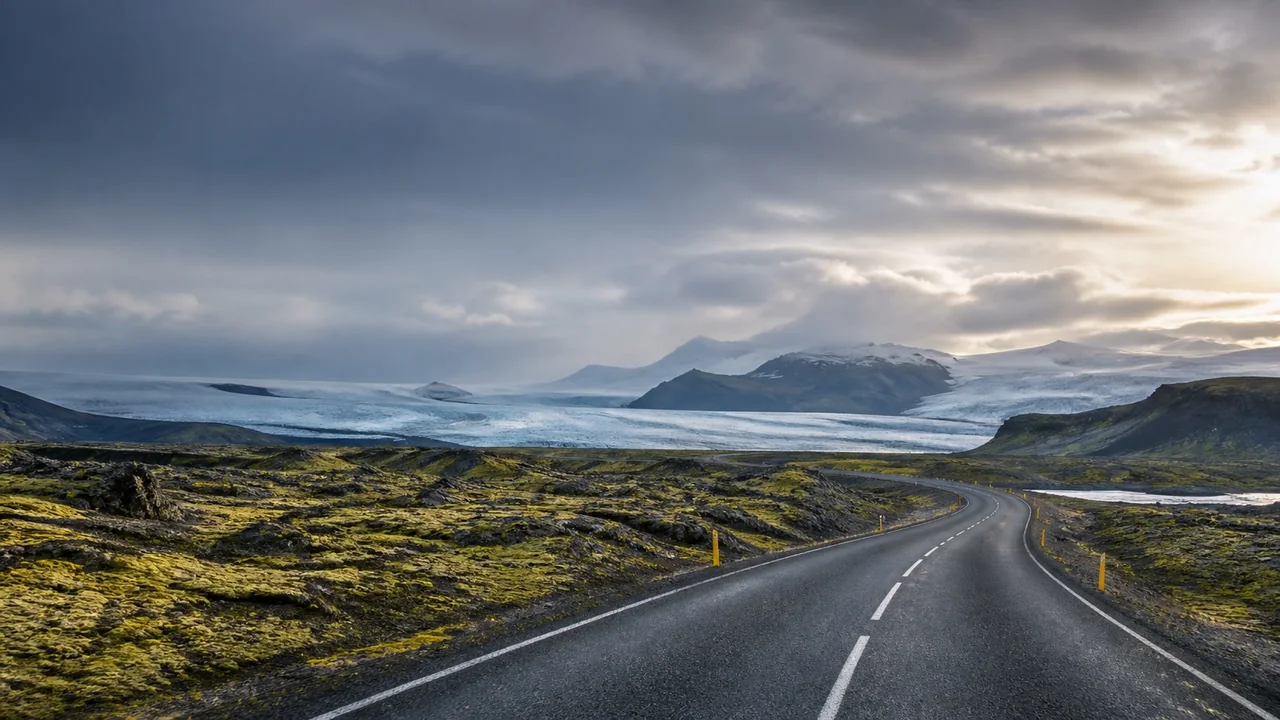
A road across Icelandic volcanic terrain with snowy mountains in the distance
İzlandapedia image archive · Illustrative image, not current conditions.
Choose by experience Compare all 12 months

Summer gives you time

June and July offer long sightseeing days. Their bright nights do not suit a trip centred on aurora viewing.

Aurora needs more than darkness

The general viewing season runs from late August to late April. Darkness, a gap in the clouds and activity must come together.

Highlands need an access check

A summer date is not confirmation that your route is open. Check road status, vehicle suitability and rental permission separately.

Contents
  1. Quick answer: when should you visit Iceland?
  2. All 12 months at a glance
  3. Choose a period around your goal
  4. January
  5. February
  6. March
  7. April
  8. May
  9. June
  10. July
  11. August
  12. September
  13. October
  14. November
  15. December
  16. How to think about the four seasons
  17. When can you see the Northern Lights?
  18. Daylight by month and the Midnight Sun
  19. Monthly weather: averages are not forecasts
  20. Choosing a road-trip and F-road season
  21. What to wear by season
  22. When can you see puffins?
  23. When to plan whale watching
  24. Choosing a hiking season
  25. Waterfalls, glaciers and ice caves
  26. Volcanic activity and current access
  27. How to judge crowds and costs
  28. Icelandic for your trip
  29. Final pre-trip check
  30. Sources and method

What matters most on this trip?

Pick a starting point below. Each option suggests a planning window, rather than promising open roads, clear weather or a sighting.

June–July

Long days

Long daylight gives you room for stops and changes of plan. Keep proper rest in the itinerary, even when the night stays bright.

Best suited to
Coastal touring and a first road trip
Build your plan around
Main-road accommodation, open walking paths and late-evening photography stops.
Know the limit
Even near the solstice, Reykjavík’s sun briefly dips below the horizon. A bright night is not a dark aurora-viewing night.

Late August–late April

Northern Lights

Choose a daytime itinerary you will enjoy anyway. Decide whether to go out at night using cloud cover, activity and safe access.

Best suited to
Dark nights with a flexible itinerary
Build your plan around
Several possible nights, warm layers and a safe place to wait.
Know the limit
The dark season offers opportunities, not guaranteed sightings. Short winter days and driving conditions may require much shorter daily stages.

Consider May–July

Puffins and coastlines

Choose the colony first, then check its local breeding season and access arrangements.

Best suited to
Breeding colonies with suitable visitor access
Build your plan around
Binoculars, authorised viewing platforms and time to watch without disturbing birds.
Know the limit
The Hafnarhólmi visitor information gives mid-April to mid-August. That is not a calendar for every colony or every year; birds may be out at sea when you visit.

Summer; open roads and trails only

Highland routes

A highland route needs different preparation from a coastal outing. Avoid building bookings around an assumed opening day.

Best suited to
Confirm access before committing
Build your plan around
Current road information, advice from local staff, suitable transport and a fallback route.
Know the limit
Not every 4WD suits every F-road. An open road does not settle river-crossing safety or the terms of your rental agreement.
If your priority is different
  • Winter scenery: Keep short stages and cancellation flexibility; a particular date does not guarantee snow.
  • Whale watching: Explore summer departures, then check the harbour, sailing schedule and sea conditions for your dates.
  • Photography: Summer evenings, autumn colours and winter light offer different possibilities. Choose safe places to wait.
  • Fewer visitors: Consider dates outside the summer peak, but check available services and actual quotes. Quieter does not automatically mean cheaper.

Plan around daylight

Reykjavík · 9–15 November 2026. Sunrise, sunset and length of day.

  1. MON 0909:37–16:44 7 h 7 min
  2. TUE 1009:40–16:41 7 h 1 min −6 min
  3. WED 1109:43–16:38 6 h 55 min −6 min
  4. THU 1209:47–16:35 6 h 48 min −7 min
  5. FRI 1309:50–16:32 6 h 42 min −6 min
  6. SAT 1409:53–16:29 6 h 36 min −6 min
  7. SUN 1509:57–16:26 6 h 30 min −6 min

The dark blue line shows the time the sun is above the horizon; light blue includes twilight.

Times are local to Reykjavík. Do not use these same times for stops in the north or east. Daylight does not guarantee sunshine or open roads.

Fit outdoor visits into the daylight shown, allowing separate time for driving, meals and safety.

Quick answer: when should you visit Iceland?

Quick answer: when should you visit Iceland?

There is no single best month for everyone. Consider summer for long days and a first main-road trip, and the darker part of the year for night-sky viewing. May or September may suit a transitional-season trip, but highland access and activities need separate checks. The suggestions below are planning judgements, not weather or wildlife guarantees.

Iceland month by month

At a glance at the top of each month: Reykjavík’s average daytime high and night-time low (1991–2020), the time from sunrise to sunset on the 15th, Northern Lights conditions and the crowd tendency. Values differ in the north, inland and at the start or end of the month. Seasonal guidance, not a daily forecast or confirmation that roads are open.

Source: Icelandic Met Office — station climate data · Visit Iceland — aurora · Umferðin · Ferðamálastofa — April 2026 report (PDF) · Daylight: sunrise and sunset calculated for Reykjavík

Choose a month to focus on its weather and travel details.

January

  • Temperature · day/night3° / −2°
  • Daylight · on the 15th5 h 23 min
  • Northern LightsDark nights; conditional
  • CrowdsBelow summer
Weather, daylight and what to plan
Weather
Coastal rain, snow and freeze–thaw cycles can occur on the same trip; inland conditions differ from Reykjavík.
Daylight
Days are short and lengthen toward the end of the month. Put outdoor stops around the middle of the day.
Driving and roads
Choose short, adjustable stages. A road open in the morning is not a promise for the return journey.
What to wear
Pack warm insulation, a waterproof shell, gloves and footwear suited to the surface.
Things to do
Combine Reykjavík museums and pools with short coastal outings when conditions allow.
Nature and wildlife
Do not plan around puffins at nesting colonies; focus on locally present winter birds instead.
Who it may suit
Travellers seeking winter scenery who can change their itinerary.
Main trade-off
Two distant regions in one day can use up the available light in the car.

Source: Icelandic Met Office — station climate data · Umferðin · Visit Iceland — aurora

February

  • Temperature · day/night3° / −2°
  • Daylight · on the 15th8 h 37 min
  • Northern LightsDark nights; conditional
  • CrowdsBelow summer
Weather, daylight and what to plan
Weather
Winter continues; ice after rain matters just as much as fresh snow.
Daylight
There is more daylight than in January; allow for the difference between the beginning and end of the month.
Driving and roads
If unfamiliar with winter driving, consider guided transport. Avoid a remote overnight stop before an early flight.
What to wear
Spare gloves and socks, a windproof hood and warm insulation help with wet, exposed stops.
Things to do
Balance short photography outings with time in the city and indoor alternatives.
Nature and wildlife
Consider a whale trip only where departures operate; sea conditions may cause cancellation.
Who it may suit
Visitors wanting winter landscapes with a little more daytime.
Main trade-off
Longer days do not mean easier roads.

Source: Icelandic Met Office — station climate data · Umferðin · Visit Iceland — aurora

March

  • Temperature · day/night4° / −1°
  • Daylight · on the 15th11 h 41 min
  • Northern LightsDark nights; conditional
  • CrowdsBelow summer
Weather, daylight and what to plan
Weather
The calendar says spring, but snow, ice and storms can still shape the journey.
Daylight
Day and night approach a balance around the equinox, with dark evenings still available.
Driving and roads
Do not turn extra daylight into excessive mileage. Check mountain passes separately.
What to wear
Keep winter layers and footwear that can handle meltwater and slush.
Things to do
Coastal visits by day and aurora watching on suitable nights can share an itinerary.
Nature and wildlife
Do not choose March as a reliable month for returning puffin colonies.
Who it may suit
Travellers combining daytime sightseeing with dark nights.
Main trade-off
Rest after a late aurora outing before starting a long morning drive.

Source: Icelandic Met Office — station climate data · Umferðin · Visit Iceland — aurora

April

  • Temperature · day/night7° / 1°
  • Daylight · on the 15th15 h 4 min
  • Northern LightsDark window shrinks
  • CrowdsBelow summer
Weather, daylight and what to plan
Weather
Lowland thaw can coexist with winter at altitude and muddy trails.
Daylight
Evenings brighten rapidly and the dark window for aurora narrows.
Driving and roads
Prioritise coastal routes; the arrival of spring does not mean F-roads have opened.
What to wear
Removable layers and waterproof boots help with mixed temperatures and wet ground.
Things to do
City visits and accessible coastal walks provide an adaptable base.
Nature and wildlife
Puffins may begin returning at some colonies; check local reports and nesting restrictions.
Who it may suit
Visitors looking for a transitional season and longer evenings.
Main trade-off
Walking around a muddy closed trail can damage surrounding vegetation.

Source: Icelandic Met Office — station climate data · Umferðin · Visit Iceland — aurora

May

  • Temperature · day/night10° / 4°
  • Daylight · on the 15th18 h 23 min
  • Northern LightsToo bright
  • CrowdsRising demand
Weather, daylight and what to plan
Weather
Milder spells become possible, while exposed places remain cool and windy.
Daylight
Days are very long; nights become unsuitable for an aurora-focused trip as the month progresses.
Driving and roads
Main-road touring can work well, but do not make closed highland routes essential to the plan.
What to wear
Bring light insulation, a rain shell and a hat rather than summer clothing alone.
Things to do
Coastal towns, open walking paths and birdwatching may suit the season.
Nature and wildlife
Check the local colony before a puffin visit and use designated viewing areas.
Who it may suit
Travellers seeking long days before the busiest summer period.
Main trade-off
Long daylight does not mean every service is running its summer timetable.

Source: Icelandic Met Office — station climate data · Umferðin · Visit Iceland — aurora

June

  • Temperature · day/night13° / 7°
  • Daylight · on the 15th21 h 0 min
  • Northern LightsToo bright
  • CrowdsHigh
Weather, daylight and what to plan
Weather
Summer remains cool and changeable; wind and rain protection still matter.
Daylight
The solstice brings the brightest period; a bright Reykjavík night is not the same as the sun staying above the horizon for 24 hours.
Driving and roads
Long light gives scheduling flexibility. Never infer a highland road opening from the month alone.
What to wear
Alongside layers, consider a sleep mask and appropriate sun protection for long outdoor days.
Things to do
Late-evening photography and coastal itineraries with generous rest stops fit well.
Nature and wildlife
Watch nesting seabirds from a distance and stay away from burrows and cliff edges.
Who it may suit
Visitors seeking bright nights or their first substantial road trip.
Main trade-off
A bright night does not prevent tiredness; protect your sleep schedule.

Source: Icelandic Met Office — station climate data · Umferðin · Visit Iceland — aurora

July

  • Temperature · day/night15° / 9°
  • Daylight · on the 15th19 h 41 min
  • Northern LightsToo bright
  • CrowdsHigh
Weather, daylight and what to plan
Weather
Lowlands are in their summer season, but mountains can still be cold, wet and foggy.
Daylight
Days remain very long, gradually shortening after the solstice.
Driving and roads
Open roads may widen your options; check vehicle suitability and rental permission separately for F-roads.
What to wear
Carry insulation and a shell on walks and keep spare clothing dry inside the pack.
Things to do
Consider open trails, regional road trips and boat outings from operating harbours.
Nature and wildlife
Puffin colonies and whale watching can fit a summer trip, without guaranteed sightings.
Who it may suit
Travellers prioritising hiking and stays in several regions.
Main trade-off
Summer demand can be high; do not assume accommodation will be available each evening without planning.

Source: Icelandic Met Office — station climate data · Umferðin · Visit Iceland — aurora

August

  • Temperature · day/night14° / 9°
  • Daylight · on the 15th16 h 23 min
  • Northern LightsPossible late in month
  • CrowdsHigh
Weather, daylight and what to plan
Weather
The shift toward autumn becomes noticeable; high ground differs from the coast.
Daylight
Evenings shorten through the month; sufficient darkness may return near the end.
Driving and roads
Recalculate stages around late-month light and retain a fallback for highland routes.
What to wear
Plan layers for both daytime walking and cooler evening stops.
Things to do
Combine accessible hiking routes with flexible coastal visits.
Nature and wildlife
Puffin departure varies by colony; do not rely on a late-August sighting.
Who it may suit
Travellers interested in the transition between summer activities and darker nights.
Main trade-off
Conditions at the start of August cannot simply be applied to its final week.

Source: Icelandic Met Office — station climate data · Umferðin · Visit Iceland — aurora

September

  • Temperature · day/night11° / 6°
  • Daylight · on the 15th13 h 2 min
  • Northern LightsDark nights; conditional
  • CrowdsBelow summer peak
Weather, daylight and what to plan
Weather
Autumn brings cool evenings and unsettled spells; consider possible snow at altitude.
Daylight
Daylight contracts rapidly as dark nights return.
Driving and roads
Check the end of highland access and seasonal services individually; avoid targeting their final possible day.
What to wear
Carry a waterproof shell, warm insulation and gloves for evening observations.
Things to do
Autumn colour photography and aurora on suitable nights can be considered.
Nature and wildlife
Do not carry summer expectations into puffin colonies; use local information for other wildlife.
Who it may suit
Visitors seeking autumn colour and a balance of daytime and darkness.
Main trade-off
Fewer visitors than summer does not promise solitude or low prices everywhere.

Source: Icelandic Met Office — station climate data · Umferðin · Visit Iceland — aurora

October

  • Temperature · day/night8° / 3°
  • Daylight · on the 15th9 h 48 min
  • Northern LightsDark nights; conditional
  • CrowdsBelow summer peak
Weather, daylight and what to plan
Weather
Rain, wind and early winter conditions may vary along the same route.
Daylight
Daylight becomes noticeably shorter; keep outdoor stops close to your overnight base.
Driving and roads
Take the transition to winter driving seriously. Exploring one region can be more adaptable than a long circuit.
What to wear
A rain shell, insulation, hat and gloves belong in the same packing plan.
Things to do
Use a city base, short nature visits and suitable nights for sky watching.
Nature and wildlife
Whale departures depend on harbour and operator schedules; wind can change bookings.
Who it may suit
Travellers combining an aurora attempt with city and cultural visits.
Main trade-off
More darkness is not a promise of clear skies.

Source: Icelandic Met Office — station climate data · Umferðin · Visit Iceland — aurora

November

  • Temperature · day/night5° / 0°
  • Daylight · on the 15th6 h 29 min
  • Northern LightsDark nights; conditional
  • CrowdsBelow summer
Weather, daylight and what to plan
Weather
Winter becomes more influential; icy ground and wind affect safety as well as comfort.
Daylight
Short days leave a smaller window for outdoor visits.
Driving and roads
Start with weather alerts and allow time and accommodation flexibility for disrupted transport.
What to wear
Prioritise warm base layers, dry spares and footwear with appropriate grip.
Things to do
Reykjavík-based outings, museums and pools offer adaptable options.
Nature and wildlife
Do not treat wildlife as a guaranteed outcome; consider waves and wind at coastal observation points.
Who it may suit
Visitors seeking winter atmosphere at a slower pace.
Main trade-off
Long drives can easily consume most of the time available for sightseeing.

Source: Icelandic Met Office — station climate data · Umferðin · Visit Iceland — aurora

December

  • Temperature · day/night3° / −2°
  • Daylight · on the 15th4 h 11 min
  • Northern LightsDark nights; conditional
  • CrowdsHolidays vary
Weather, daylight and what to plan
Weather
Winter weather and storms may change access outside the city from day to day.
Daylight
The winter solstice brings the shortest days of the year.
Driving and roads
Avoid making a remote final overnight stay essential before your flight; plan short stages and extra time.
What to wear
Use warm layers, gloves, a hat and protection from wet conditions together.
Things to do
City lights, museums and short nature outings in suitable weather can work well.
Nature and wildlife
This is not the land-based puffin season; verify boat schedules separately.
Who it may suit
Visitors interested in city atmosphere and short winter outings.
Main trade-off
Holiday opening hours, restaurants and transport need advance checking.

Source: Icelandic Met Office — station climate data · Umferðin · Visit Iceland — aurora

How to think about the four seasons

Winter: plan for short days and flexible transport in December–February. Spring: March–May quickly adds daylight without instantly clearing mountain snow. Summer: June–August provides longer sightseeing days, while road and trail status still need checking. Autumn: September–November restores darkness as route and service options may narrow. These are planning groups rather than promises about when weather changes.
Source: Icelandic Met Office — station climate data

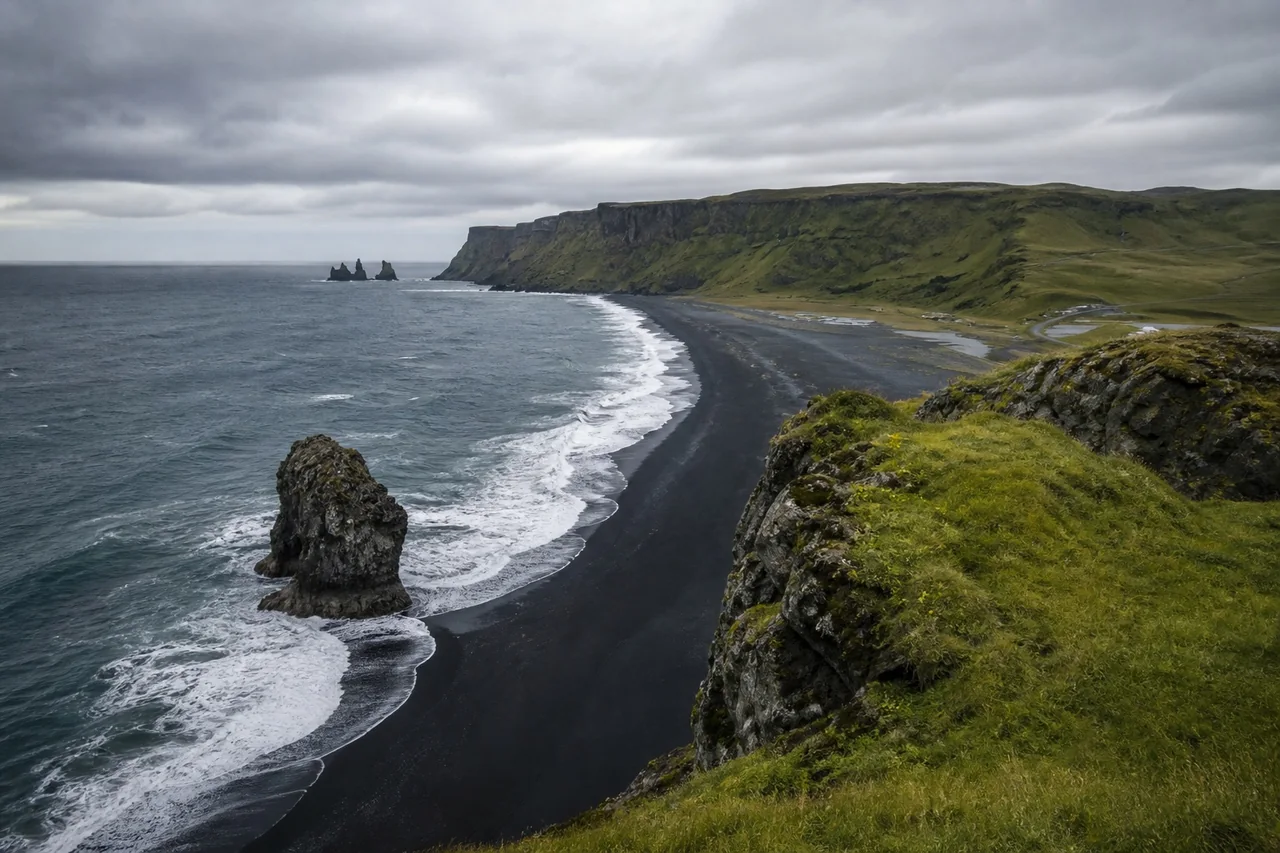
Existing editorial illustration of Icelandic coastal scenery and waterfalls
İzlandapedia image archive · Illustrative image, not current conditions.

When can you see the Northern Lights?

Aurora watching needs sufficient darkness, a view through the clouds and suitable geomagnetic conditions together. Official tourism guidance describes a broad season from late August to late April, not a promise for every night. Viewing can also be possible in Reykjavík: choose a safe location away from direct lighting. Avoid making one night the sole purpose of the trip or driving into unsafe conditions to escape clouds.

Source: Visit Iceland — aurora · Veðurstofa Íslands

Daylight by month and the Midnight Sun

The daylight figure on each card is the time between sunrise and sunset in Reykjavík on the 15th of the month, calculated from the sun’s position rather than forecast. The first and last day of a month differ, as do Reykjavík and northern settlements. Sunrise-to-sunset duration is also different from twilight. Around the June solstice, Reykjavík nights stay very bright even though the sun briefly dips below the horizon. The travel phrase Midnight Sun does not mean uninterrupted 24-hour sunshine everywhere. Plan from the local sunrise and sunset for your exact dates, and remember that a bright night does not replace sleep.

Source: Visit Reykjavík — light on summer nights · Veðurstofa Íslands

Plan around the daylight

Reykjavík · Sunrise, sunset and hours of daylight for the displayed week.

  1. MON 0909:37–16:44 7 h 7 min
  2. TUE 1009:40–16:41 7 h 1 min −6 min
  3. WED 1109:43–16:38 6 h 55 min −6 min
  4. THU 1209:47–16:35 6 h 48 min −7 min
  5. FRI 1309:50–16:32 6 h 42 min −6 min
  6. SAT 1409:53–16:29 6 h 36 min −6 min
  7. SUN 1509:57–16:26 6 h 30 min −6 min

The dark blue line shows the time the sun is above the horizon; the light blue area includes twilight.

Times are for Reykjavík and use local time. Do not apply the same times to stops in the north or east. Daylight does not guarantee sunshine or an open road.

Plan outdoor visits within the daylight window shown in the table; allow separately for driving, meals and a safety margin.

Monthly weather: averages are not forecasts

Climate averages describe a past period at a particular station. They do not predict your travel day. This guide does not assign one temperature to the whole country: the south coast, north, interior and higher ground differ. For numerical comparisons, use monthly data from the same station and reference period. Update decisions from the daily forecast, warnings and road conditions, considering wind and precipitation as well as temperature.

Source: Icelandic Met Office — station climate data

Choose a vehicle and booking for the season

After choosing your travel month, match the vehicle to the actual route. Not every visitor needs a 4×4 or a camper. A vehicle photograph or season name is not enough: daily road and weather conditions still matter.

Trip conditionsWhat should guide the choice?
Main roads in summerA 2WD passenger car may suit the route and conditions. Compare space, mileage and protection.
Outside town in winterConsider winter tyres, vehicle suitability and your driving experience together. Even with four-wheel drive, warnings or closures may require a change of route.
Spring and autumnWinter conditions can occur in these months too. Plan flexible stops and a return buffer rather than an inflexible long itinerary.
Highlands in summerA summer date does not mean a road is open. Check road access, vehicle suitability and rental permission separately; not every 4×4 is suitable for every road.

Flexibility matters when conditions are uncertain

Compare cancellation and change conditions, deadlines and fees. Do not assume a weather-related change automatically entitles you to a refund.

Match the camper to the season

Check heating, fuel or energy needs, open campsites and the driving demands of a larger vehicle in wind. A camper is not necessarily the cheaper option in every season.

Compare using dates in your chosen season

Enter your dates on the provider’s site. Confirm card, deposit, tyre and protection requirements in the specific offer; the seasonal advice here is not a vehicle or road safety guarantee.

Links in this section are affiliate links. İzlandapedia may earn a commission from qualifying bookings. Confirm prices, availability and rental conditions on the provider’s website, where booking and payment take place.

Check the rental guide’s budget and protection advice →

Sources for this section

Sources for this section checked: 17 November 2026.

Choosing a road-trip and F-road season

For a first road trip, long daylight and a main-road itinerary make changes easier. In winter, reduce daily distance and retain time before the return flight. An F-road is not equivalent to a normal highway: seasonal access, vehicle suitability, crossings and rental permission are separate questions. There is no fixed annual opening date. Check Umferðin, signs and rental conditions; a route drawn by navigation software is not permission to drive it. Four-wheel drive does not guarantee safe river crossings or bad-weather travel.

Source: Umferðin · SafeTravel — highland driving

What to wear by season

Combine a moisture-managing base, insulating middle and windproof, waterproof outer layer. Even in summer, carry warmth for an exposed coastal stop. Winter calls for more insulation and dry spares. Choose footwear for the terrain and planned walk rather than its appearance; equipment does not cancel a severe-weather warning.

Source: SafeTravel — clothing

When can you see puffins?

For colony locations and responsible viewing, use our guide to where to see puffins in Iceland alongside this seasonal overview.

Land-based puffin viewing follows the breeding season. Local guidance for Hafnarhólmi gives mid-April to mid-August; this is not a fixed schedule for every colony or year. May–July is a planning option within that seasonal window. Avoid burrows, birds and cliff edges, using binoculars and permitted platforms. Presence at a colony does not guarantee a bird will be visible during your visit.

Source: Visit Austurland — Hafnarhólmi

When to plan whale watching

Summer feeding areas and long days can suit a wildlife itinerary, but Reykjavík, Húsavík and other harbours do not share one schedule. Species, region and sea conditions affect the outcome. Once dates are chosen, verify the departure harbour and the specific sailing calendar. Leave room for cancellation or rescheduling; buying a tour does not guarantee a wildlife encounter.

Source: Visit Iceland — whale watching

Choosing a hiking season

Long days help with planning, but the summer calendar does not open every trail. A low coastal path and a multi-day high route need different plans. Obtain local information about snow, mud, rivers, visibility and conservation closures. Set pace by the slowest member of the group and plan a turnaround time, offline maps, a contact arrangement and an alternative walk.

Source: SafeTravel — hiking

Waterfalls, glaciers and ice caves

Waterfall spray can freeze on walking surfaces in winter; respect barriers and open paths. Viewing a glacier is a different activity from stepping onto it. Ice-cave structure and access change: neither “winter always means safe” nor “every cave closes all summer” is a sound rule. Choose an appropriately guided programme with a current local assessment; do not plan independent cave entry or glacier walking.

Source: SafeTravel — Sólheimajökull · SafeTravel

Volcanic activity and current access

A volcanic hazard in one area does not affect the whole country in the same way. This guide does not freeze the current access status of an eruption into an evergreen page. On the day of travel, check official warnings, permitted approaches and gas information. Never cross a closure or disregard evacuation instructions for a photograph or booking.

Source: Almannavarnir · SafeTravel

How to judge crowds and costs

Monthly visitor statistics can indicate higher summer demand; they do not measure the crowd at a particular waterfall on your visit. The table gives a qualitative summary of a historical national pattern. Holidays, events and popular stops differ. A quieter season is not automatically cheaper: compare transport and accommodation for your actual dates alongside operating services and cancellation terms.

Source: Ferðamálastofa — April 2026 report (PDF)

Icelandic for your trip

Speed

Listen to all six phrases in Icelandic. Choose normal or slow playback.

Hvernig er veðrið?How is the weather?
Það er kalt.It is cold.
Það er rok.There is strong wind.
Er vegurinn opinn?Is the road open?
Hvar er næsta bensínstöð?Where is the nearest petrol station?
Takk fyrir.Thank you.

Final pre-trip check

Sources for your next decision

Practical travel guidance reviewed on 3 October 2026. Weather, access and observations need a fresh check for your own date and location.

Use this guide to choose a planning window. Recheck official conditions for your travel dates; no season guarantees weather, access or wildlife sightings.

Full reference list and image notes

Sources and method

The month-by-month guide combines seasonal information from official sources with editorial planning suggestions. It does not supply numerical temperature, daylight, price or sighting-probability forecasts. Core planning sources were checked again on 3 October 2026. Crowd guidance refers to historical visitor patterns in the explicitly dated April 2026 report; it is not a forecast of today’s crowds or prices.