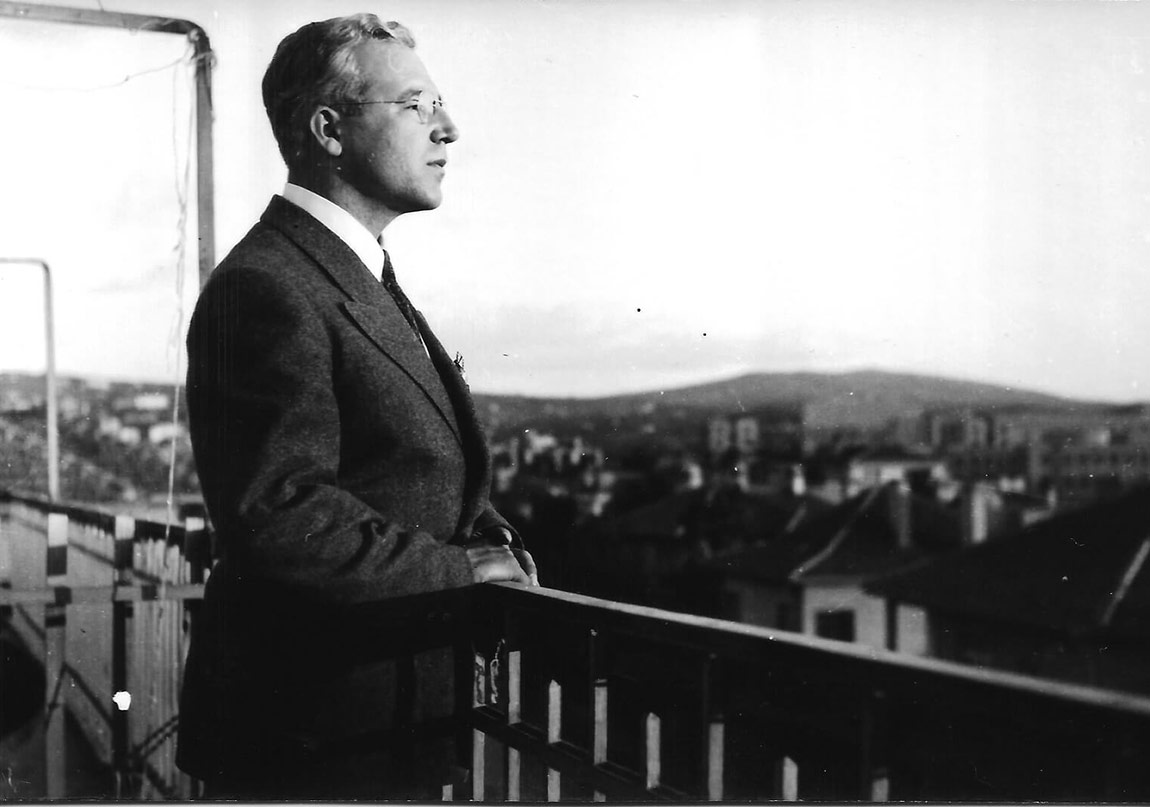
The guest list for the Second Congress of Czechoslovak Writers, which opened in Prague on 22 April 1956, includes two names: Nâzım Hikmet from Turkey and Icelandic writer Halldór Laxness. The proceedings confirm that both writers attended the same event 70 years ago. Congress proceedings, p. 35
The record does not tell us whether Hikmet and Laxness spoke privately or were friends. What we know is that both were at the congress. This connection offers a useful starting point for introducing Hikmet to Icelandic readers.
Finding Laxness and Hikmet at the same congress led us to take a closer look at the proceedings. During that research, we came across a striking assessment by Czech writer Jan Drda, speaking about artistic freedom and persecution:
“Pablo Neruda and Nâzım Hikmet, the two greatest poets of our time, are persecuted in their own countries.”
— Jan Drda, congress address, 22 April 1956. Translation: İzlandapedia. Congress proceedings, p. 51
“The two greatest poets” is Drda’s assessment. His words offer a glimpse of how writers in other countries saw Hikmet at the time.
Born in Salonika, Nâzım Hikmet Ran helped change the way poetry was written in Turkish. In Moscow, he encountered Russian poets who were experimenting with new forms. He moved away from traditional patterns of metre and explored different rhythms in Turkish. The Academy of American Poets places him among the major international poets of the twentieth century. Academy of American Poets: Nâzım Hikmet
Politics played an important part in his life. He was a communist and was politically active. He was arrested several times and spent years in prison after receiving a long sentence in 1938. An international campaign called for his release. He was freed under a general amnesty in 1950. Nâzım Hikmet Culture and Art Foundation: Biography
He left Turkey in 1951 and was stripped of his citizenship that year. He spent the rest of his life abroad. When he died in Moscow in 1963, he had not been able to return to Turkey. Missing his homeland became a major theme in his poetry. Nâzım Hikmet Foundation
Hikmet also wrote about his country through the lives of its people. He began Memleketimden İnsan Manzaraları, known in English as Human Landscapes from My Country, in 1941. The work aims to tell Turkey’s social history through different people’s stories. It combines poetry with techniques from fiction and screenwriting. Readers see a period of history through the eyes of the people living through it. Yapı Kredi Publications: The development of Hikmet’s poetry
His letters to Piraye show a more personal side. The letters she preserved span the years 1933–1950. Those written from prison describe waiting for news, sharing everyday life and missing someone. They remind us that the famous poet was also a person struggling with separation. Yapı Kredi Publications: Letters to Piraye
For readers new to Hikmet, Yaşamaya Dair, translated as On Living, is a good place to start. Here are its first two lines in the English translation:
Living is no laughing matter:
— Nâzım Hikmet, On Living. Translation: Randy Blasing and Mutlu Konuk. Source
you must live with great seriousness
Listen in English · On Living
A brief poetry excerpt followed by original commentary from İzlandapedia. AI narration.
English audio transcript
“Living is no laughing matter: you must live with great seriousness.” These are the opening words of Nâzım Hikmet’s On Living, translated by Randy Blasing and Mutlu Konuk. Here is our reflection. What makes this poem powerful is its refusal to give up on life, even when life becomes difficult. For us, it asks a simple question: are we only getting through our days, or are we truly paying attention to them? To the people we love. To the work we care about. To the small moments we might otherwise miss. Hikmet’s poetry can travel across languages because these questions belong to all of us.
Excerpt: Nâzım Hikmet, On Living. English translation by Randy Blasing and Mutlu Konuk. Commentary: İzlandapedia.
In this poem, Hikmet writes about the desire to keep living even when faced with ageing, illness and death. His example of planting olive trees at seventy is part of that idea. We can read it as an invitation to stay involved in life, even during difficult times. Read “On Living” in English
Readers in Iceland may recognise these feelings too. Someone living abroad may understand the homesickness; someone separated from a loved one may recognise the waiting. These shared experiences can bring Hikmet’s poetry close to readers who know little about Turkey.
The full English version of On Living is available free on the Academy of American Poets website. It was translated by Randy Blasing and Mutlu Konuk. Read the poem
Reading Hikmet today means thinking about how people continue to love, miss others and hope under difficult circumstances. His poems describe these feelings in a way that can feel close to our own lives.