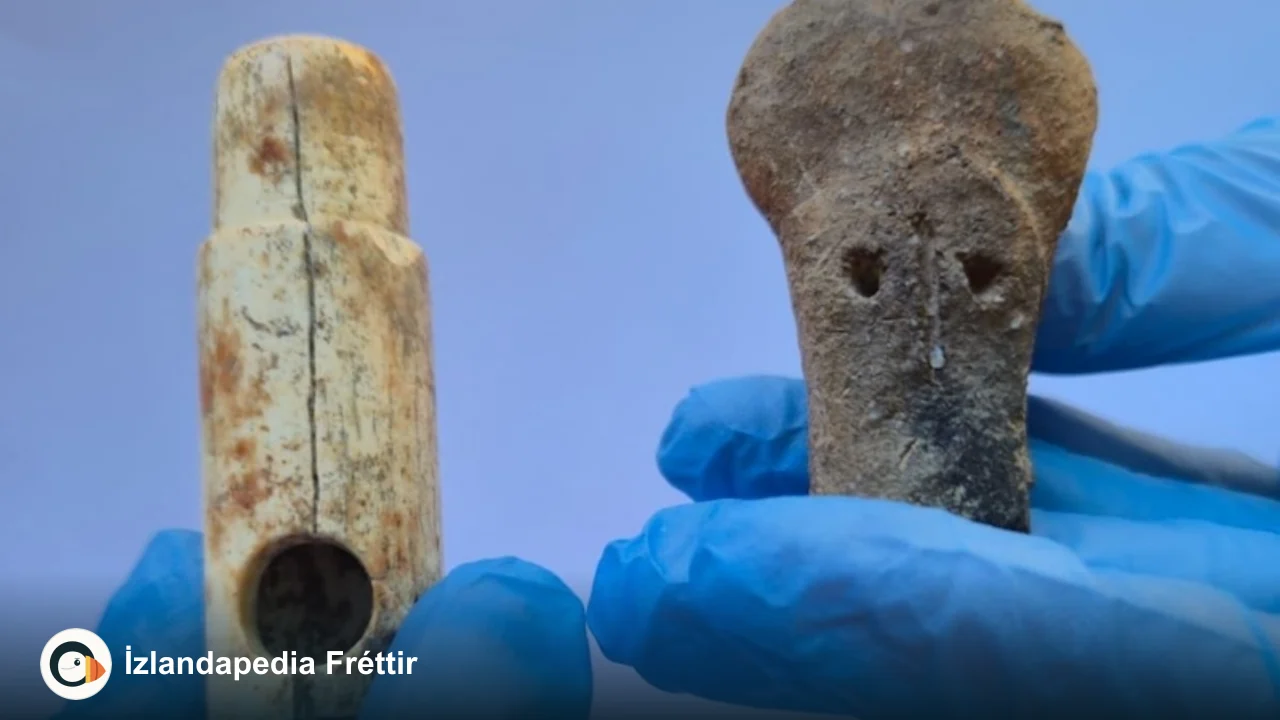
Troy brings to mind warriors, heroes and a wooden horse. Yet everyday life in the ancient city extended beyond those stories. A roughly 2,800-year-old bone flute found in Çanakkale, northwestern Türkiye, offers a tangible glimpse of the music once played there.
On 22 October, Culture and Tourism Minister Mehmet Nuri Ersoy announced that the 2026 excavations had uncovered both the flute and a human-shaped figurine head dating back around 4,500 years. The work is part of the ministry’s Heritage for the Future project.
A trace of the city’s musical past
According to the ministry, the flute was recovered from an Archaic-period settlement deposit. Its significance lies in being the first musical instrument reported from the long history of excavations at Troy.
Instruments made from organic materials such as bone, wood and reeds are difficult to preserve over thousands of years. The surviving portion gives researchers an opportunity to examine its construction and possible use.
What did it sound like?
That question remains unanswered in the information released so far. We do not know who played this instrument or which melodies they performed. Although music featured in ceremonies and social life in the period, the particular setting in which this flute was used has not been established.
An older human figure from the same excavation season
The human-shaped figurine head found near the Troy II city gate is around 4,500 years old. It belongs to the Early Bronze Age, long before the flute. Researchers expect the small object to help illuminate the period’s symbolic world and cultural connections in western Anatolia.
Found in the same year, the objects nonetheless come from different eras. The roughly 1,700 years separating them remind us that Troy was home to many generations, not just the setting of a single story.
We cannot hear this flute’s ancient melody today. But the object invites us to look beyond Troy’s battles: within those walls, there was music too.