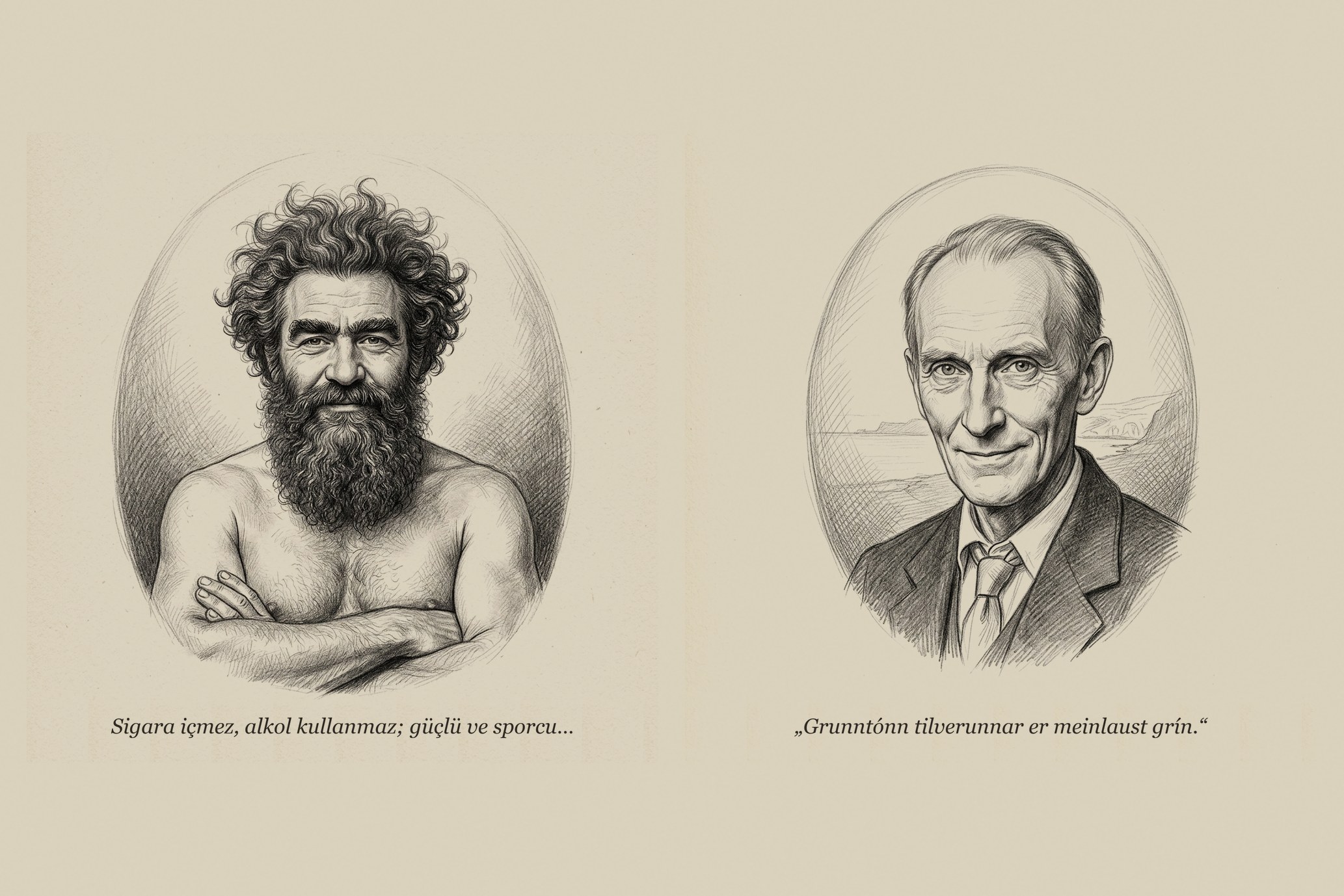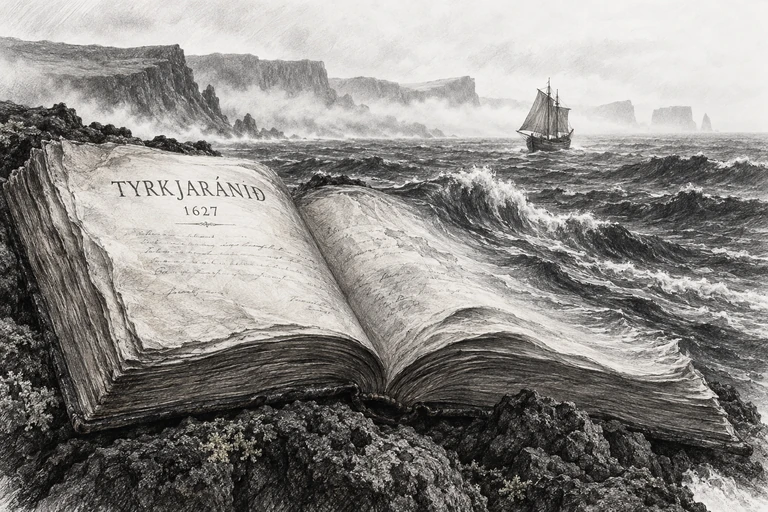
The closeness of those four years is a coincidence. What is not a coincidence is the choice both made: to build rather than borrow. In different centuries and for very different reasons, both countries had reached the same conclusion — a language that cannot name new things starts losing ground.
Reykjavík, 1965: the prophetess of numbers
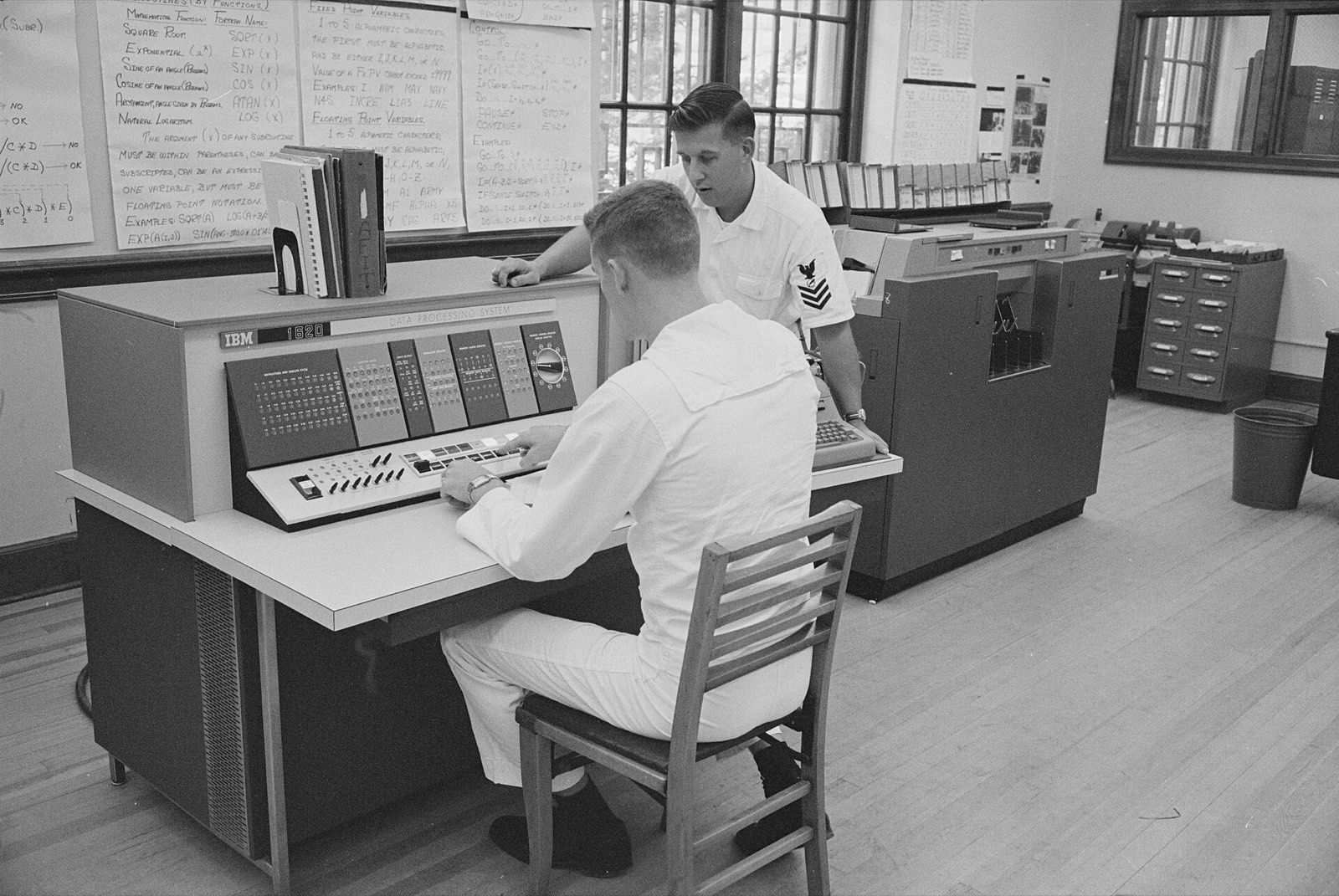
The University of Iceland received its first computer in December 1964 — an IBM 1620. The machine had arrived; the word had not.
Several candidates were in use: rafreiknir (electric calculator), rafeindaheili (electron brain), rafeindareiknir. Iceland’s Director of Health (landlæknir), Vilmundur Jónsson, suggested hjarni, meaning “brain”. Others simply said “computer”.
The answer came in an evening conversation. The meteorologist Páll Bergþórsson suggested the machine might be called vala, then corrected himself to valva. When this was relayed to Professor Sigurður Nordal, he corrected it again: “not valva, völva.” After a pause he added:
The word fuses two old ones: tala (number) and völva (a woman who sees the future, a seeress). Roughly: the prophetess of numbers.
Þorsteinn Gylfason, who was present, said the word was widely known within weeks and that every other candidate died. Sixty years later, the Icelandic word for computer is still tölva.
A habit, not a one-off
Icelandic does this constantly:
- sími (telephone) — from an old word for thread
- þota (jet) — from þjóta, to zoom
- myndband (video) — literally “picture band”
- alnæmi (AIDS) — roughly “total vulnerability”
Word-building is institutional work, carried out by bodies such as the Árni Magnússon Institute and by terminology committees. Icelandic even coined a word for “term” itself: íðorð, created by Guðmundur Finnbogason. The terminology committee of the engineers' association published its own glossary as early as 1928.
There is a reason for the effort. Written Icelandic has changed very little in eight hundred years. A reader today can follow a medieval saga to a large extent. The language is part of an identity built on that continuity.
Ankara, 1932: a reform by the state
In Türkiye the work began on a far larger scale and moved much faster.
On 12 July 1932, on Atatürk’s instruction, the Türk Dili Tetkik Cemiyeti (Society for Research on the Turkish Language) was founded. Its founders — Sâmih Rif’at, Ruşen Eşref, Celâl Sâhir and Yakup Kadri — were all members of parliament and well-known writers of the period. Sâmih Rif’at became its first president.
Its stated aim was:
The first Turkish Language Congress met at Dolmabahçe Palace from 26 September to 5 October 1932. The society was renamed in 1934 and became the Türk Dil Kurumu (Turkish Language Association) in 1936.
And a step back
This part matters, because it is the part usually left out.
A rapid purification movement began with the institution’s founding. But according to the Turkish Language Association’s own history, that movement ran until the autumn of 1935, when the practice of removing words that had already settled into everyday speech was abandoned.
The limit, in other words, was set by the language itself. Once people had adopted a word, the institution could not pull it back out.
Iceland has its own limit. Many Icelanders today say talva rather than tölva, inflecting it from tala instead. Vísindavefurinn, the University of Iceland’s science site, has had to answer this question several times over the years, and its verdict is clear: the correct form is tölva. The argument continues all the same. A decision taken around a table sixty years ago is still being reshaped by the people who speak it.
Ankara, 1969: a young engineer
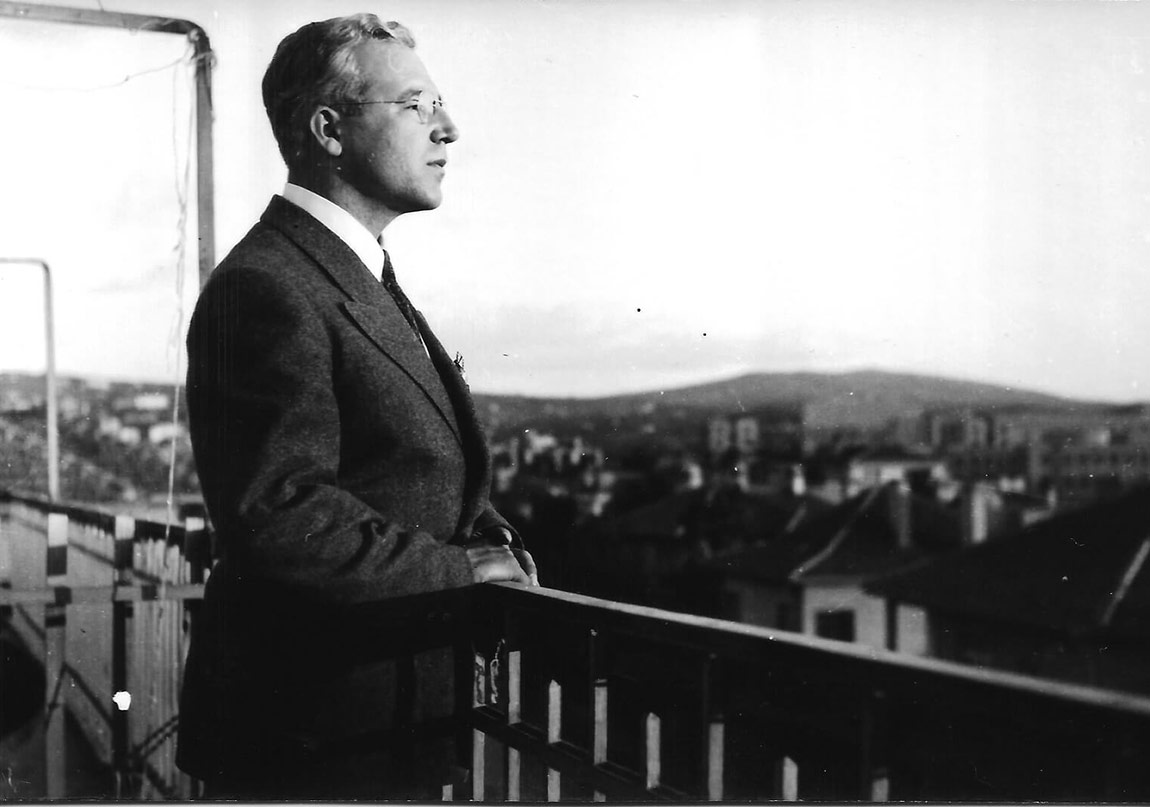
One name sits behind the Turkish word for computer: Aydın Köksal.
After his studies in Paris, Köksal returned to Ankara and became the founding director of the computing centre at the newly established Hacettepe University. The centre adopted a principle: Turkish equivalents would be found, and used.
He had already coined yazılım for “software” and bellek for “memory”. In the spring of 1969 came bilgisayar.
The word first reached the public in a tender notice: Hacettepe placed a newspaper advertisement reading “a bilgisayar system is to be leased”.
Köksal says he coined more than 2,500 terms. Among the examples he lists himself are bilişim (informatics), donanım (hardware), imleç (cursor), çıktı (output), yazıcı (printer), tarayıcı (scanner), etkileşimli (interactive), güvenilirlik (reliability) and çevrimiçi (online). He built bilişim from the root bil- through bilişmek, choosing it to express knowledge in motion.
At one point IBM asked him to find Turkish equivalents for 12,000 terms and gave him 90 days. He finished in 75.
Thanks to the aliens
What really carried the word to the public was unexpected: television.
Turkish state broadcasting had just started, and one of the most popular series was Star Trek. The show was full of computers. In Köksal’s own telling, aliens started saying “bilgisayar” before Turkish intellectuals did.
Not every word was welcomed. When Köksal proposed bellek for “memory” during his military service, a colonel objected: “Instead of a peasant word like bellek, shouldn’t we say hafıza?”
Two languages, two routes
The parallel is real, but they are not the same thing.
In Iceland the work is continuous, institutional and relatively quiet. A small country, a long continuity, committees moving by consensus. The language had not changed; the task was to keep it that way.
In Türkiye it was a reform: state-led, fast, political and contested. And it was not only words — the alphabet had changed in 1928. The break was far sharper.
What they share is the underlying belief: a language that cannot name new things will retreat. Both chose to build rather than borrow.
And both gave that machine a name of their own. One made it a prophetess of numbers. The other built it from knowledge — though Köksal himself says that what he meant was never simply “counting information”.
Two languages, two centuries, the same stubbornness.
Sources
Sources checked 9 October 2026. Dates come from the institutions concerned and from Aydın Köksal’s own accounts.
- Guðrún Kvaran, “Er jafnrétt að nota orðið tölva og talva?”, Vísindavefurinn, 20.10.2000
- Vísindavefurinn, further answers on the word tölva
- “Að tala og rita um tæknina á íslensku”, sky.is
- Turkish Language Association, official history
- Umut Erdem, interview with Aydın Köksal, Hürriyet, 5 March 2006
- “Türkiye’de bilgisayarı kim buldu?”, Habertürk
- Timur Sırt, “Bilgisayar kelimesi 50 yaşında”, Sabah, 14.4.2019
- Wiktionary (Turkish): “bilgisayar”
İzlandapedia · Independent Iceland guides and news. This feature is based on institutional sources and interviews.