The raiders and their identities
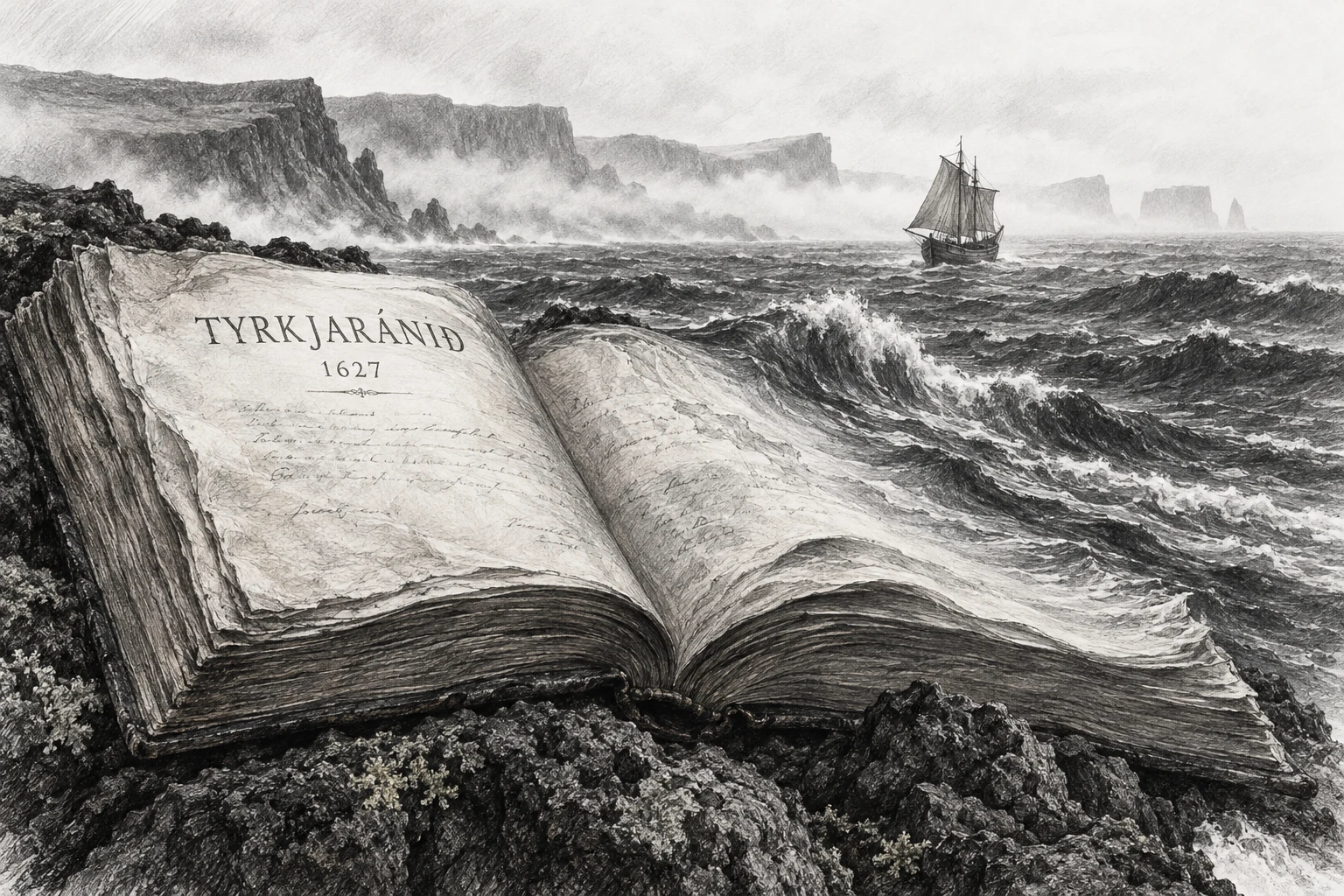
In the summer of 1627, corsairs attacked Iceland’s shores, taking hundreds of people captive and killing dozens. The disaster became known as Tyrkjaránið, the “Turkish raid”. Yet the name of an event does not establish the ethnic identities of its perpetrators. That distinction matters both for understanding the attacks and for examining the meanings subsequently attached to the word “Turk”. [1]
Historical research associates the Murad Reis who led the Grindavík raid with the Dutch-born Jan Janszoon van Haarlem. His conversion to Islam and adoption of the name Murad Reis did not change his Dutch origins. Scholars also distinguish between different captains bearing that name; all the attacks of 1627 cannot simply be assigned to a single commander. [2]
The raiders sailed from Salé in Morocco and Algiers. Salé was outside the Ottoman Empire, while Algiers belonged to the Ottoman political sphere. A port’s political allegiance, however, does not establish its sailors’ ethnic origins. Historian Þorsteinn Helgason considers northern European converts to Islam likely to have been the largest and most active group among the raiders in Iceland. This is a historical assessment, not a complete crew census. [3] [4]
The sources examined for this article did not establish a named individual as both ethnically Turkish and a participant in the 1627 raids. Since the identities of all crew members have not been determined, the categorical claim that no ethnic Turk participated cannot be established either. Missing records are not evidence of Turkish participation. Nor can the event’s name assign collective responsibility to a people.
When “Turk” also meant Muslim
Understanding the name Tyrkjaránið requires attention to the contemporary meaning of “Turk”. Helgason explains that the word was used for centuries as a broad designation for Muslims around the Mediterranean. Moroccans could therefore be called “Turks” despite living outside Ottoman rule. Religious affiliation, political allegiance and origin overlapped in this vocabulary. Reading every historical instance of “Turk” as a modern ethnic classification changes the meaning of the sources. [3]
Hostility before the raids
Anti-Turkish discourse in Iceland did not begin in 1627. According to Helgason’s 2021 study, a hymn written by Martin Luther in 1541, presenting the Turks as a threat, appeared in Icelandic hymnbooks from 1555, seventy-two years before the raids. [5]
A prayer book printed at Hólar in 1607 likewise portrayed the Turk as a cruel tyrant and the chief enemy of all Christendom. This religious language cast Turkish or Muslim identity as a collective enemy twenty years before the attacks. It cannot be explained solely as a reaction to them. [5]
The chronology supports the interpretation that the raids were understood through an existing image of an enemy. It does not, by itself, establish an uninterrupted line of transmission from those religious texts to every later insult.
The words and their meanings
Dictionaries and dated publications document several derogatory uses of the name “Turk”:
| Word | Meaning and documented use |
|---|---|
| hundtyrki | Combines “dog” and “Turk”, approximately “dog-Turk”. The Árni Magnússon Institute’s dictionary explicitly identifies it as a racial slur against Turks or Muslims. [6] |
| Tyrkjadjöfull | Combines “Turk” and “devil”, approximately “Turkish devil”. Tyrkjadjöful is an inflected form of the same word. In the 2006 and 2012 examples below, it functions as a racist insult directed at Turkish identity. [8] [9] |
| Tyrki | Ordinarily means “Turk”. The Kollsvík local word collection also records its use as an insult for a rough or bullying person. This is a local lexical record, not evidence that every use of the word is insulting. [7] |
Documented uses in the twenty-first century
These expressions occur beyond historical texts. A 3 August 2006 report in Vísir states that footballer Hjörtur Hjartarson acknowledged calling Guðmundur Viðar Mete Tyrkjadjöful during a match on 23 July. The word was directed at a living person, rather than quoted from an old document. [8]
In a 30 November 2012 NBA Ísland article, criticism of Ersan İlyasova’s performance and earnings includes a reference to Tyrkjarán and then calls him Tyrkjadjöful. At that point, criticism of sporting performance becomes a racist insult targeting Turkish identity. [9]
These records demonstrate use in the twenty-first century. This article has no representative data measuring how frequently the expressions are used in 2026. The documented insults are real; treating them as the shared attitude of Icelandic society would go beyond the evidence. Nor is the historical event name Tyrkjaránið itself an insult in every context.
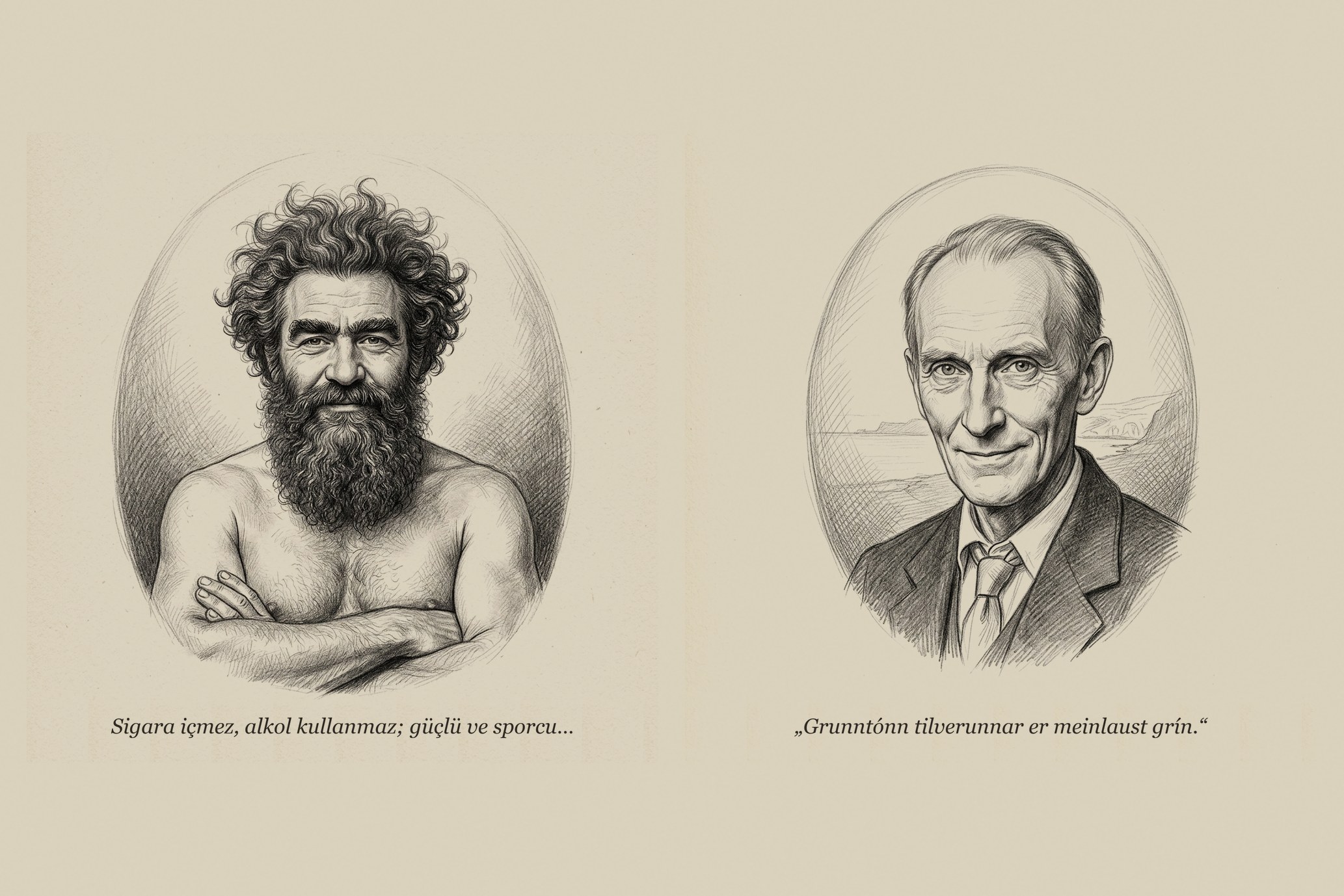
Recognising the suffering of those taken captive in 1627 and rejecting collective blame directed at Turks today are compatible responsibilities. Historical accountability concerns documented people and actions; it cannot be inherited through a people’s name. A democratic, multicultural society must also recognise and reject racist insults directed at Turkish identity.
İzlandapedia · A source-based history and culture feature.
Suggest a correction or share feedback