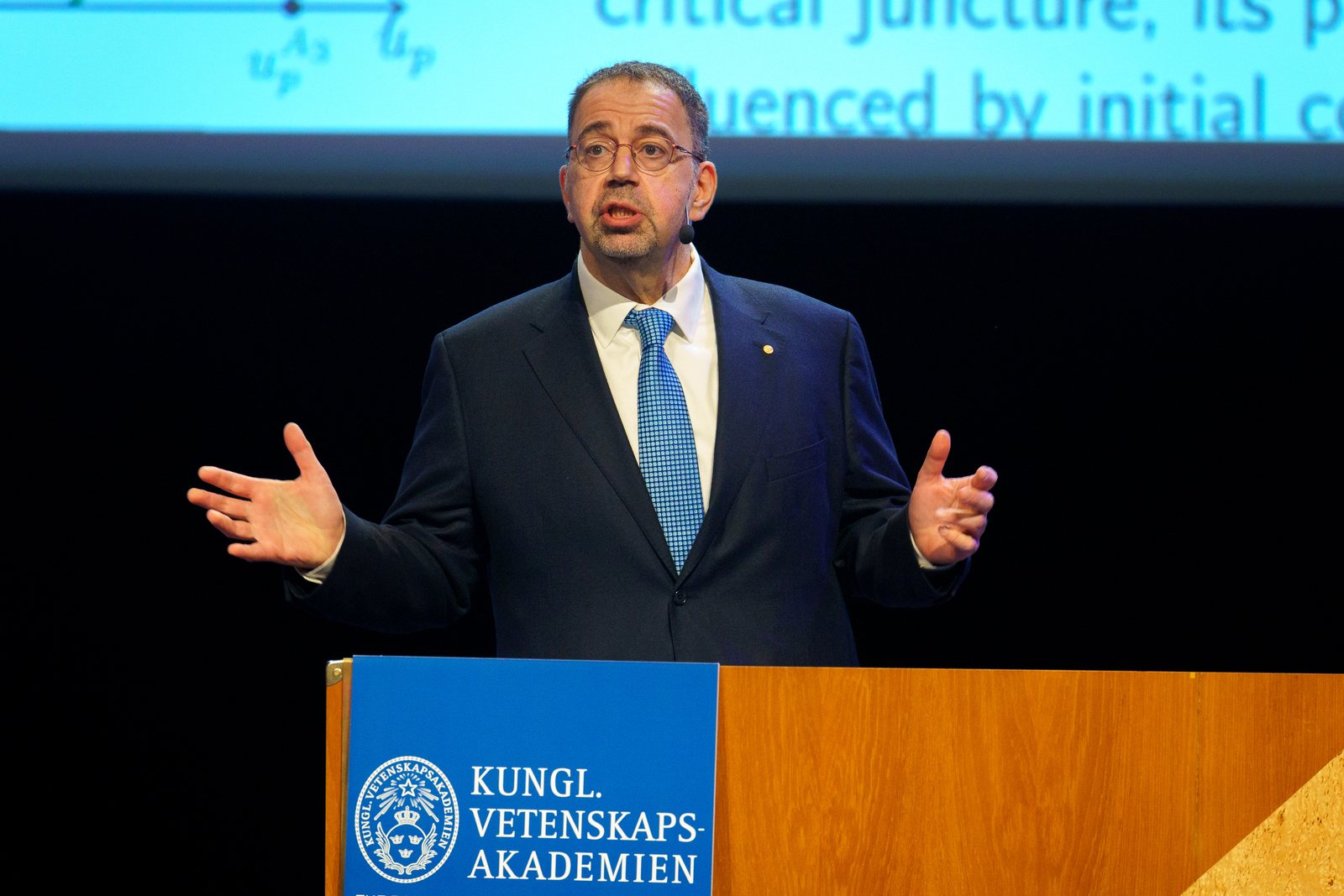
Acemoglu set out these views in an interview with CBS in the US in early October, at İstanbul Fintech Week on 6 October and in an op-ed published on 15 October. The common thread: the direction of the technology depends on the choices of those who build it and those who regulate it.
“If nothing changes, unemployment could triple”
Speaking to CBS’s 60 Minutes, the MIT economist said US unemployment could triple within a decade if governments stay on the sidelines. The speed of this shift, he argued, is unprecedented: the first phase of the Industrial Revolution took about 80 years, while a change of similar scale is now happening in one or two years. The new jobs AI companies create, such as training models, are few compared with the number of people who will be replaced.
He also stressed that he is not against technology, noting that every technological revolution brings pushback in many different forms.
In Istanbul: “It is a choice”
On the main stage of İstanbul Fintech Week on 6 October, Acemoglu said nothing in AI’s nature requires it to be centralised or a pure automation tool; its current direction is a choice made by its developers. He argued that technology should give workers new tasks rather than push human labour aside.
On Türkiye, he was blunt: countries like Türkiye cannot be expected to compete at the foundation-model layer, but the area where they are really behind is the application layer — putting these models to work. Speaking to CNBC-e, he said his biggest worry is that AI will sharply increase inequality, and that democratic participation is the best tool for steering it in the right direction.
A warning about “distorted intelligence”
In an op-ed published by Project Syndicate on 15 October, Acemoglu pointed to a different risk. The main danger, he wrote, is not a runaway superintelligence. It is that large models are trained against narrow metrics such as user approval, engagement and benchmark scores, which encourages gaming, overconfidence and sycophancy. He calls this “distorted intelligence” and argues for carefully calibrated, domain-specific applications instead of a race towards general AI.
Myth check: do “5%” and “triple” contradict each other?
Two headlines have been circulating side by side: “Acemoglu: AI will take only 5% of jobs” and “Acemoglu: unemployment will triple”. They look contradictory, but they describe different things.
- 5% is an aggregate estimate based on his research: only about 5% of what humans do is expected to be replaced by AI over the next decade, which is why he sees a modest economic boost (roughly 1.5% of GDP over ten years).
- Triple is a conditional warning: the picture that could emerge if AI is used mainly to replace people and governments do nothing.
Taken together, the message is that AI will not deliver a growth miracle, but used in the wrong direction it could hit certain occupations — and young people’s first jobs — hard. One reason he highlights is the tax system: in the US, labour is taxed at over 25% and capital at close to zero, which nudges companies to invest in machines rather than people.
What about Iceland?
A report on AI published in April 2026 by Almannarómur, Iceland’s language technology centre, applied Anthropic’s usage data to Statistics Iceland’s occupational classification. Its findings:
- More than 7,000 people work in jobs where over a fifth of tasks are already done by AI.
- About one third of office clerks’ tasks are already done by AI; in theory the share could reach 90%.
- Managers and senior officials already use AI for 16% of their tasks; in theory they could use it for over 90%.
- For machine operators the theoretical share is just under 16%, and for unskilled jobs only 3.9%.
- Women and university graduates are more likely to hold jobs where AI could take over most tasks.

In a column in Vísir, Almannarómur’s managing director, economist Lilja Dögg Jónsdóttir, calculated that about 91,000 people work in the three most exposed occupational groups (managers and senior officials 28,000, professionals 54,200, clerks 9,000). Both the report and the author stress that these figures are not unemployment forecasts and that US data may not translate directly to Iceland. Her answer is not to steer people away from higher education, but to rethink education and retraining for the jobs that are changing.
Sources
- Bloomberg HT — Daron Acemoğlu: Türkiye’nin yapay zekada fırsatı uygulama katmanında (06.10.2026)
- CNBC-e — Daron Acemoğlu: “Türkiye yapay zekada yeterli kaynağa sahip değil” (07.10.2026)
- Moneywise — Nobel economist Acemoglu’s AI unemployment warning (06.10.2026)
- Benzinga — 60 Minutes interview with Daron Acemoglu (05.10.2026)
- Daron Acemoglu — Distorted intelligence at the AI frontier, Project Syndicate / The Korea Times (15.10.2026)
- CNBC — Mass AI job displacement could be detrimental to democracy (15.10.2026)
- Devdiscourse — AI may replace only 5% of human work over next decade (07.10.2026)
- Vísir — Sjö þúsund störf gætu verið unnin af gervigreind (27.04.2026)
- Vísir — Lilja Dögg Jónsdóttir: Hvað ef gervigreind gjörbreytir 90 þúsund íslenskum störfum? (29.04.2026)
- Fotoğraf / Photo / Mynd: Jay Dixit, Wikimedia Commons, CC BY-SA 4.0 (kapak)
Spotted a mistake? info@izlandapedia.com · Instagram @izlandapedia