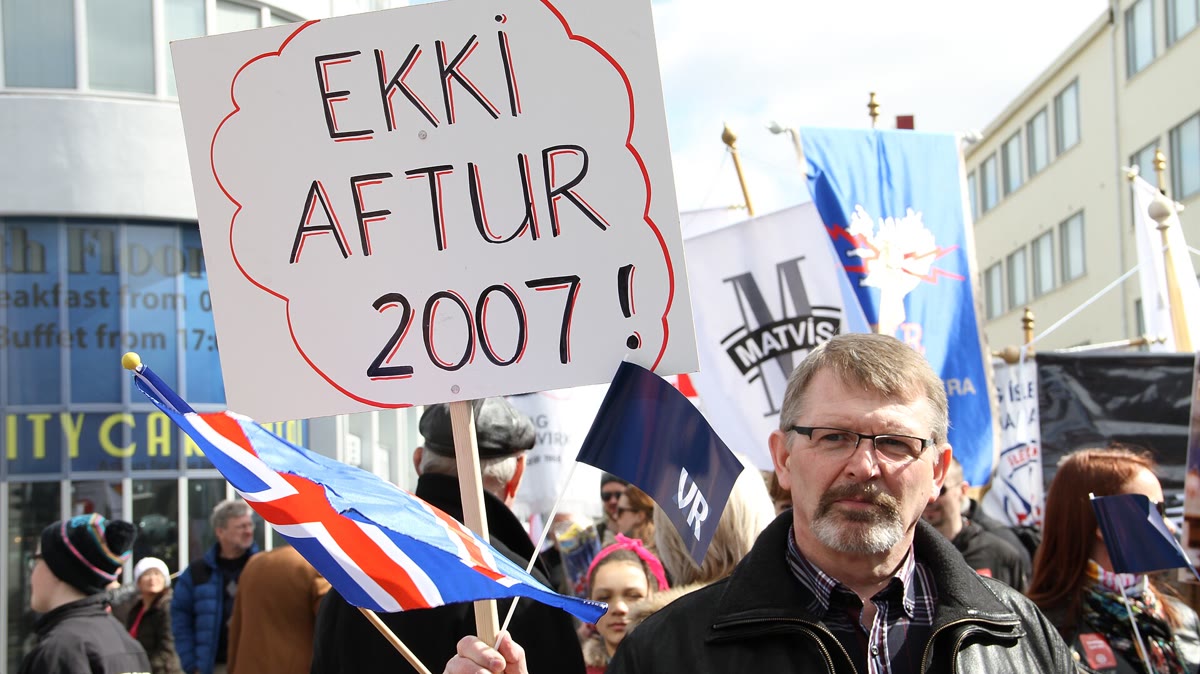
According to figures published today by Statistics Iceland (Hagstofa Íslands), seasonally adjusted unemployment stood at 5.7% in September, with about 15,300 people looking for work. That is down 1.1 points from 6.8% in August. Compared with a year earlier, however, the picture is different: unadjusted unemployment rose from 3.2% in September 2025 to 5.1%, and the employment rate fell by 3 points.
Registered unemployment at the Directorate of Labour (Vinnumálastofnun) points the same way: 4.0% in September (8,226 people), against 3.5% a year earlier. The directorate expects 4.2–4.3% in October.
Why the forecasts missed
In November 2025, Statistics Iceland expected unemployment to “peak at 4.3%” in 2026. In reality, the quarterly average reached 7.3% in the first three months of 2026 and 6.5% in the second quarter. Forecasts were raised again and again: the Central Bank (Seðlabanki) expected 4.8% for 2026 in February; the Icelandic Confederation of Labour (ASÍ) forecast 5.8% for this year in October.
Several shocks lie behind the rise: the collapse of airline Play in September 2025 left about 400 people jobless and hit tourist numbers; in October 2025 production at the Grundartangi aluminium smelter was largely halted; and high interest rates slowed construction. Holding its rate at 8% on 7 October, the Central Bank said economic activity was “clearly slowing”.
On 8 October, alongside the new wage agreements, the government said it would prepare a contingency plan “against rising unemployment” by the end of the year. Statistics Iceland stopped publishing economic forecasts at the start of 2026; the government now bases its budget on the Central Bank’s forecast.
Who is hit hardest?
Source: Statistics Iceland
- Young people: unemployment among 16–24-year-olds reached 17.3% in the second quarter of 2026, up from 7.6% a year earlier. One in six young people is looking for work.
- Sectors: the rise is largest in construction and tourism. September’s mass-layoff notices were concentrated in software, construction and fish processing.
- Region: the highest rate is in Suðurnes (5.4%).
- Long-term unemployment: the number unemployed for more than a year rose from 1,580 to 1,743.
- Citizenship: registered unemployment is 7.8% among foreign citizens and 2.6% among Icelandic citizens. On 2 March, Prime Minister Kristrún Frostadóttir told parliament that Iceland was dealing with “a two-tier labour market”: unemployment was 10% among foreign citizens at the time and “barely measurable” among Icelandic citizens.
What has been tightened meanwhile?
- Unemployment benefits: since 1 July, new claimants can receive benefits for 24 months instead of 30. Since 1 September, qualifying requires at least 7 months of work instead of 3.
- Student permits: under a law in force since 8 July, non-EEA students must complete at least 75% of a full course load before each renewal and may work up to 60%. The post-graduation job-seeking permit has been cut from 3 years to 18 months, and diploma students have lost work and family rights. Tuition fees for non-EEA students at public universities start in 2027–28.
- Residence permits (draft): a draft opened for consultation on 1 October proposes raising the residence requirement for permanent residence from 4 to 6 years.
The government does not justify these changes by unemployment. Justice Minister Þorbjörg Sigríður Gunnlaugsdóttir said the student-permit changes aim to “curb misuse of the residence permit system”, and that in many areas Iceland’s rules have been “milder than our neighbours’”. The shorter benefit period is meant to encourage a return to work. Student-permit applications rose by 40% in 2025; in 2026 they have fallen significantly.
A note on the numbers
Immigrant response to Statistics Iceland’s labour force survey rose from about 17% to 41% after November 2025, and the agency re-estimated the survey weights. Part of the year-on-year rise may therefore come from the change in method. Registered unemployment is not affected by this change and shows a more moderate rise (3.5% → 4.0%).
Opinion · Álit
Honesty in Politics Means Saying the Hard Truths Too
I welcome Prime Minister Kristrún Frostadóttir’s decision to draw attention, in a speech to parliament on 2 March 2026, to Iceland’s “two-tier labour market”. Describing the situation that day, Frostadóttir said that unemployment among foreign citizens was around 10 percent, while among Icelandic citizens it was, in her words, barely measurable. Pointing out that consumption remained strong despite high unemployment, she acknowledged that conventional economic policy affects people in different ways.
What I value in this statement is the effort to stay objective when assessing the economic picture. Understanding a country’s economy also means looking at what the numbers mean for different parts of society. Consumption can remain strong across the country while, in the same country, some people face serious difficulties finding work, earning an income and planning their future. Being able to see both of these realities together is the mark of a responsible political approach.
It matters to me that a sitting prime minister, when describing her country’s economic problems, openly names the hardship faced by foreign citizens. This stance makes room for everyone’s lives within the economic picture presented to the public. It ensures that the people behind the headline figures are seen too.
As someone who lives and works in Iceland, I feel close to this statement. I believe the experiences of people trying to build a life here should be taken into account when the country’s economic situation is assessed. A person’s wish to work, their effort to make a living from their labour, and a correct public understanding of the obstacles they face are also valuable for their trust in society.
This is exactly what I expect from an honest politician: to assess the data as a whole, to name problems clearly, and to acknowledge that economic developments do not affect everyone in the same way. In my view, political honesty also shows in the figures a leader uses, the distinctions they make and the problems they choose to highlight.
Unfortunately, I cannot say that I encounter this kind of openness in politics often enough. That is why, when I see such an attitude, I feel it is necessary to express my appreciation. Acknowledging behaviour we find right and honest strengthens public debate just as much as criticism does. We must keep the same objectivity we expect from politicians when we assess them.
In my eyes, Frostadóttir’s statement is an example of a sincere and responsible political attitude. Taking into account the hardship faced by foreign citizens when reading unemployment rates and the economic situation meets my expectation of an honest politician. I hope this approach will be followed by concrete steps.
I commend Kristrún Frostadóttir for clearly seeing and speaking about the hardship foreigners face within the economic picture. Being able to tell the truth as a whole is one of the basic conditions for earning trust in politics.
This article reflects the personal view of its author.
Sources
- Hagstofa Íslands, 21.10.2026 — Vinnumarkaðurinn í september 2026
- Hagstofa Íslands, 4.9.2026 — Vinnumarkaðurinn á 2. ársfjórðungi 2026
- Hagstofa Íslands — Vinnumarkaðurinn á 1. ársfjórðungi 2026
- Hagstofa Íslands, 14.11.2025 — Þjóðhagsspá í nóvember 2025
- Hagstofa Íslands — Vinnumarkaðurinn í febrúar 2026
- Vinnumálastofnun, 9.10.2026 — Skráð atvinnuleysi í september var 4,0%
- Seðlabanki Íslands, 4.2.2026 — Peningamál í hnotskurn
- Seðlabanki Íslands, 7.10.2026 — Yfirlýsing peningastefnunefndar
- Stjórnarráð Íslands, 8.10.2026 — Aðgerðir ríkisstjórnar vegna kjarasamninga
- Alþingi, 2.3.2026 — Ræða forsætisráðherra: Aðgerðir í efnahagsmálum
- Stjórnarráð Íslands, 18.6.2026 — Hert skilyrði námsleyfa samþykkt á Alþingi
- Útlendingastofnun, 8.7.2026 — Nýjar reglur um dvalar- og atvinnuleyfi taka gildi
- Stjórnarráð Íslands, 1.10.2026 — Skilyrðum breytt og ríkari kröfur gerðar til umsækjenda
- Vinnumálastofnun — Lagabreytingar frá 1. júlí 2026
- Vinnumálastofnun — Breytingar á lögum um atvinnuleysistryggingar
- Ísland.is — Atvinnuleysisbætur: upphæðir og útreikningur
- RÚV, 2.10.2026 — Þungur vetur framundan á vinnumarkaði
- Útlendingastofnun — Mikil fjölgun umsókna um dvalarleyfi fyrir námsmenn
Spotted a mistake? info@izlandapedia.com · Instagram @izlandapedia