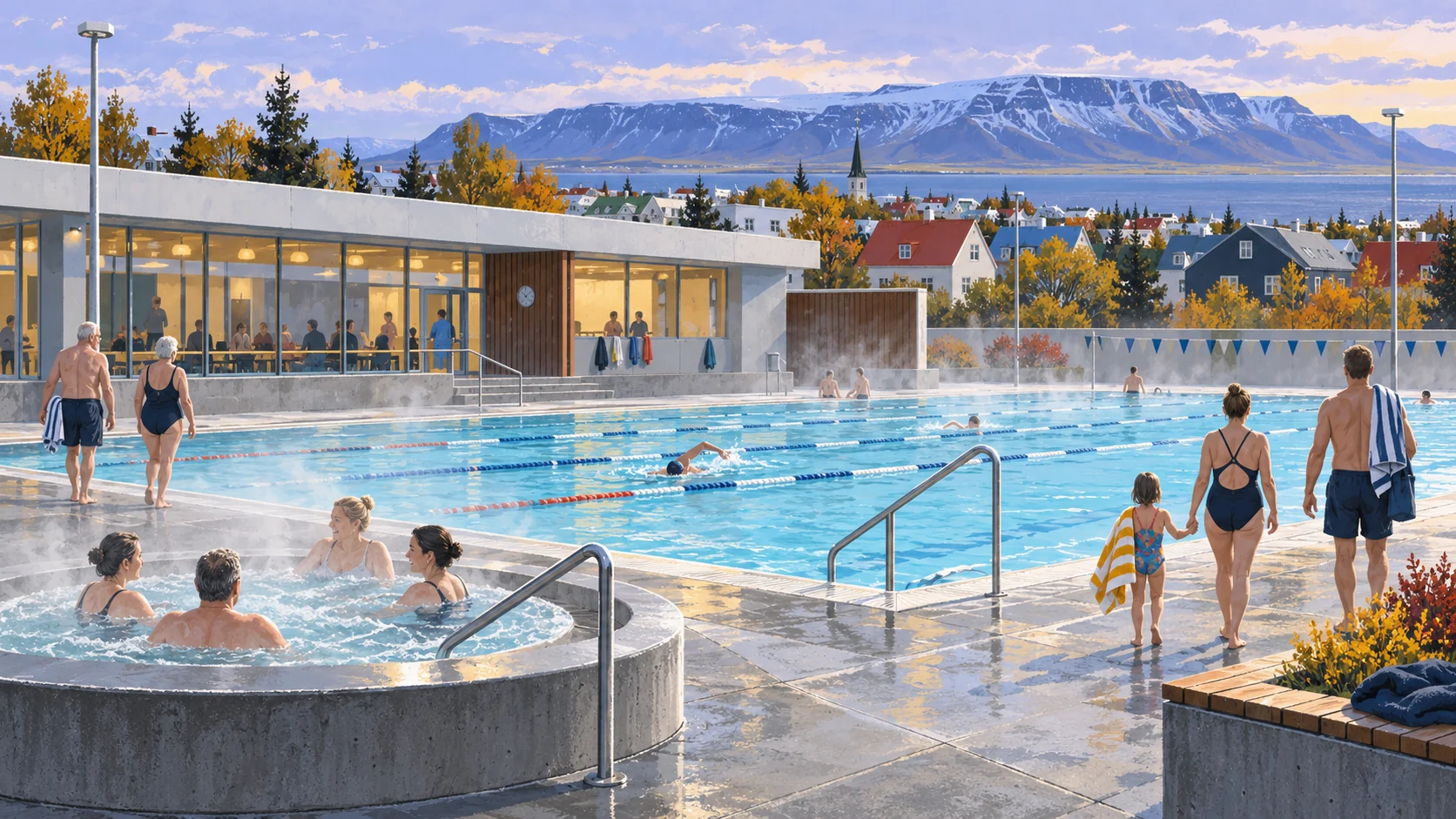
A swimming lane, a children’s pool and a hot tub offer different ways to spend an afternoon. That variety helps explain the importance of the neighbourhood sundlaug, the Icelandic word for swimming pool. People share a place without all doing the same thing.
The pool forms part of a town’s social infrastructure. An ordinary visit becomes a repeated habit; its cultural value grows through participation and the ability to keep coming back.
A living tradition receives recognition
On 11 December 2025, Iceland’s swimming pool culture was inscribed on UNESCO’s Representative List of the Intangible Cultural Heritage of Humanity. Reykjavík City dates the nomination to March 2024 and describes preparatory work led by the National Museum of Iceland, following earlier work by the Árni Magnússon Institute for Icelandic Studies. Pool users, associations and municipalities took part.
The recognition concerns a living practice. It does not place every pool building on the World Heritage List. Its significance lies in what people do together, how those habits are passed on and whether others can join in.
Room for conversation and quiet
UNESCO describes community-run pools as social meeting places and hot tubs as settings for informal debate. A heitur pottur is a hot tub; pottar is the plural. The term has a social meaning alongside its physical one.
Privacy helps that shared space work. Reykjavík’s pool FAQ explains the photography ban partly through respect for people who do not want images of themselves in swimwear shared online. Other visitors remain fellow participants. The national Lifandi hefðir inventory also records people coming for quiet and time alone.
Learning the habit, as well as the strokes
The Lifandi hefðir heritage inventory traces part of this history to youth associations building pools, often through volunteer work, in the early twentieth century. It records swimming becoming a compulsory school subject nationwide in 1940. Daily pool life developed alongside the practical need to learn to swim.
Today’s national curriculum connects swimming with safety, hygiene and helping oneself or another person in the water. Family visits provide another route into the tradition, as UNESCO explains. A child learns a skill and how to use a place with others: when to play, listen and leave space.
Source 3 · Source 4 · Source 1
Warm water becomes a public service
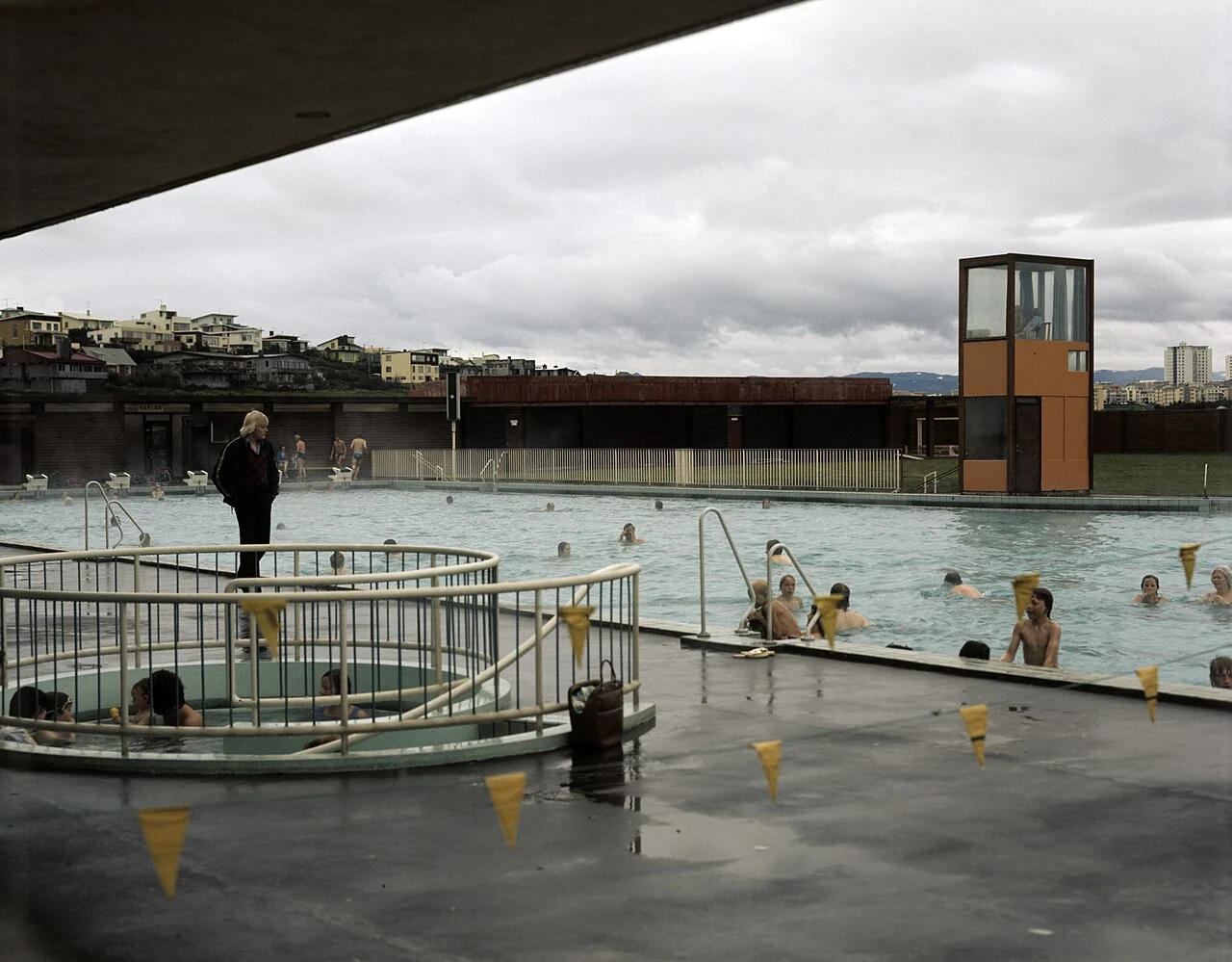
Geothermal heat makes much of this outdoor pool life possible. The official Visit Iceland guide says geothermal energy heats nearly every swimming pool in Iceland. Local swimming culture depends on infrastructure and public choices as well as natural hot water.
Reykjavík operates pools at eight sites throughout the year, according to its municipal overview. The link between heat and heritage becomes clearer when people can return regularly. An annual routine can accommodate a winter swim as readily as a summer family visit.
Heritage also has an admission price
Access is part of the cultural story. A Reykjavík City announcement dated 4 May 2026 set out changes effective the next day: the adult annual pool pass fell from ISK 48,000 to ISK 34,000. Children and young people aged 17 and under with legal residence in Reykjavík gained free access to city pools and the geothermal beach. That residence condition matters.
When planning a visit, check the city’s current fee schedule and the relevant eligibility category. Free youth access does not cover every visitor aged 17 or under. A published price and a person’s entitlement need to be read together.
Physical access varies between pools and facilities. Check the city’s pool-by-pool details of private changing rooms, lifts and other features; it currently notes construction at Klébergslaug. Inclusion needs practical provision and maintenance. Affordable entry and usable facilities give the idea of a welcoming public space substance.
Joining in starts before entering the water
For newcomers, learning the routine is a useful first step. Reykjavík’s guidance asks visitors to remove shoes before the changing area, use a locker and wash thoroughly with soap without swimwear before putting it on. Bring a towel and swimwear, or ask about rental. Staff can explain changing facilities and local rules.
Then let the visit take its own pace. Follow posted rules, respect privacy and allow both conversation and silence. The editorial lesson of UNESCO’s recognition is simple: ordinary habits deserve care. Each considerate visit helps the shared setting remain usable for the next person.
Common questions
Are individual pool buildings UNESCO World Heritage Sites?
This inscription recognises Iceland’s living swimming pool culture on UNESCO’s intangible heritage list. It does not designate every pool building as a World Heritage Site.
Is swimming free for all children visiting Reykjavík?
Children aged 0–9 enter free with a guardian under the current tariff. For ages 10–17, free access with registration applies to those with legal residence in Reykjavík; other visitors pay ISK 400 for a single admission. Check supervision rules separately.
Must I shower without swimwear?
Yes. Reykjavík’s guidance requires a thorough wash with soap without swimwear before entering the pool. Ask staff about private changing facilities if needed.
Sources and verification
Sources checked on 4 October 2026. This feature explains the 2025 inscription; it does not report a new UNESCO decision. Fees and facilities may change.
- UNESCO — Swimming pool culture in Iceland (02249)2025 inscription and the scope of the recognised practice.
- Reykjavík — 11 December 2025Decision date, March 2024 nomination and the institutions involved.
- Lifandi hefðir — Sundlaugamenning á ÍslandiSchool swimming history and everyday practice; 2023 inventory.
- Aðalnámskrá — Skólaíþróttir (2024)Current swimming, safety and hygiene learning goals.
- Visit Iceland — Swimming pool culture in IcelandGeothermal heating and the cultural setting of pools.
- Reykjavík — Updated fee schedule (4 May 2026)Annual fee and residence-based access changes effective 5 May.
- Reykjavík — Fees for swimming poolsAdmission, age categories, card fee and multi-visit terms; checked 4 October 2026.
- Reykjavík — Swimming pool accessibilityPool-specific access and private changing facilities.
- Reykjavík — Safety and conduct rulesWashing, supervision and phone/camera rules.
- Reykjavík — How do I go swimming?First-visit routine and practical preparation.
- Reykjavík — City poolsEight municipal sites, hours and service links.
- Reykjavík — Swimming pool FAQPrivacy rationale for the photography ban; fees come from the separate current tariff.
İzlandapedia · Independent guides and news. This feature draws on official sources; it does not contain on-site interviews.