
İzlandapedia · Podcast
Weekly Roundup
With Özgür Akın
Life in Iceland from the inside. News, culture and human stories: an island’s joys and difficulties.
A week in Iceland: Harbours, home deposits and hungry birds
Episode 2: A week in Iceland
2–9 November 2026: Akureyri Hospital, nursing, immigration waiting times, prejudice on social media and Iceland Airwaves. A conversation about the good and difficult sides of life in Iceland. In respectful memory of my father, Kemal AKIN.
Our editor wrote and reviewed this episode’s script. AI-assisted narration was used.
Read the episode transcript
Hello, and welcome to İzlandapedia’s weekly conversation.
“What is life in Iceland like?”
It is one of the questions we hear most often.
In my account, you will not find the exaggerated, picture-perfect Iceland you see on social media. Life here is more than those images.
We will talk about the beautiful and the ugly. We will describe what is going well and what is not. Alongside nature, music and a good meal, we will look at the struggle to make ends meet, public services and how people treat one another.
Loving a place does not mean having to make everything about it look good.
This week, we will discuss healthcare, the wait for immigration applications and the human side of building a life here.
Akureyri Hospital was in the healthcare news.
Management’s assessment points to a funding gap of around two billion Icelandic krónur by the end of 2026, including the amount carried over from the previous year. Particular emphasis is placed on the gap between staffing costs and the funding available to meet them.
That statement does not mean the hospital is closing or that all appointments have been cancelled. But patients could be affected if extra funding is not provided and service capacity is reduced.
Having a medical appointment where you live is not the same as having to travel to another city. You may need to arrange travel, someone to accompany you and time off work.
A hospital budget is therefore more than a spreadsheet. Behind those figures are patients, families and staff.
After our report about nurses, a question arrived from Türkiye: “Can I apply too?”
Yes, if the necessary requirements are met. But this is not a story of a guaranteed job and an easy move.
Assessment of your degree, professional licensing, a job offer and the required immigration permissions are separate stages. Completing one does not automatically resolve the others.
Language and housing preparation matter too. Landspítali says it offers Icelandic lessons to international staff, but also makes clear that it does not provide housing for employees.
So do not ask only about the salary. Discuss where you will live, your rent, your shifts and the support you will receive.
This is the part often missing from short social-media videos. Showing an opportunity is easy; explaining all its conditions takes more work.
The Directorate of Immigration’s processing times were also on our agenda.
The Parliamentary Ombudsman is questioning how well the published figures reflect the actual wait. In particular, the question is whether processing times calculated only from approved applications give a realistic picture.
That may sound like a technical debate. But for someone waiting for an application, it is very concrete: being able to see the way ahead.
Being able to plan work, family life and the future.
When uncertainty drags on, it is not only a file that waits. A person waits too.
Another issue we have been examining is degrading content on social media.
We looked at comments about a person whose visit and statements had caused controversy.
That person’s words can be criticised. Responsibility for those words lies with the speaker. What saddened me was the way the discussion moved away from those statements and towards people the commenters did not know: the collective humiliation of Muslims, immigrants or people from other countries.
Immigration policy, religion and politics can all be criticised. But fear or anger cannot justify degrading people.
Reading those comments genuinely upset me. As someone who has made friends with people of different faiths, I find it difficult to accept how easily people turn one another into enemies without knowing each other.
That is why we included Elif Şafak’s speech. It prompted us to think about how little we see of a person when we judge them only by their religion or country of birth.
Our aim was not to win an argument. It was to refuse to remain silent as humiliation becomes normal.
If we describe life in Iceland, we will also describe this behaviour when we encounter it.
Iceland Airwaves was part of the week too.
Alongside the festival linking different venues across Reykjavík, free concerts were announced. For example, the programme at 12 Tónar on 5, 6 and 7 November was free.
I think that matters. Life in a city should not be only work and bills. It is valuable when people can reach culture and one another without spending money.
Sometimes your connection with the place where you live begins with a song, a conversation or stepping through a door you have never entered before.
We will describe the good things too, without making the difficulties invisible.
Today, 9 November, I lost my father, Kemal AKIN.
I am sharing that here because this reality is also part of the question: “What is life in Iceland like?”
You work here, learn and try to build a life. But your family’s life continues somewhere else. Your parents grow older. There are illnesses, births and losses.
Missing someone and being unable to be there on a painful day are not the same thing.
Sometimes you can bear the longing by saying, “I will go one day.” But a final goodbye cannot be postponed.
For people living as refugees in particular, returning may not simply be a matter of buying a ticket. Between wanting to go and being able to go, there may be barriers that others cannot see.
Sometimes you feel incomplete on both sides.
Here, you try to explain yourself and have your past and your work recognised. In the place you left behind, you try to keep up with your loved ones’ lives from a distance.
Not yet speaking a new language well does not mean having nothing to say. Arriving in a country later does not mean you had no life before that day.
A person has a past. Work they have done. People they love. Sometimes, too, a goodbye they could not reach in time.
Not everyone experiences these things in the same way. But they are part of life here as well.
We will keep telling the story of Iceland.
We will talk about its nature, its music and the things that make life easier. And about waiting, prejudice and loneliness.
People thinking of coming here need real information, not advertising copy. Those living here also need their experiences to be heard.
In my account, you will not find a perfect country. You will find a country lived in by people, with its beauty and its problems.
Thank you for listening.
I close this episode in respectful memory of my father, Kemal AKIN.
Sources and further reading
All episodes
In this programme
We talk about Iceland through everyday life.
Instead of the picture-perfect Iceland of social media, we look at real life here. From culture and working life to news and everyday encounters, we discuss both the good and the difficult.
We aim to make the news understandable, give human stories room and think together. Each episode’s transcript and sources are also available to listeners.
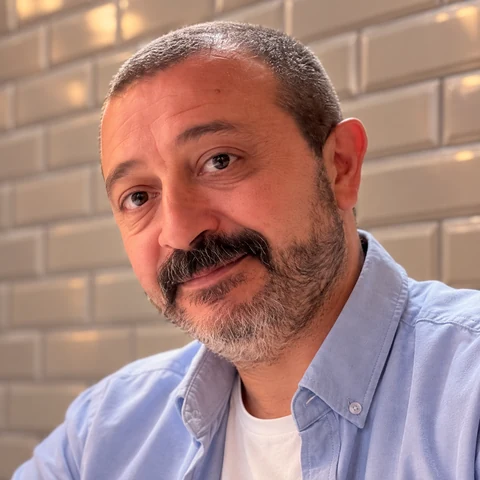
Meet your host
Özgür Akın
İzlandapedia editor · Podcast host
Based in Iceland, Özgür Akın covers the island’s news, culture and everyday life at İzlandapedia. In Weekly Roundup, he brings news together with his own observations and human stories.
“Here you will find not only the beautiful sides of life, but the difficult ones too.”
Where can I listen?
- The player on this page
- Turkish RSS feed
- Spotify — coming soon
- Apple Podcasts
How is it made?
Our editor selects each episode’s topics and angle, writes its script and checks the sources. The first episode was narrated in Turkish and English using an authorised clone of Özgür Akın’s own voice. Its gentle instrumental music was created with Suno. We disclose AI-assisted narration in the episode description whenever it is used. You can also read each episode’s transcript on this page.
What should we discuss next?
Do you have a question about Iceland, an experience to share or a subject that matters to you?info@izlandapedia.comWrite to us and we will look into it. Your suggestions are always welcome.