
The Republic of Türkiye turns 103: why does Atatürk still matter so much?
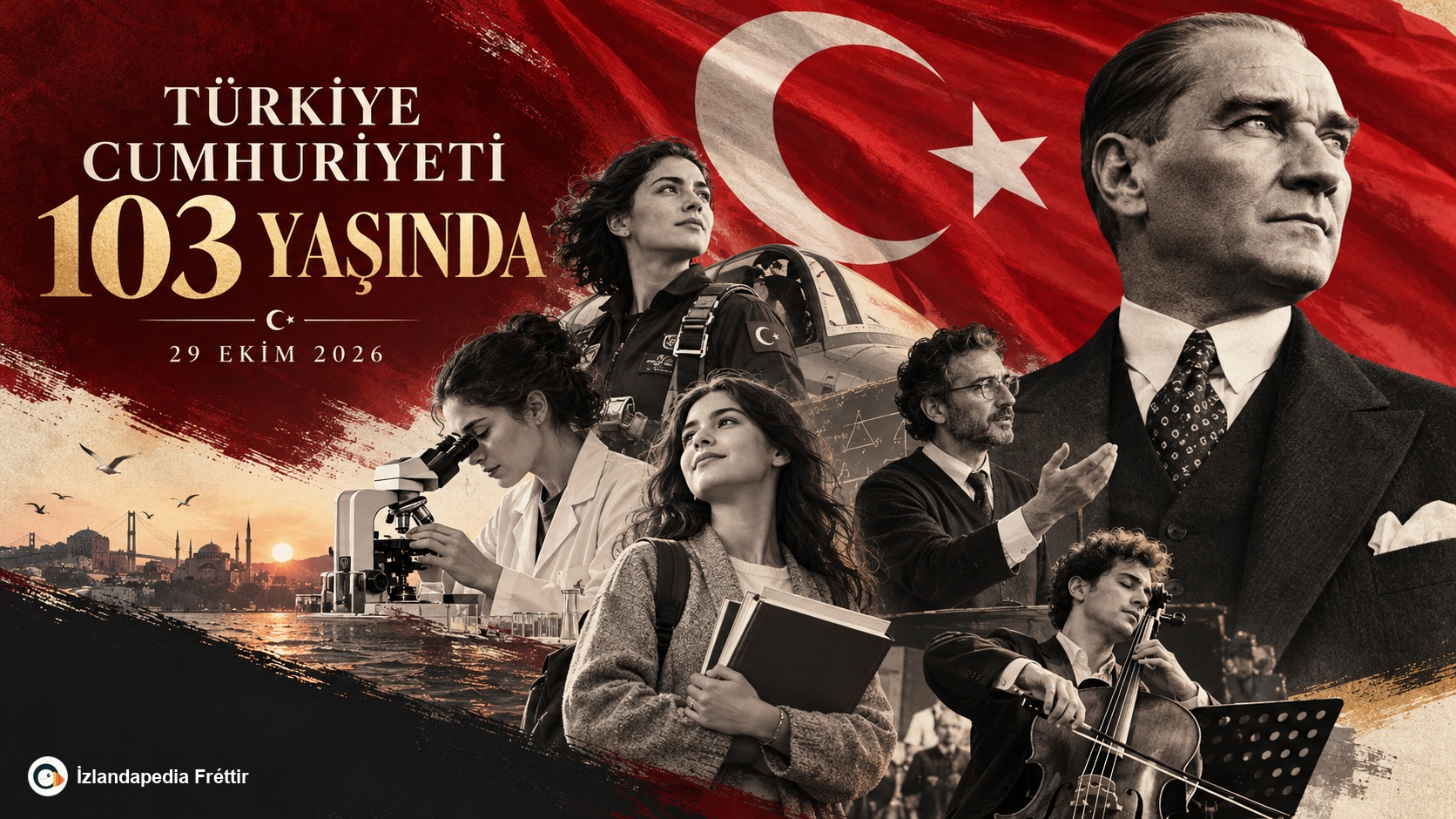
Founded after a war of independence, the Republic means more than a system of government to millions in Türkiye: it stands for freedom, secularism and the right to shape their own future. On its 103rd anniversary, attachment to Atatürk expresses expectations for the future as well as respect for the past.
The decision taken in Ankara on 29 October 1923 changed the future of a country emerging from war. The Grand National Assembly of Türkiye proclaimed the Republic and elected Mustafa Kemal Atatürk its first president. The head of state was now a president elected by parliament, rather than the ruler of a dynasty. Ministry of National Education chronology
A hundred and three years have passed. Türkiye has changed, as have generations, governments, economic circumstances and individual lives. Yet for millions, Atatürk has never become merely a name confined to history books.
What keeps a founding leader at the centre of such a strong emotional connection decades after his death?
More than saving a country
Affection for Atatürk is rooted in the struggle for independence he led against the threat of occupation and dismemberment. But describing him only as a commander who won a war leaves much out.
The founding of the Republic was followed by reforms that changed education, law and social life. Unifying education, reshaping civil law and extending women’s political rights were among the steps that set the new state’s direction. This transformation did not reach everyone at the same time or to the same extent, but it opened the way to rethinking the place of women and men in society. Atatürk Encyclopedia: women’s rights
For those who admire him, Atatürk’s legacy is therefore about more than defending borders. A girl’s opportunity to study, a woman’s ability to pursue a profession, science as a guide in education and citizens holding rights in relation to the state are also parts of that legacy.
Secularism takes its meaning within this framework: in a society where people may hold different beliefs, shared life is governed by law that applies to everyone, rather than by a religious authority.
Resolute in war, seeking agreement in peace
Mustafa Kemal was a soldier who had learned the cost of war at the front. His military determination helped shape the outcome of the independence struggle. Yet the Republic’s foreign policy prioritised security and diplomatic agreement over permanent warfare.
Relations with Greece offer a concrete example. Two countries that had fought a devastating war signed a treaty of friendship, neutrality, conciliation and arbitration in 1930. After their recent hostility, they demonstrated a willingness to resolve disputes through diplomacy. Turkish Historical Society: treaties, Atatürk Research Centre: Türkiye–Greece relations
“Peace at home, peace in the world” captured this choice. Military victory should be a means of building a country where people could live securely, rather than an enduring system of war. Ministry of Youth and Sports: Atatürk’s principles
On democracy, however, an important historical distinction must be maintained. National sovereignty and citizenship were fundamental aspirations of the Republic, but Atatürk’s era was not a pluralist democracy in today’s sense. It was a period of single-party rule, and attempts at a multiparty system did not endure. Explaining his democratic ideal does not require overlooking the political limitations of the period. Atatürk Research Centre: the transition to multiparty politics
A task entrusted to the young: protecting the Republic
For Atatürk, establishing the Republic did not mean it would remain safe forever. The opening sentence of his Address to Youth sets out this responsibility clearly:
“Your first duty is to preserve and defend Turkish independence and the Turkish Republic forever.”
The address goes on to describe internal and external forces seeking to destroy independence and the Republic. It warns that those governing the country may also make grave mistakes, even placing personal interests ahead of the country’s interests. Responsibility is thus placed not only on leaders but on future generations as well. Ministry of National Education: Address to Youth
It is not enough to interpret that warning today solely as a call to defend borders. Keeping the Republic alive also requires protecting legal certainty, education, integrity in public life, free thought and equal citizenship.
Invoking the Republic’s name is not the same as keeping the rights it grants citizens alive.
What does “We are Mustafa Kemal’s soldiers” mean?
One familiar expression of attachment to Atatürk is the slogan “We are Mustafa Kemal’s soldiers.”
Its meaning can vary with context. Someone using it at a civilian commemoration or celebration need not be describing themselves literally as a soldier. The phrase may express commitment to independence, the Republic and the values Atatürk is believed to represent.
In this analysis, such commitment means a sense of responsibility for the country’s future, rather than hostility towards someone else. The Republic’s endurance also depends on citizens with different views being able to live under the same legal order.
How does research explain affection for Atatürk?
Research does not suggest that millions love the same person for one identical reason. Studies of collective memory can, however, help explain why a leader from the past can retain a powerful place in people’s feelings today.
The first connection is shared identity. People also understand their country’s past as a story about who they are. A master’s study conducted at Middle East Technical University with 340 participants found an association between the importance attached to the Republic’s history and identification with national identity. The finding cannot be generalised to the whole population, but it illustrates a connection between history and belonging. METU: research on history and identity
The second connection is judging the present against an ideal from the past. A study published in the Istanbul University Journal of Sociology in 2025 examined 1,852 comments on an AI-generated Atatürk video. Longing, emotional attachment, comparisons with the present and the enduring relevance of Atatürk’s ideas were among its prominent themes. This was not a nationwide opinion survey, but a pattern observed in comments on one particular video. Original research publication
These findings help explain why Atatürk may feel even more important to some people today. Someone concerned about education, justice, independence or secularism may see him as a benchmark for those values.
Why is an idea not easily erased?
A country’s institutions can be weakened. Education, law and public resources can suffer from poor governance. Yet an idea of rights that people have learned is harder to eliminate.
Women’s equality, the guiding role of science and the idea that sovereignty belongs to the people do not exist only in official texts. They are discussed in families, learned at school and connected to personal lives. People who embrace these ideas debate them anew and pass them to future generations.
Atatürk’s enduring influence can be understood here: the memory of an individual has become a set of values people demand for their own lives.
The current Constitution also defines the Republic of Türkiye as a democratic, secular and social state governed by the rule of law. How fully these qualities are realised in everyday life remains open to citizens’ judgement and public scrutiny. Constitutional Court: the Constitution
The future being celebrated in the 103rd year
From Iceland, 29 October may look like a national holiday in another country’s calendar. For many people in Türkiye, it marks independence and the determination to build a modern life.
Affection for Atatürk often draws on this feeling: believing that a country can change its future even under the most difficult circumstances.
In the Republic’s 103rd year, the central question is not only what was achieved in the past, but what is being done with that inheritance today: the education left to children, the lives available to women and the legal order passed on to citizens.
Happy 103rd anniversary of the founding of the Republic of Türkiye. We respectfully remember those who fought for independence and founded the Republic.