NATURE · REYKJAVÍK / ISTANBUL
Simit in Istanbul, bird feeding at Tjörnin: two cities, one debate
Reykjavík officials are concerned about excessive feeding, while volunteers defend winter support. Istanbul also debates bread feeding, but tradition and scientific evidence answer different questions.
 İzlandapedia
Simit in Istanbul, bird feeding at Tjörnin: two cities, one debate
www.izlandapedia.comIn this report
What is Reykjavík debating?
Reykjavík’s environment and planning council discussed bird feeding at Tjörnin on 11 November 2026. It expressed concern that excessive feeding adds pressure to a pond already affected by organic pollution. The council calls for cooperation with volunteers and feeding wild birds only when needed. This is not a blanket ban on feeding all birds.[1]
Quantity, location and duration matter
An expert memorandum dated 26 October describes feeding that has become regular through winter. It raises concerns about food and droppings adding organic matter to the water, birds gathering at feeding points and dependence on people. These are the authors’ assessments, not proof that every effect was measured experimentally at Tjörnin.[2]
Why do volunteers feed the birds?
In a speech published on 21 October, Dýravaktin founder Ingiveig Gunnarsdóttir argues that snow and ice restrict winter food access and that helping the birds is a responsibility. The speech predates the council meeting; it is not a response to that decision. The disagreement concerns how much support is needed and how it should be provided.[3]
Istanbul has a simit debate too
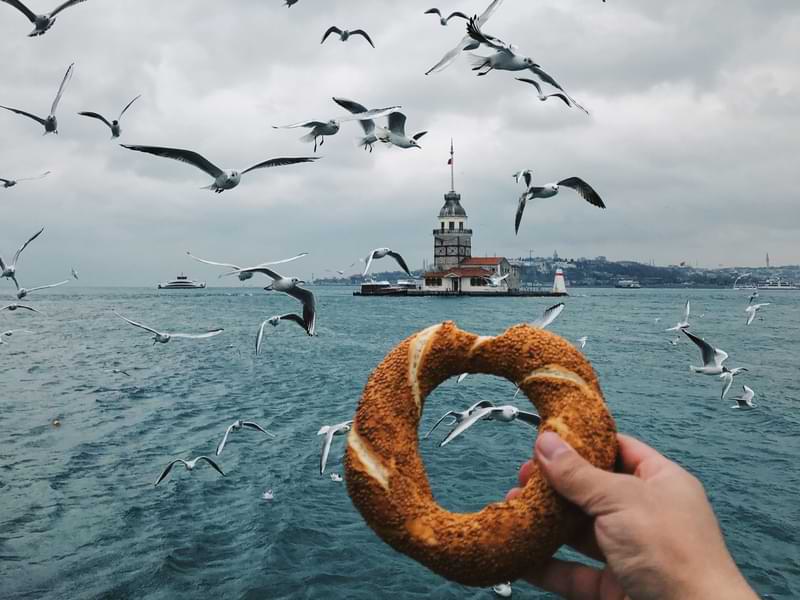
Offering simit, a sesame-coated bread ring, to gulls from a ferry is a familiar Istanbul tradition. Euronews Turkish used it as the starting point for a report about bread feeding on 20 September 2024. However, the article also discusses pet-bird nutrition and presents no experiment measuring simit’s effects on Istanbul gulls. It documents public discussion, not a scientific test of simit.[4]
What does the research establish?
A 2024 symposium abstract by Yağmur Acer and Emre Keskin examines diet and gut microorganisms in Istanbul’s yellow-legged gulls. It compares DNA in droppings collected across different levels of urbanisation and human interaction. The abstract reports differences associated with human influence but provides neither a detailed food breakdown nor a test of whether simit causes illness. It cannot establish that simit is harmless or that it causes disease.[5]
Are they the same gulls?
Some species occur in both places: black-headed gulls are documented at Tjörnin and in the Marmara region. The Istanbul diet study concerns yellow-legged gulls. Findings about one species cannot automatically be applied to every gull, or to the ducks and swans at Tjörnin.[5][6][7]
A shared question, different settings
A piece of simit offered to a gull following a ferry differs from organised feeding around a pond over several months. Food, quantity, season, species and setting all matter. The shared question is how to help birds when necessary while protecting their habitat and natural behaviour. Istanbul’s tradition makes the comparison useful; it does not by itself prove benefit or harm.
Sources
- Reykjavík — 11 Kasım 2026 kurul tutanağı ↗
- 26 Ekim 2026 — belediyeler arası uzman notu ↗
- Dýravaktin kurucusunun 21 Ekim 2026’da yayımlanan konuşması ↗
- Euronews Türkçe — 20 Eylül 2024 ↗
- 2024 Ekoloji ve Evrimsel Biyoloji Sempozyumu — Acer ve Keskin, özet ↗
- Reykjavík — Tjörnin kuşları ↗
- Marmara Bölgesi karabaş martıları — 2020 araştırması ↗
Sources checked on 14 November 2026. The 2024 conference record is an abstract; detailed full-paper results were not verified.