
SUNDAY · FOOD · CULTURE
What to eat on a Sunday in Iceland? A warming pot of Kjötsúpa
November air outside, lamb and vegetables simmering gently indoors… Kjötsúpa, one of Iceland’s familiar home dishes, makes a simple, satisfying Sunday suggestion. We follow a bowl back to the country’s farming traditions, then head into the kitchen.
Jump to recipe and shopping list ↓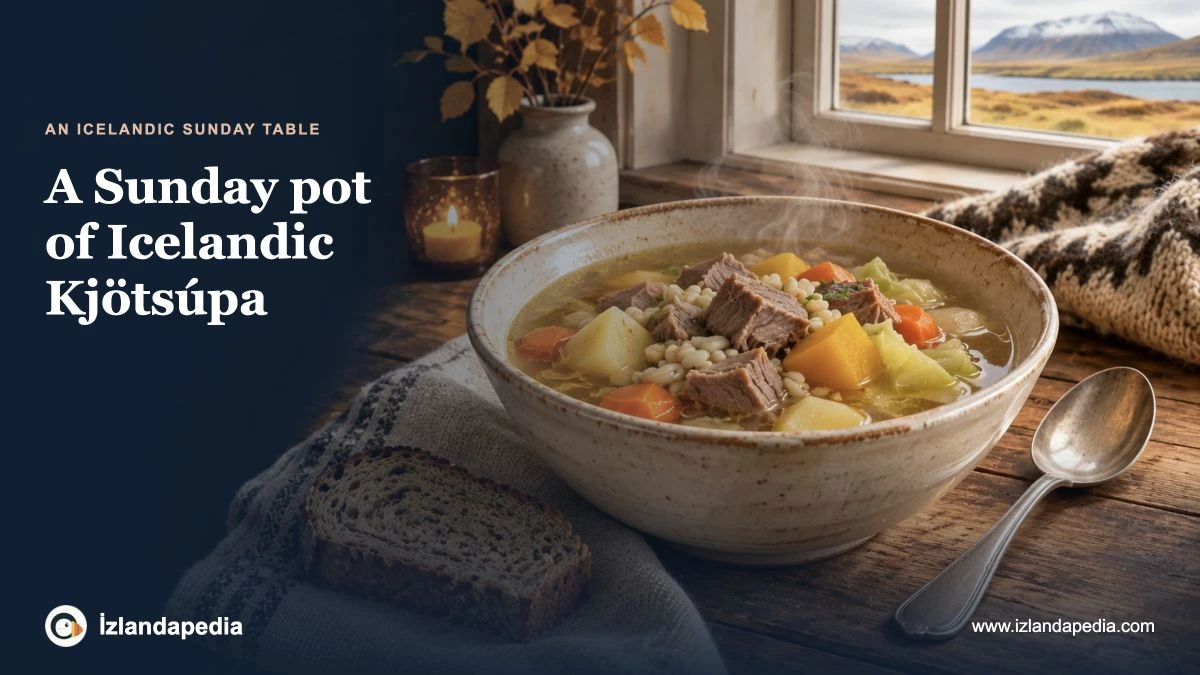
Some meals begin before the first spoonful: with steam rising from a pot, deep bowls placed on the table and someone asking whether you would like a little more. Kjötsúpa has that kind of place in Icelandic cooking. Its name means meat soup; in a familiar modern version, lamb, root vegetables and a clear broth made from the meat itself come together. [1][3]
For anyone wondering what to cook this Sunday, our suggestion is a pot to share rather than an elaborate plate. Enjoyed on other days of the week too, Kjötsúpa suits slow cooking, sitting together and saving a bowl for tomorrow.
The farming life behind a bowl
To understand the soup’s cultural roots, start with Iceland’s sheep-farming history. Visit Iceland describes sheep arriving with the first settlers and lamb remaining an important part of the country’s food tradition for more than a thousand years. Lamb soup is among the traditional dishes it identifies. That history does not mean today’s potato-and-carrot recipe has remained unchanged for a millennium. [1]
In autumn, sheep that have grazed through summer are brought home and sorted by owner at gatherings known as réttir. West Iceland’s official tourism organisation describes a tradition that is as much about families, neighbours and shared work as it is about farming. The soup’s straightforward combination of lamb and vegetables brings a sense of that food-producing landscape to the table. [2]
There is more than one family recipe
Icelandic food writer Albert Eiríksson describes Kjötsúpa as a dish with personal household versions. The recipe from Leiðbeiningastöð heimilanna includes oats, rice and barley, with potatoes cooked separately. Icelandic Lamb’s version puts potatoes and barley into the pot. Those differences do not make either soup less recognisable. [3][4][5]
The recipe below is a practical home adaptation inspired by these traditional examples. Think clear broth rather than a creamy soup or one thickened with flour. Lamb juices, vegetables and, optionally, a little barley provide the flavour and body. The seasoning need not compete with them.
What should you look for in the shops?
Súpukjöt means soup meat. Bone-in lamb pieces work well; ask a butcher for lamb suitable for soup or pieces from the shoulder. Bones contribute flavour, but check carefully for small fragments when preparing the cooked meat for serving. [3][4]
Among the vegetables, gulrófa means swede or rutabaga, while gulrót is carrot. Bankabygg is barley; súpujurtir refers to a dried soup herb or vegetable mix. If you cannot find the mix, a little dried thyme and parsley will do for this home adaptation. They are an alternative, not a claim that one particular blend is the only traditional choice.
Kjötsúpa for 4–6: Put the pot on
These quantities suit a large pot of about 5–6 litres. Allow roughly 20 minutes for preparation and around 90 minutes for cooking; the size of the lamb pieces and how quickly they become tender can extend the time. Keep the vegetables in fairly generous pieces so they are less likely to fall apart.
Tick ingredients off while shopping and follow the steps as you cook. Lamb, water and vegetables form the base; barley is optional. If you include it, check the cooking guidance on its packet as well.
Barley contains gluten. Check ingredient and allergen labels on prepared mixes.
Step-by-step cooking
Put the lamb pieces and 2.2 litres of cold water into the pot. Bring slowly to the boil and skim off the foam that rises.
Reduce the heat and add the chopped onion and optional barley. Simmer gently for about 45–60 minutes. If the lamb is still tough, give it a little longer before adding the vegetables.
Cut the potatoes, swede and carrots into generous bite-sized pieces and add them. Cook for about 20 minutes, topping up with hot water if needed.
Add the roughly shredded cabbage and dried herbs. Simmer for another 10–15 minutes, until both meat and vegetables are tender. Check that any barley is cooked too.
Adjust the salt and pepper. Remove the lamb carefully when safe to handle, separate it from the bones and check for small fragments. Return the meat to the soup and serve hot.
Small choices that keep the flavour clear
Simmer gently rather than boiling fiercely. Icelandic Lamb also recommends a slow simmer throughout cooking. Skimming the early foam helps keep the broth clear. Add a little hot water if too much evaporates and check the salt again near the end. [3]
You can leave out the barley. But that does not automatically make a soup gluten-free if a ready-made herb mix or stock cube is used: check those labels. This adaptation does not require stock cubes, leaving room for the lamb’s own flavour. For serving, divide the deboned meat among bowls and ladle over the vegetables and broth.
Save a bowl for tomorrow—safely
Do not leave a large pot on the stove overnight. Divide leftovers into small, shallow containers so they cool quickly, and refrigerate within two hours at 4°C or below. USDA advises using properly stored cooked leftovers within 3–4 days, or freezing them for longer storage. Reheat thoroughly before serving. [6]
Then set the table. Add bread if you like, or simply fill the bowls. That is what makes Kjötsúpa such a pleasant Sunday suggestion: less fuss in the kitchen and more room to stay at the table together. It is another way to get to know Iceland this weekend.
Sources and recipe note
Cultural context was checked against tourism organisations and Icelandic food sources. The recipe is an editorial home adaptation inspired by those sources, not a claim to one fixed traditional formula.