

Topkapı’s arrangements changed over the centuries. Most examples here concern palace life in the seventeenth and eighteenth centuries; nineteenth-century images also need to be understood within their own period.
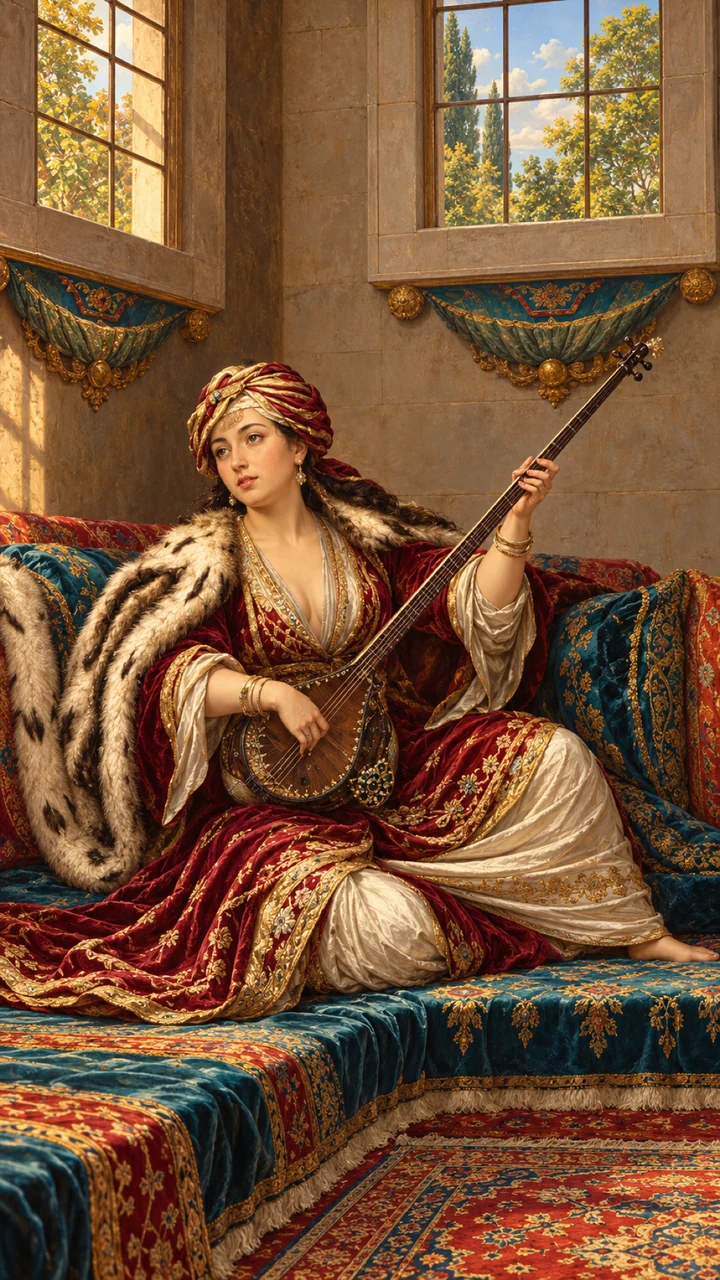
The elaborately dressed official, fully veiled figure and woman holding an instrument in the Reel invite useful questions. Finding answers means looking beyond pictures to records of duties, historical research and sometimes a letter a woman sent many years later.
Why does a musician appear in a purchase record
Because Latife was a woman with musical skills who was legally enslaved. According to Günnaz Özmutlu’s research into archival documents, she was purchased for the palace on 28 June 1677. The recorded price was 204,000 akçe.
Latife could sing and play the tanbur, kanun, santur and an instrument described in the record as a keman. These would be impressive skills for a musician today. Yet the same lines show that the person whose abilities were being described was being bought and sold. That is what makes the record so striking: artistic training and freedom were different things. Özmutlu’s research in Belleten
Converting 204,000 akçe into a present-day price tag would not help us understand this life. The more revealing questions concern how a person’s abilities were valued and how much control she had over her own future.
The musician in the Reel is not a portrait of Latife. The image draws on a depiction of a woman playing an instrument in a costume album dated 1714–1715. The Met’s catalogue does not identify that figure as a resident of the imperial harem either. The Metropolitan Museum of Art’s object record
Who lived and worked in the harem
The harem was a household containing different ranks and responsibilities. The dynasty’s women and children did not have the same authority as the women who performed its service and administrative work.
The valide sultan, the reigning sultan’s mother; his consorts and women close to him; his daughters and the princes formed its family circle. Enslaved women could work in various services, and some acquired responsibilities over time. The term cariye was more than a job description: it also denoted a legal status of slavery. TDV’s Harem entry
| Title or position | Place within the harem |
|---|---|
| Valide sultan | The reigning sultan’s mother, with considerable authority within the harem hierarchy |
| Dynastic women and children | Family members with different positions and privileges |
| Kethüda kadın and hazinedar usta | Women responsible for administration and the organisation of services |
| Women in different services | Those handling coffee, meals, laundry, stores, baths and clerical work |
The records studied by Betül İpşirli Argıt distinguish these specialisms. Yes, the palace even had a woman responsible for coffee service. The kahveci usta is a small but revealing detail: a large household depended on work that people carried out every day. The importance of titles and the distribution of duties could change over time. Argıt on the harem’s residents and organisation
Who is the man in the Reel and how powerful was his office
The figure is inspired by a depiction of the office and costume of the chief harem eunuch, known as the Darüssaade ağası. Also called the kızlar ağası, this official should not be understood simply as a doorkeeper. The engraving behind the Reel’s image dates to 1714; it is not presented as an authenticated portrait of a named officeholder. New York Public Library’s record
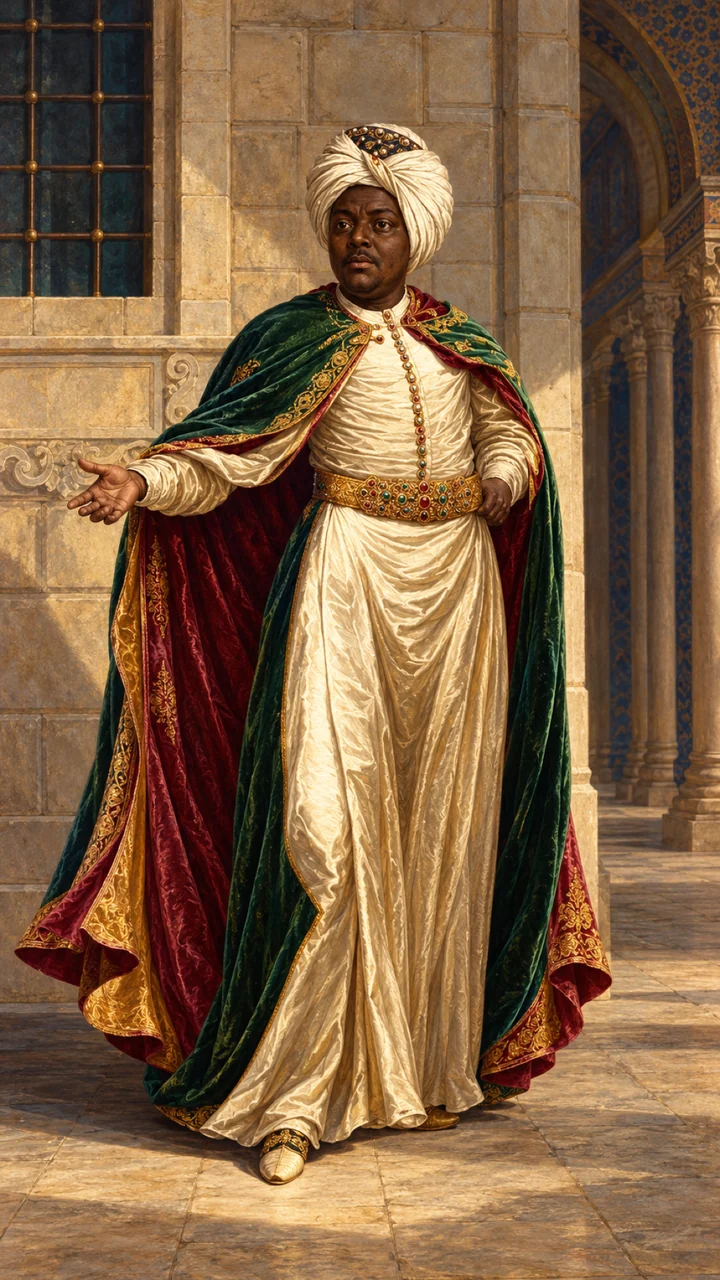
Historian Jane Hathaway’s research shows that the chief harem eunuch’s influence could extend far beyond the palace. Political relationships with the valide sultan, proximity to the ruler and the networks of income and grain associated with endowments supporting Mecca and Medina all contributed to this power. Some officeholders also supported educational and charitable institutions of their own.
Hacı Beşir Ağa’s powerful position between 1717 and 1746 offers a specific example. We cannot, however, give his name to the figure in the Reel. An image representing an office is different from a portrait of a particular person who held it. Hathaway on the chief harem eunuch
There is also a painful human history behind this office. The enslavement and castration of African men can easily disappear from accounts focused on magnificent costumes. The influence some eunuchs later acquired did not undo the coercion at the beginning of their lives. Hathaway
Who had authority in the harem
The valide sultan, some dynastic women and experienced female administrators could exercise authority at different levels. Closeness to the ruler, a significant position in the continuation of the dynasty and the ability to build relationships could bring political weight.
Leslie Peirce’s research, particularly on the sixteenth century and the first half of the seventeenth, places dynastic women’s activities within the workings of sovereignty. Their influence could be visible in diplomacy, ceremonies, patronage and charitable activity. Explaining women’s presence in politics solely through secret intrigue obscures this wider field. Peirce, The Imperial Harem
Familiar names such as Hürrem and Kösem help bring the subject into focus. But a few powerful women’s lives cannot tell us that all enslaved women had similar opportunities. The authority of a valide sultan was far removed from the room for manoeuvre available to a woman newly brought into service.
The useful question is therefore more precise than “Were women powerful?” Which woman could exert influence, in which period, and through which position?
Alongside the magnificent rooms stood a laundry
When we look at a palace room, we tend to notice tiles, fabrics and embroidery first. Cleaning that room, preparing its food and caring for its clothes can remain outside the picture.
The presentation of Topkapı’s Courtyard of the Consorts and Concubines following restoration makes this everyday world more visible. The section described by Türkiye’s National Palaces administration brings together a dormitory, laundry, kitchen, storeroom, bath and coffee hearth. Their proximity provides a useful starting point for understanding how a household functioned. National Palaces announcement
Small rooms, narrow covered walkways and shared spaces were connected to supervision and hierarchy as well as privacy. People did not all occupy equally spacious rooms or enjoy the same comfort. The furnishings visitors see today are also a museum presentation designed to explain that life, rather than a time capsule in which every object has remained in the same place for centuries.
What were education and entertainment like
Language, religious knowledge, etiquette and handicrafts formed part of the institution’s operation. What a woman learned could vary with her position and intended work. The National Palaces account considers service and training together. National Palaces
Women with musical abilities could receive instrumental and vocal instruction. Özmutlu’s study of 1677–1687 also reveals women trained in performance arts such as puppetry and shadow theatre. Entertainment, too, involved learning and work. Belleten
These details enrich our understanding of the harem’s cultural life. Access to education did not, however, mean being free to choose one’s own life. A woman’s acquired skills and her legal dependence need to be understood together.
Why is the veiled woman dressed like this
We do not know exactly why the figure in this particular photograph was covered in this way. The Reel’s image draws on a photograph produced by the Bonfils studio in Beirut in the 1870s. It has not been established that this photograph documents a palace harem.
The Metropolitan Museum of Art explains that the studio catered to foreign tourists’ curiosity and fantasies about the East. Costumes did not always accurately represent the sitters’ everyday dress. The same figure has also been identified in different places as Turkish or Syrian.
The covering alone cannot establish the woman’s nationality, membership of a harem or personal intentions. The museum makes a particularly important point: a travel writer’s interpretation of women’s veiling is not substantiated by the photograph itself. The Met’s Bonfils record
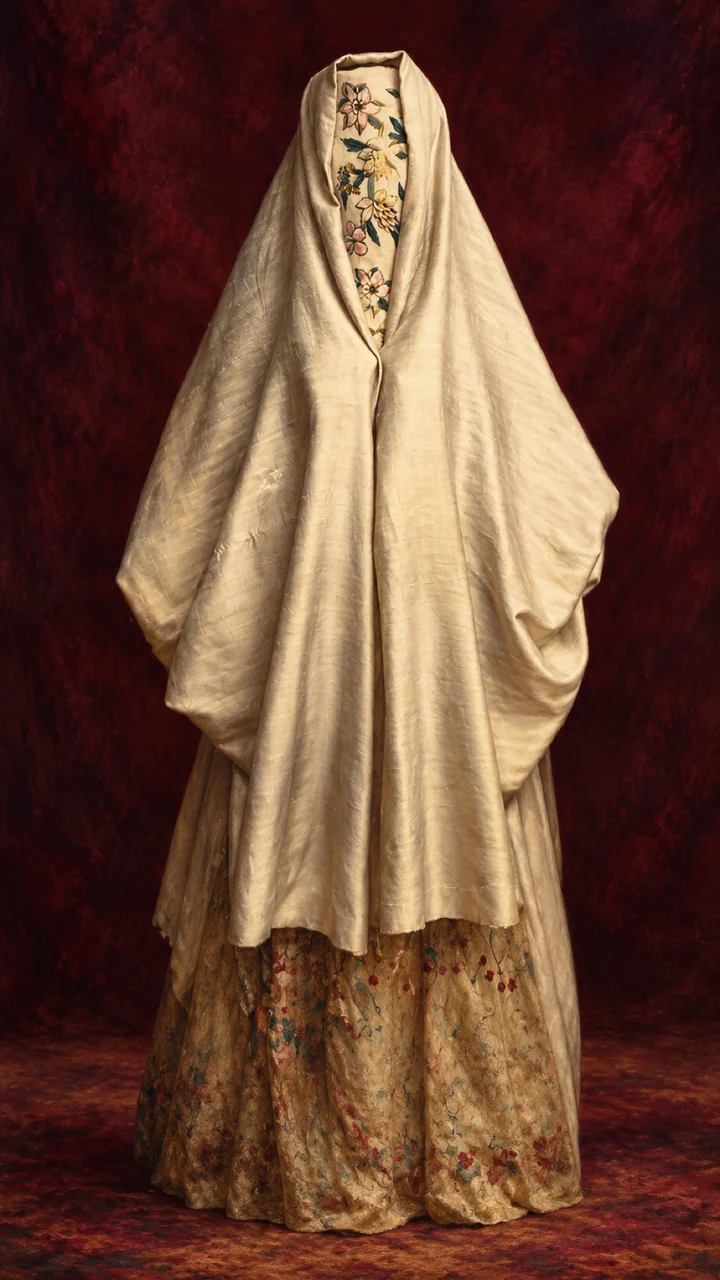
This answer redirects our curiosity. Sometimes a photograph reveals the customers and expectations of the studio that produced it before it reveals the person in front of the camera.
Ottoman women did not share a single style of dress
Street clothes and clothing worn in private, fashions from different centuries and social positions need to be distinguished. TDV’s entry on the yaşmak describes how this face covering, worn with the ferace outer garment, acquired different ways of tying it, degrees of fineness and decorative practices over time. Veiling did not produce one unchanging appearance. TDV’s Yaşmak entry
Another intriguing detail appears in Vanmour’s painting of a woman, dated approximately 1720–1737. The Rijksmuseum associates the low neckline of her dress with Tulip Era fashion. The Reel’s scene of a woman with a fan draws on this work, but her identity and connection to the palace remain uncertain. Rijksmuseum object record
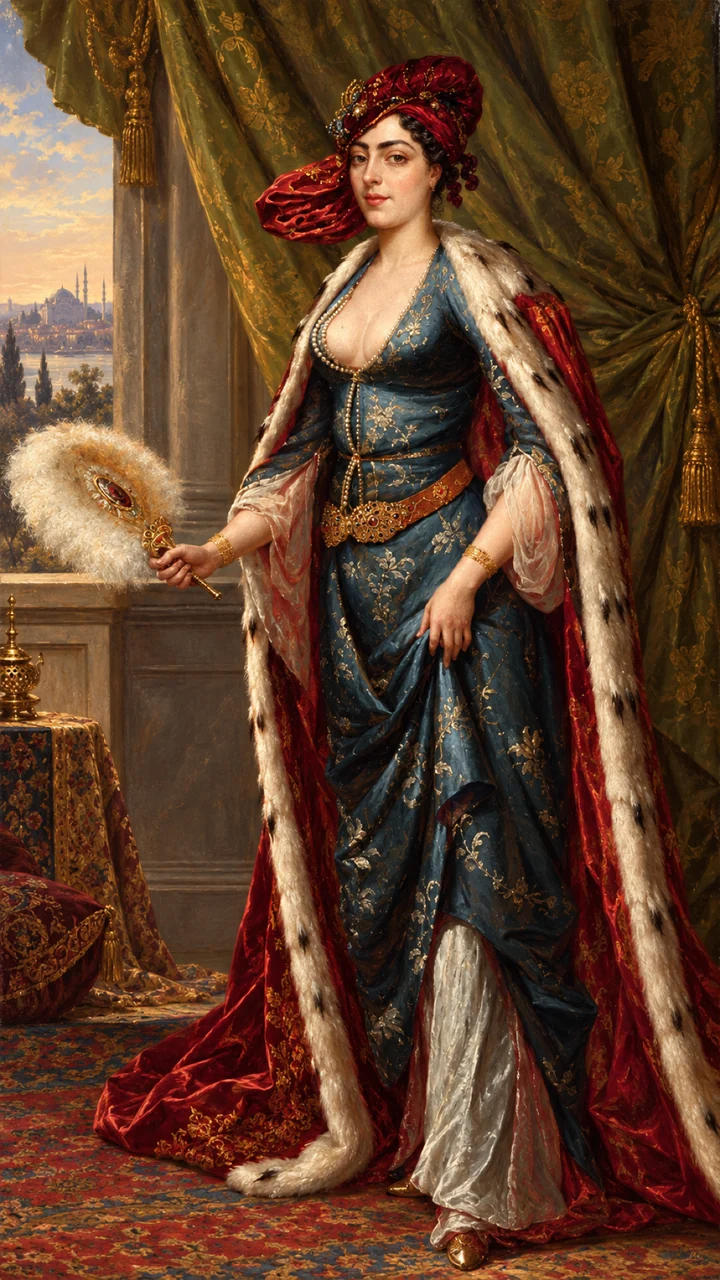
How much a person’s clothing conceals or reveals cannot sum up her entire life.
Can a picture tell us a person’s life story
An image offers clues; it cannot provide a complete life story on its own. Its date, place of production, medium and intended audience matter.
Melling’s depiction of a harem interior in his 1819 album offers a useful example. Its wooden galleries, rooms and figures open a richly detailed world to the viewer. Yet the Laskaridis collection classifies the scene among imaginary depictions and reconstructions. We therefore cannot read the engraving as an exact architectural plan or a snapshot of everyday life. Laskaridis collection record
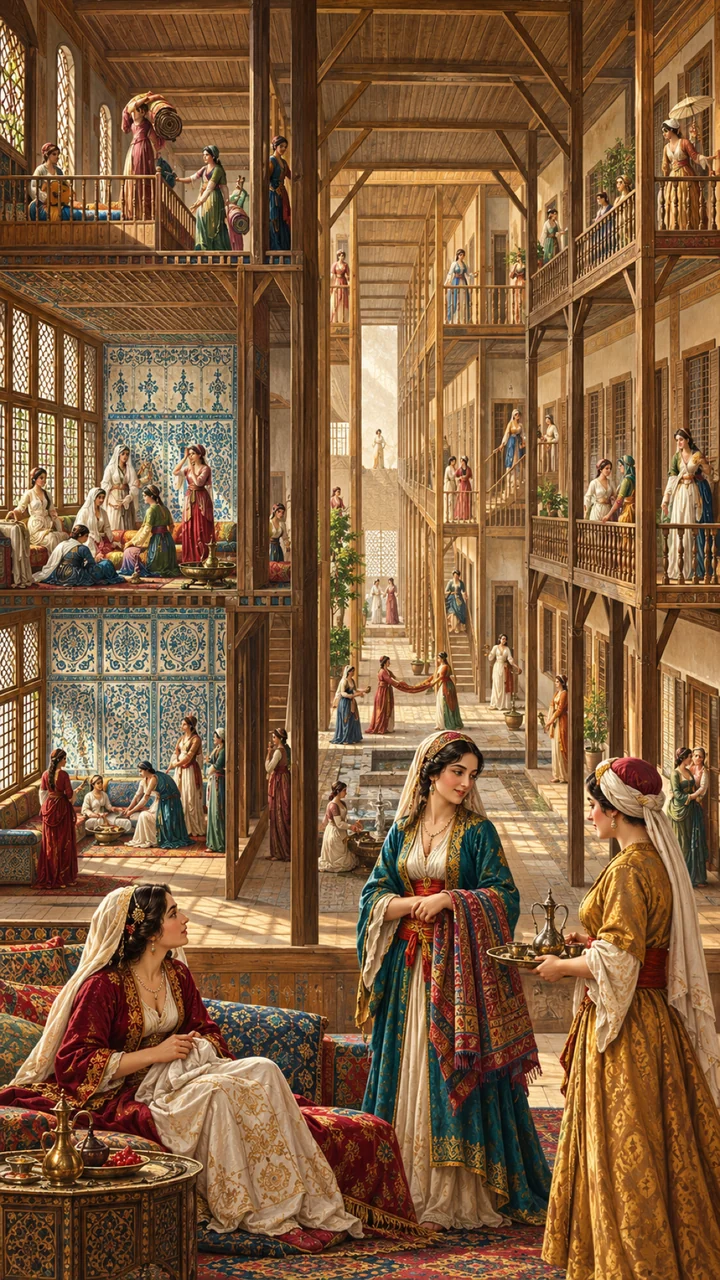
A woman in a costume album might represent a particular occupation, a style of dress or a scene arranged by an artist. Adding “harem beauty” beneath it later does not establish that she lived in a palace. The appeal of a historical image must be distinguished from documentary evidence of identity.
The colour images in this feature and the Reel’s scenes are modern illustrations inspired by historical depictions. Faces, colours, some costume details and movements have been reinterpreted. They are not presented as original engravings or documentary film footage.
Life continued after leaving the harem
Women could be freed from slavery and leave the palace, and some maintained relationships with it afterwards. Among the women studied by Argıt were those who married and established new households and those who continued to benefit from palace connections. This did not give every woman the same timetable, wealth or security. Argıt, Life after the Harem
A woman’s own request provides a glimpse of this later life. According to a letter discussed in Argıt’s 2011 article, el-Hâce Sarayî Fatma, a former çaşnigir usta, was living in Medina in 1799. Fatma wrote that she normally received 500 kuruş a year but had been sent 175 kuruş on this occasion, and objected to the deduction. She explained that she had purchased the relevant income share with her own money after selling her jewellery.
Here we encounter more than a title or a magnificent costume: a woman asserting a claim to income she considered her property, corresponding with palace circles. Leaving through the palace gates had not ended all her relationships with it. Argıt’s research, p. 2
A gaze in an engraving can spark curiosity. A letter disputing a deduction can take that curiosity towards the ways a person defended her own life and interests.
Quick answers about the harem
Was every woman in the harem the sultan’s wife
No. Family members, administrators and women in different services held distinct positions. TDV
Does cariye simply mean a servant
No. The word also denotes a legal status of slavery. TDV
Did the chief harem eunuch only guard the door
No. He could also have political and financial influence and authority connected with endowments. Hathaway
Is the veiled figure known to have lived in a harem
No. The museum record for the Bonfils photograph does not establish this. The Met
Is the musician in the Reel Latife
No. The source engraving is not identified as a portrait of Latife. The Met
Could women leave the harem
Women were freed from slavery and left; relationships with the palace could continue afterwards. Argıt
Sources
- TDV Encyclopaedia of Islam
- Özmutlu’s research in Belleten
- The Metropolitan Museum of Art’s object record
- Argıt on the harem’s residents and organisation
- New York Public Library’s record
- Hathaway on the chief harem eunuch
- Peirce, The Imperial Harem
- National Palaces announcement
- The Met’s Bonfils record
- TDV’s Yaşmak entry
- Rijksmuseum object record
- Laskaridis collection record
- Argıt, Life after the Harem
- Argıt’s research, p. 2
Spotted an error? info@izlandapedia.com