The most common Northern Lights expectation is simple: “If the sky is clear, I will see them.” Clear weather only opens the door. Space-weather activity, sufficient darkness and timing must also come together.
Aurora can be seen across Iceland. Your chances depend less on standing in front of a famous landmark than on finding a safe place under the clearest patch of sky and allowing enough time to wait.
Why don’t they appear on every clear night?
- You need darkness.Aurora may occur in summer, but Iceland’s bright nights make it very difficult to observe from the ground.
- Clear sky is only the first condition.Cloud blocks aurora far above it; on a cloudless night, space-weather activity can still be weak.
- The solar wind changes.NASA explains that charged particles and energy interacting with Earth’s magnetic environment can make oxygen and nitrogen in the upper atmosphere glow.
- Kp is not a complete answer.Visit Iceland advises against relying on Kp alone. Local cloud, real-time space weather and your horizon also matter.
- Timing changes.An aurora can strengthen briefly and fade. It may have ended before you arrived or appeared in a different part of the sky.
When is the most suitable time?
Iceland’s official tourism organisation describes the season as running from late August to late April. For travellers seeking a practical balance, late September through late March combines genuinely dark nights with usable daytime hours.
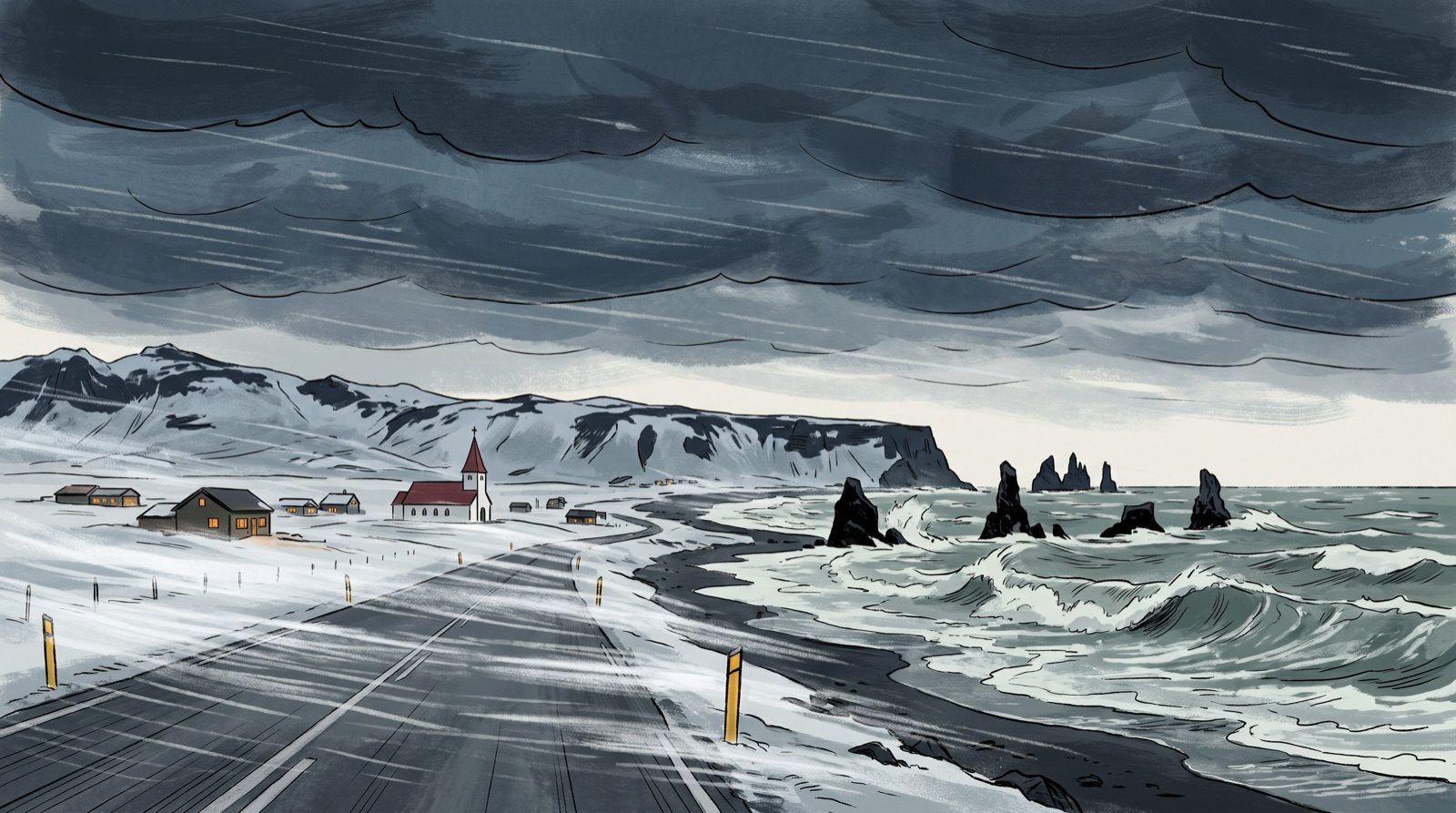
Darkness returns while daytime sightseeing remains relatively generous. Wind and rain can disrupt plans.
The longest dark window, but ice, storms and very short days require more care.
A useful balance between dark nights and lengthening days. There is still no guarantee.
Visit Iceland says aurora is, on average, most frequent in the Icelandic sky around 11 pm and suggests being outside roughly from 10 pm to 1 am. Treat that as a planning window, not an appointment.
Where should you watch? There is no single best place
The safest clear location that night can outperform the most famous viewpoint. Four settings suit different romantic trips:
South Iceland
The most balanced first romantic aurora trip. The Hella–Hvolsvöllur area, Ölfus and the South Coast combine broad horizons, rural stays and daytime waterfalls or geothermal stops. A base near the Ring Road simplifies the plan.
Snæfellsnes and Kirkjufell
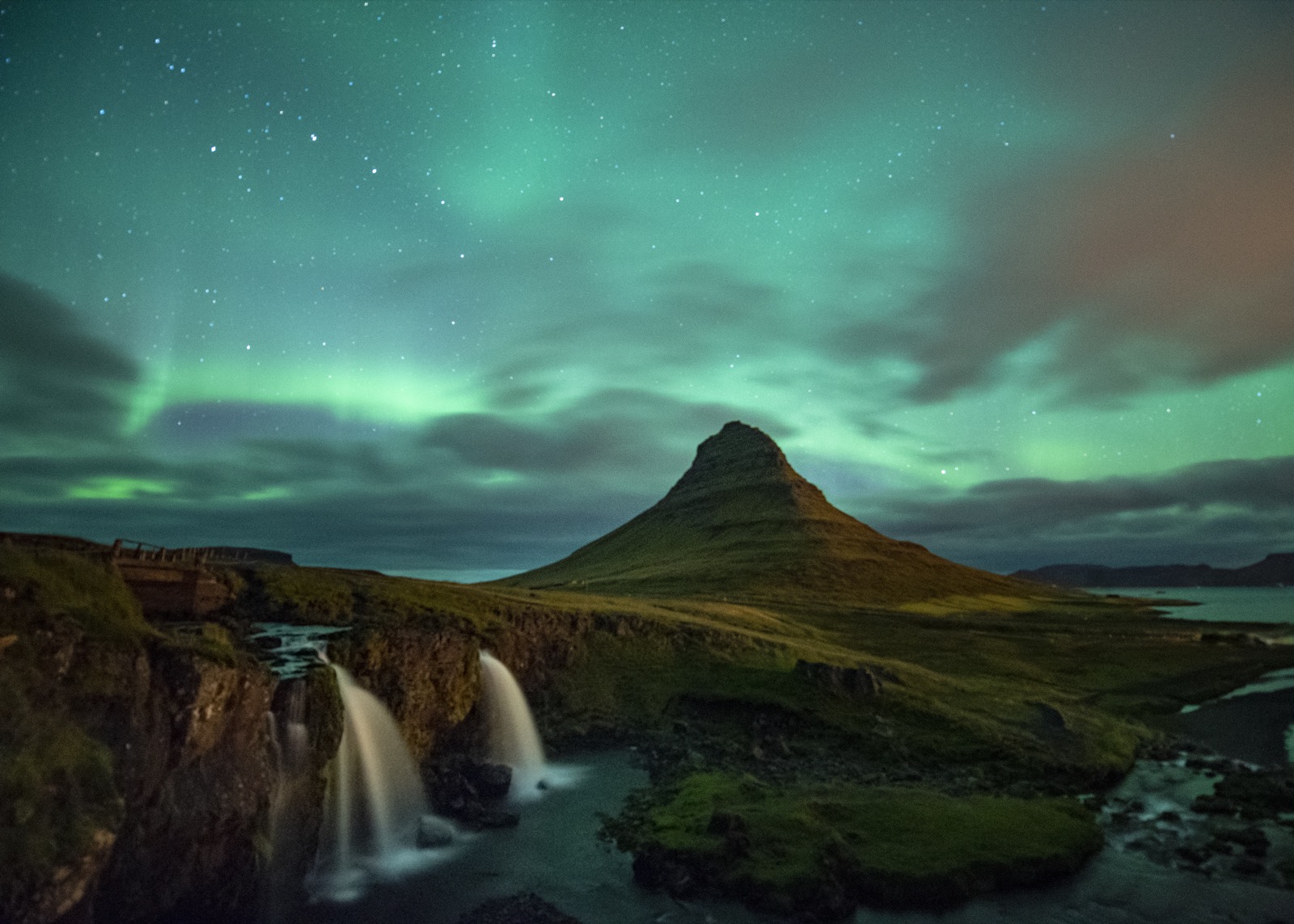
A strong photography choice. Kirkjufell provides an iconic foreground near Grundarfjörður. Do not tie the whole trip to one photo spot; winter roads, wind and crowds change.
Mývatn and North Iceland
For a slower winter break. Open space, low light pollution and geothermal relaxation make a coherent romantic itinerary. Allow more time for travel and winter driving.
Greater Reykjavík
For a short, car-free break. City lights reduce contrast, but aurora can be visible from the coast on a clear, active night. A licensed tour removes the burden of winter driving.
How do you build a romantic Northern Lights break?
Our balanced recommendation is to stay for three nights at one base in South Iceland or Snæfellsnes. A one-night aurora package is highly exposed to weather. Three nights give you another chance after a cloudy evening.
- Choose rural accommodation within reasonable reach of a main road.
- Ask whether the sky can be watched safely from the property.
- Keep daytime plans light so you do not drive long distances while tired.
- Treat a hot tub as an enjoyable bad-weather alternative, not an aurora guarantee.
- When the display begins, spend a few minutes looking before reaching for the phone.
A five-step plan for the night
- Check weather warnings and each cloud layer on the Icelandic Met Office site.
- Check road conditions and closures on Umferðin.
- Choose a dark place with legal parking and a simple return route.
- Bring warm layers, a windproof shell, gloves and a hot drink.
- Cancel if cloud or roads deteriorate. Aurora is never a reason for risky driving.
Why can a real photograph look brighter than the view?
The Kirkjufell image used here is a real long-exposure photograph. Its camera metadata records a 15-second exposure and high ISO. A long exposure collects more light and colour than the eye may perceive at one instant, so a vivid green image on screen is not a promise of identical naked-eye brightness.
A faint aurora may first look like a grey-white arc while a phone’s night mode records green. That does not make the photograph fake; it means the capture method shapes the result.
Keep the romantic night safe
Do not stop suddenly on the road, enter private land without permission or approach surf beaches in darkness. Postpone the plan during warnings or closures. Check the Icelandic Met Office aurora and cloud forecast, Umferðin road conditions and SafeTravel alerts together.
Common questions
Can you see the Northern Lights on every clear night?
No. You also need sufficient activity, darkness, suitable timing and a useful view of the sky.
What is the best month in Iceland?
There is no single winner. September–October and March can balance darkness with daylight; midwinter offers longer darkness but greater weather and road risk.
Can they be seen from Reykjavík?
Yes, with clear sky and sufficient activity. A safe coastal area away from direct lights improves contrast.
Sources and verification
Sources checked 5 October 2026. This article is not a live forecast or a visibility guarantee.
- Visit Iceland — The AurorasSeason, suggested viewing window, cloud and Kp limitations.
- Icelandic Met Office — Aurora forecastCloud map, activity scale and Reykjavík darkness times.
- NASA Science — AurorasHow aurora forms and why it has colour.
- Visit South Iceland — Northern LightsAccess, dark landscapes and flexible routing.
- Visit West Iceland — KirkjufellLocation and winter landscape context.
- Visit North Iceland — MývatnRegional and winter-visit context.
İzlandapedia · Independent Iceland guides and news. This feature uses official sources and received no hotel or tour-company sponsorship.