29 October 2026 · Türkiye’s Republic Day · 103rd anniversary
Women who helped build a republic — and widened its horizons
A writer addressing crowds, a militia commander, pioneering pilots, doctors, scientists and an opera singer: meet ten women whose lives illuminate the making and continuing development of the Turkish Republic.
Özgür Akın · İzlandapedia



 İzlandapedia Fréttir
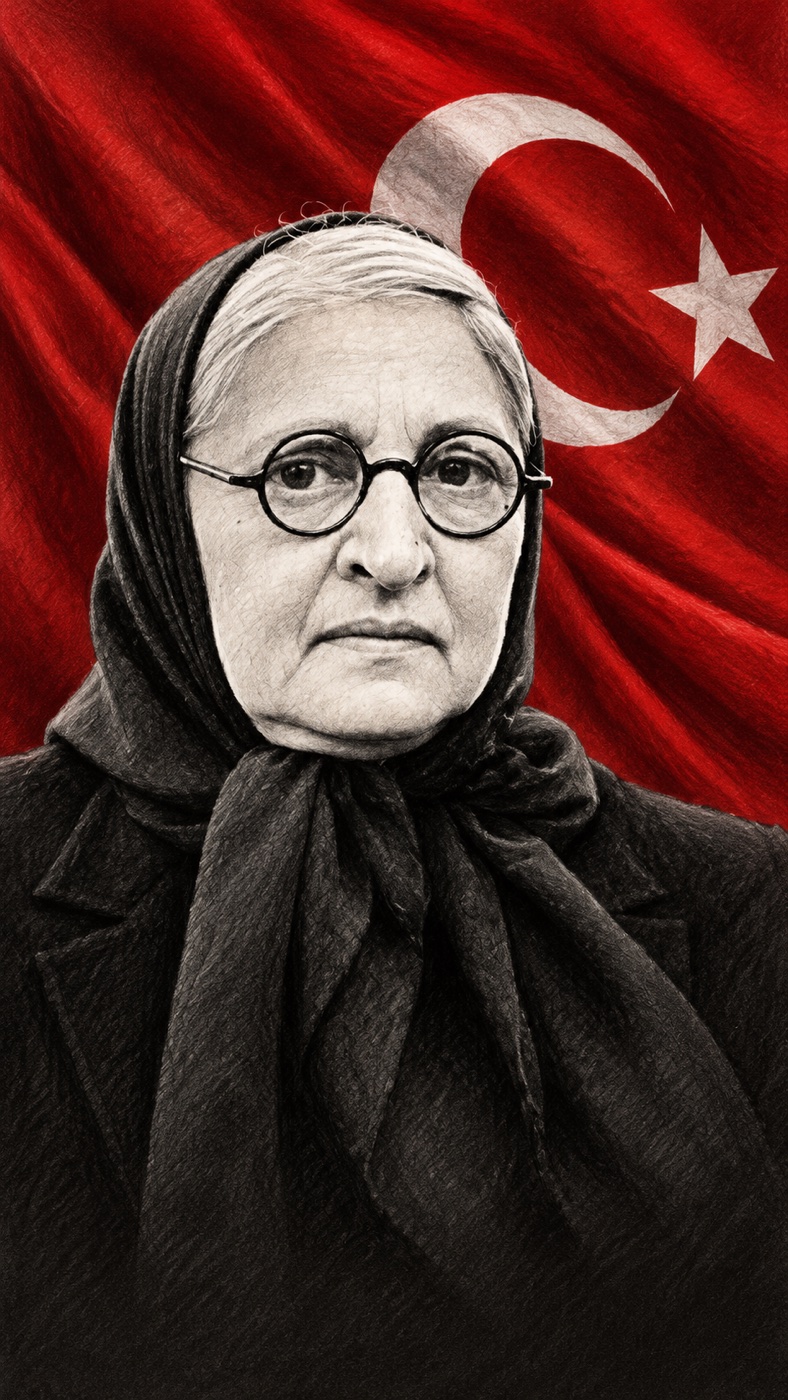
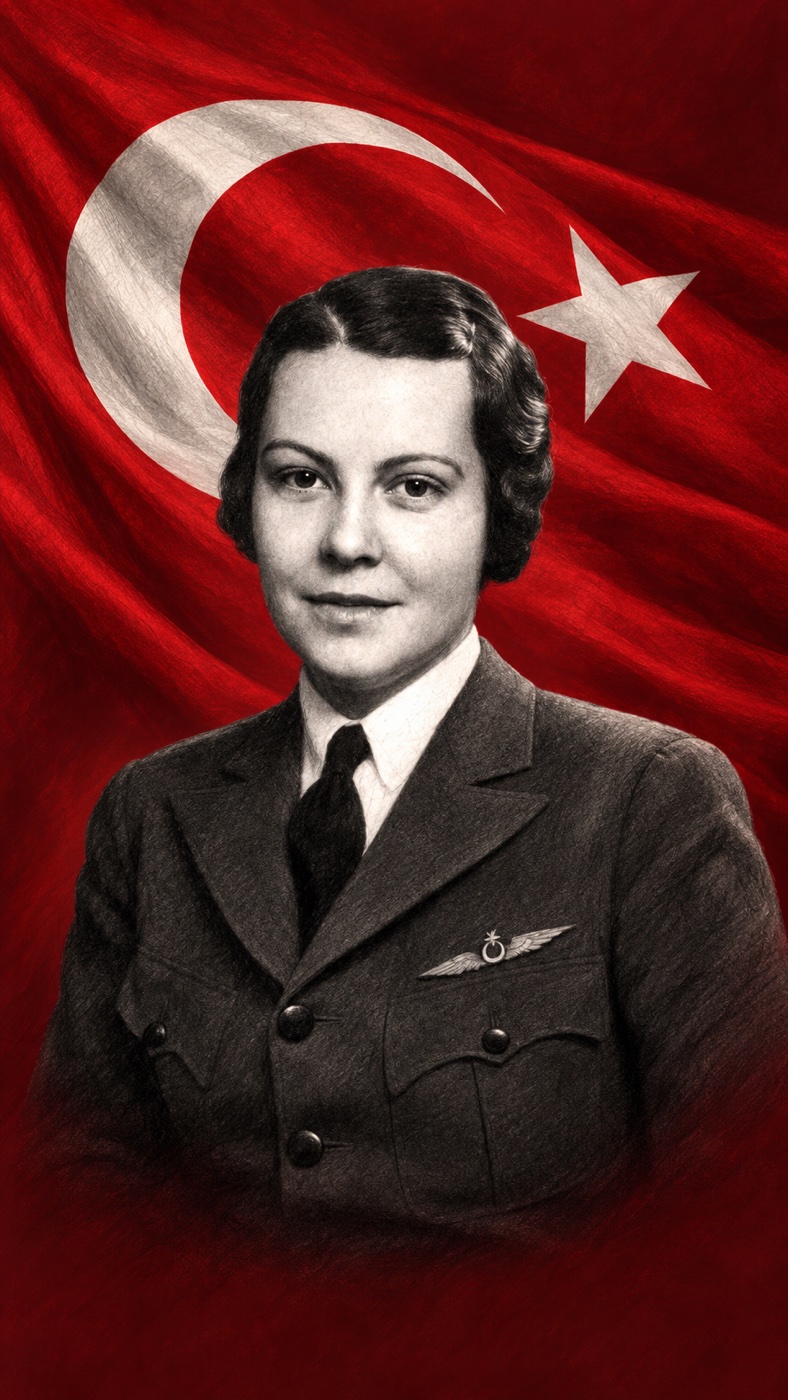
The portraits are commemorative illustrations created for this feature, not archival photographs. Tap an image to open it at full size.
When a country’s history is told only through battles, treaties and political leaders, part of the picture disappears. Women also organised, cared for the wounded, pursued education and entered professions that had seemed closed to them.
Proclaimed on 29 October 1923, the Turkish Republic will mark its 103rd anniversary in 2026. For readers in Iceland, these ten portraits offer a journey from the independence struggle to aviation, medicine, science and the arts. Some careers began before the Republic; others extended its educational ambitions into later generations.
Why women mattered to Atatürk’s modernisation project
The reforms led by Mustafa Kemal Atatürk made girls’ education and women’s participation in public life central to the country’s development. The unification of education in 1924, the Civil Code of 1926 and national voting and candidacy rights in 1934 were important milestones.
Atatürk argued that women should be able to advance through the same levels of education as men and become scholars and scientists. These changes expanded opportunities, although legal reform did not immediately remove social inequalities.
Women also organised and made demands of their own. Nezihe Muhiddin and her colleagues campaigned for political rights. The story therefore includes both institutional reform and women’s determination to shape their own lives.
Atatürk Ansiklopedisi · Kadın hakları ↗Halide Edip AdıvarAn independent voice, from public squares to literature
Halide Edip Adıvar was already a prominent writer and educator before the Republic. She spoke at rallies against the occupation of Istanbul in 1919, joined the independence movement in Anatolia and worked in wartime and hospital settings. She also helped in the founding process of Anadolu Agency.
Her novels explored women’s lives and education. Later political disagreements with Atatürk belong to this history too: she was a participant with views of her own, rather than simply a symbol of a new era.
[2] Atatürk Ansiklopedisi · Halide Edip ↗Fatma Seher Erden · Kara FatmaWomen also commanded
Fatma Seher Erden, known as Kara Fatma, was a woman militia commander in the War of Independence. She took part in armed resistance and led units, challenging the assumption that women’s wartime role was confined to support behind the lines.
Her later financial hardship also deserves remembrance. Honouring courage requires attention to the lives people lead after the fighting ends.
[3] AA · Kara Fatma: arşivler ve tanıklıklar ↗
Bedriye Tahir GökmenOpening the skies
Bedriye Tahir Gökmen entered aviation training in the early 1930s. Türkiye’s Directorate General of Civil Aviation lists her as the first Turkish woman pilot, with the year 1933.
For a woman of her generation, learning to fly also challenged expectations about who could acquire technical expertise and choose a profession.
[4] SHGM · Öncü kadın havacılar listesi ↗Sabiha GökçenAn internationally recognised aviator
Sabiha Gökçen, Atatürk’s adopted daughter, is recognised by Guinness World Records as the world’s first female combat pilot. This was the era of propeller aircraft; the distinction does not mean first female jet pilot.
Atatürk directly supported her training. Her military career also included the 1937 Dersim operation, remembered for its grave civilian suffering. Her aviation milestone and that difficult historical context both belong in an account of her life.
[5] Guinness World Records · First female combat pilot ↗ · [14] · [15]
Leman Bozkurt AltınçekiçInto the jet age
Leman Bozkurt Altınçekiç earned her jet-pilot wings in 1958 and is recognised as the first woman jet pilot in Türkiye and NATO. Her achievement extended women’s participation in aviation into a new technological era.
The demanding training made technical skill, judgement and professional competence visible in a field long associated with men.
[6] Türk Dünyası Ansiklopedisi · Leman Bozkurt Altınçekiç ↗
Şenay GünayTurning access into a career
Şenay Günay entered military aviation training in the 1950s and completed jet training in 1960. The Turkish civil aviation authority’s pioneers list places her under its 1960 category for the first woman jet combat-aircraft pilot; this should not be read as a global first.
Her long military service illustrates the importance of sustained careers as well as breakthrough moments.
[7] Ankara Üniversitesi · Şenay Günay ↗ · [4] SHGMSafiye AliCaring for women and children
Known as the first Turkish woman physician, Safiye Ali studied medicine in Germany when women’s access to medical education at home was severely restricted. She returned to practise in Türkiye. The description refers to a Turkish woman physician, not to every woman doctor who had worked in the territory.
Her attention to maternal and child health made her career a contribution to public welfare as well as a personal achievement.
[8] Atatürk Ansiklopedisi · Safiye Ali ↗
Remziye HisarA path through the laboratory
One of Türkiye’s pioneering women chemists, Remziye Hisar studied at the Sorbonne in Paris and attended Marie Curie’s lectures. She returned to contribute to university science and teaching in Türkiye.
Her career invites us to consider the resources, family responsibilities and educational opportunities that shape scientific work alongside talent.
[9] İTÜ · 250 yıllık tarih ↗Dilhan EryurtA horizon reaching the stars
Astrophysicist Dilhan Eryurt researched the structure and evolution of the Sun and stars at NASA’s Goddard Space Flight Center. She later helped develop astrophysics at Middle East Technical University in Türkiye.
Her career connects early debates about girls’ access to education with later generations’ participation in international research.
[10] Türk Astronomi Derneği · Dilhan Eryurt ↗
Semiha BerksoyConfidence on stage
Semiha Berksoy is recognised as Türkiye’s first woman opera singer. Her work spanned opera, theatre and painting, and her career reached European stages.
She represents another dimension of public participation: women creating and interpreting art, developing their own artistic language and occupying the stage in their own right.
[11] Kültür ve Turizm Bakanlığı · Semiha Berksoy ↗A question readers in Iceland will recognise
When does a legal right become a real opportunity? Iceland introduced national voting rights for women with age restrictions in 1915; women and men obtained equal legal voting conditions in 1920. Türkiye introduced national voting and candidacy rights for women in 1934.
These dates are not a league table. The more revealing question is how rights translate into access to education, professions, parliament, laboratories and cultural life.
Statistics Iceland ↗A republic’s future is also found in women’s lives
These ten women did not share one profession, one viewpoint or one set of opportunities. Together, their lives show why a country’s development cannot be separated from women’s ability to learn, work, speak and create.
For Republic Day, their stories make Atatürk’s commitment to women’s education and public participation tangible. A republic’s possibilities can also be measured by the future a girl is able to imagine for herself.